

380V Vibrator Motor Supplier Guide: Key Factors for Reliable Industrial Performance
2026-11-16
Every hour a 380V vibrator motor runs under full load is a test of its design, materials, and the supplier behind it. Yet too many teams still rely on generic specs and hope for the best—until a bearing seizes or a winding burns. That’s why this guide cuts through the noise, focusing on the few factors that truly predict long-term industrial performance. Guangling has built its reputation on those exact details, from thermal margins to vibration isolation. Keep reading, and you'll know exactly what to demand before your next purchase.
The 380V Nameplate Reading That Doesn't Predict Real Performance
A 380V stamp on a motor nameplate feels reassuring, but it describes a single test condition, not the messy reality of a running plant. Voltage sags from long cable runs, unbalanced phases, or a transformer tap set for another part of the building can push actual terminal voltage well below or above that figure. The motor still turns, but its torque, slip, and heat profile shift in ways the nameplate cannot capture.
Even at a steady 380V, performance drifts with winding temperature, load harmonics, and mechanical wear. A cold motor on a bench behaves differently from one that has been cycling for hours under a dusty load. Inductance changes, resistance climbs, and the magnetizing current that looked healthy at startup no longer holds at full load. Treating the nameplate voltage as a promise leads to undersized overload protection or missed signs of rotor stress.
The practical takeaway is to measure at the motor terminals under real operating conditions, not to trust the data plate as a forecast. A few volts of drop on one phase or a 5% overvoltage from a utility tap change can matter more than the difference between a 380V and a 400V design. Once you see the actual waveform and current draw, the nameplate becomes what it always was: a reference point, not a prediction.
Why a Supplier's Vibration Test Might Be Too Clean to Matter
Many supplier vibration tests look flawless in the lab, but that perfect sine sweep, rigid fixture, and dust-free environment have almost nothing to do with the vibration spectrum a product actually sees after installation. Real-world vibration arrives from multiple directions, stacks randomly, and mixes with thermal shifts and structural resonance. A test that is too clean simply places the product in a gentle scenario it will never encounter in service.
Take a sensor clamped firmly to a shaker table with a sweep as smooth as a textbook curve. Once it reaches the field, it might be mounted near an engine, absorbing broadband random vibration plus shock, along with secondary rattling from loose bolts. The pass in the supplier report often means only that the product survived vibration under ideal conditions, not the actual working environment.
To make the test meaningful, you need real recorded road-load data, multi-axis coupling, and even deliberate mounting errors. Otherwise the fanciest vibration report is little more than a placebo for the purchasing department.
Enclosure and Insulation Choices for Dust, Moisture, and Heat You Can't Avoid
A motor drive mounted near a sawmill's planer sees sawdust, occasional washdown spray, and ambient heat hovering around 40°C. Close it up completely and the internal temperature climbs past the capacitor rating within an hour. Leave a vent open and fine dust packs the heatsink. The enclosure choice isn't about finding a perfect seal—it's about managing three opposing forces at once.
For enclosures, powder-coated steel handles impact but rusts at the seams after a year of moisture. Cast aluminum with a gasketed lid sheds heat better and survives washdown, yet costs more and dents easily. Polycarbonate is light and corrosion-proof, but its thermal conductivity is so low that you need to derate every power component inside. The practical compromise often means a metal base for heat spreading and a non-metallic lid to interrupt condensation paths.
Insulation inside the box gets trickier. Thick foam rubber kills dust ingress but soaks up moisture like a sponge and blocks heat. A better route is a thin silicone thermal pad under the power devices, paired with a hydrophobic breather vent on the enclosure wall. The vent equalizes pressure so the box doesn't inhale damp air through cable glands during cool-down cycles. For areas with constant condensation risk, a small drain hole at the lowest point—screened against insects—does more good than another layer of gasket.
Mounting Torque and Resonance Checks That Keep Bearings Alive Longer
Most bearing failures blamed on lubrication or contamination actually start at the moment of installation. A mounting torque that's even slightly off spec changes the internal clearance and preload, forcing rolling elements to skid or overload one side of the raceway. On a tapered bore bearing, for example, driving the locknut past the recommended angular tightening range can reduce radial clearance to zero before the shaft reaches operating temperature. The result isn't always immediate seizure; more often it's a subtle but steady rise in vibration and heat that chews through the fatigue life rating long before catalog numbers would predict.
Resonance checks catch what a simple vibration reading misses. Every shaft assembly has natural frequencies where small forces amplify into large movements. If a bearing's rotational speed or its ball pass frequency lines up with one of those resonances, the resulting cyclic stress can crack cages or fret the seating surfaces within weeks. A quick run-up while watching an accelerometer spectrum usually reveals the problem: peaks that stay fixed in frequency while the machine accelerates point to structural resonances, not imbalance. Changing shaft diameter, adding a tuned mass, or shifting operating speed by a few percent often moves the resonance far enough away to stop the damage.
When Rewinding or Custom Coils Beat the Off-the-Shelf Motor
Off-the-shelf motors work fine for standard loads, but they start to stumble when you push them into unusual duty cycles, tight spaces, or nonstandard voltage and frequency combinations. A stock winding is optimized for a narrow band of conditions; once you drift outside that band—say, running a 60 Hz motor at 25 Hz under constant torque—heat builds fast and efficiency drops. That’s where rewinding or specifying a custom coil changes the equation.
Rewinding lets you keep the housing, bearings, and mounting footprint you already trust while tailoring the copper cross-section, turn count, and insulation class to match a real operating point. Instead of buying a larger frame or adding an external gearbox, you can rework the winding for higher torque at low speed, better thermal headroom, or a different voltage supply. It’s not always cheaper up front, but it often beats the cost and lead time of a fully custom motor.
Custom coils also make sense when the load is intermittent, the ambient temperature is extreme, or the existing winding has failed and you need a repair that outperforms the original. A good rewind shop will look at the actual duty cycle and adjust wire size or insulation rather than just copying the old spec. In those situations, the off-the-shelf option is a compromise; a targeted rewind or custom coil is the component that actually fits the application.
Supply Agreement Clauses That Expose a Vendor's True Service Depth
Most procurement teams fixate on price, delivery windows, and penalty structures. Yet the real signal of a vendor's operational maturity often hides in clauses that sound like legal boilerplate. Look for how they handle surge capacity—if the agreement merely mentions “reasonable efforts” without defining a capped percentage over baseline volume within a set lead time, you are likely dealing with a reseller, not a manufacturer. The difference shows up six months later when your forecast shifts by 20% and their “best effort” becomes a polite email asking you to wait.
Another tell is the continuity-of-supply section. A vendor that has invested in redundant production lines or regional buffer stock will typically offer a defined recovery time objective—say, 72 hours for critical SKUs—and will agree to financial consequences for missing it. Vague language like “promptly notify” or “use commercially reasonable endeavors” without any measurable benchmark suggests they are renting capacity from someone else and cannot promise what they do not control.
Finally, read the sub-tier disclosure requirements. A vendor with genuine service depth will not flinch at naming their key material suppliers, the geographic location of their contingency sites, or the frequency of their own supplier audits. If they resist adding a simple clause that allows you to review their business continuity test results annually, that resistance is not about confidentiality—it is about hiding a fragile, single-threaded chain that breaks under ordinary market stress.
FAQ
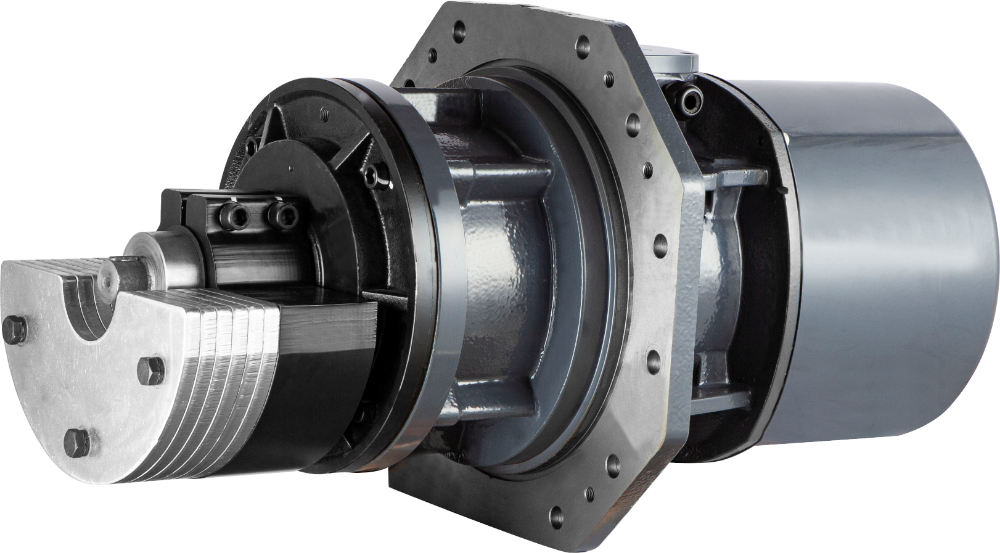
Dependable suppliers understand that vibration motors operate under continuous eccentric loading, not just occasional overload. They should provide specific bearing life calculations, reinforced frame details, and real test reports from vibration tables rather than relying on standard motor catalogs.
Very important. Look for Class F or H insulation with vacuum pressure impregnation. This prevents winding movement and moisture ingress, which are common failure points when motors shake constantly at high frequency. A motor that runs hot but is properly insulated will outlast one that is barely meeting temperature class.
Because the same motor frame may need to produce different force outputs for screens, feeders, or hoppers. Adjustable weights let you fine-tune amplitude without swapping the entire unit. This reduces inventory and lets one motor cover multiple applications, but only if the supplier provides clear calibration markings.
Spherical roller bearings or high-quality deep groove ball bearings with C3 or C4 internal clearance are typical for vibratory service. The supplier should also specify the grease type and relubrication intervals for different mounting angles. If they cannot tell you the bearing clearance class, walk away.
Request a sample motor’s vibration spectrum analysis, no-load and full-load test data, and thermal imaging under simulated unbalanced load. Reputable suppliers will have these records ready. Also ask about their balancing process for rotors and whether they do a final run-test with eccentric weights attached.
Using the wrong bolt grade or failing to torque mounting bolts evenly. Vibrator motors transfer large cyclic forces to the structure, so loose bolts cause fretting and bearing damage. A good supplier will provide a mounting guide that specifies bolt class, recommended torque, and flatness tolerance for the mounting surface.
At minimum, they should offer technical guidance on bearing replacement intervals, vibration analysis services, and quick access to genuine spare parts like eccentric covers and terminal boxes. For remote operations, look for suppliers who can troubleshoot via video or provide on-site commissioning support to avoid costly downtime.
Conclusion
A nameplate on a 380V vibrator motor says little about how it will run once bolted to your equipment. Lab readings under controlled load and temperature often fail to capture the real stress from dust, moisture, or heat that you cannot eliminate on a production floor. A supplier's vibration test, for instance, may be performed on a freshly balanced rotor in a spotless test bay, far from the uneven loads and harmonic feedback your process actually creates. That gap between clean data and dirty reality is why enclosure and insulation choices matter more than the printed kilowatt figure. In many plants, motors die early not from electrical overload but from fine dust packing into windings, condensation after washdowns, or heat building up around a sealed housing. Asking for IP-rated enclosures, appropriate insulation class, and real-world duty-cycle validation will tell you more about reliability than a glossy datasheet.
Mounting torque and resonance checks are the overlooked factors that keep bearings alive. A vibrator motor that is under-torqued or bolted to a frame with a resonant frequency close to its operating speed will shake itself apart, regardless of brand. Before signing a supply agreement, look at whether the vendor offers on-site pre-installation resonance analysis and torque verification, not just a warranty card. In many heavy-duty applications, a custom rewound motor or a purpose-built coil set will outperform a standard off-the-shelf unit because the winding configuration can be matched to the actual eccentric load and duty cycle. The supply agreement itself exposes service depth: clauses covering emergency rewinding, spare rotor availability, and field balancing support indicate whether a supplier sees you as a long-term partner or a one-time order. Choosing a 380V vibrator motor supplier means judging these operational details, not just price per unit.
Contact Us
Contact Person: ZHUO
Email: [email protected]
Tel/WhatsApp: 86-576-86320988
Website: https://www.cnguangling.com