

Air Circuit Breaker Which One Is Good? How to Choose the Best
2026-08-31
Choosing the right air circuit breaker can feel like a gamble—one wrong pick and you're stuck with nuisance tripping, overheating, or worse, equipment damage. You've probably seen endless spec sheets and vague claims, leaving you wondering: which one is actually good? The truth is, the best ACB isn't the most expensive or the most hyped. It's the one that matches your load profile, breaking capacity, and operating environment. In this guide, we'll cut through the noise and walk you through the key factors that separate a reliable breaker from a headache. Along the way, you'll see why Chang Song has earned a reputation for robust, no-nonsense ACBs that hold up when it matters most.
What Separates a Reliable Air Circuit Breaker from a Risky One
A dependable air circuit breaker earns its reputation through the small details that rarely show up on a spec sheet. The contact surfaces, for instance, aren't just copper—they're typically a silver alloy blend chosen to resist welding and erosion under repeated short-circuit interruptions. Arc chutes in better units use hard ceramic or glass-reinforced materials with carefully shaped splitter plates, which means the arc is drawn in, cooled, and quenched before it can damage adjacent phases or the enclosure. Cheaper designs may look similar from the outside, but thinner contact arms, fewer splitter plates, or loosely fitted arc barriers create hot spots that slowly degrade performance until a fault clears the wrong way.
Beyond the physical build, testing behavior separates the two. A trustworthy breaker has been pushed past its nameplate ratings in type tests: short-time withstand, temperature rise at full load, and endurance cycling at hundreds or thousands of operations. The trip unit settings don't wander after a few thermal cycles, and the breaker trips within its published time-current curve even when the control voltage dips or the ambient temperature climbs. Risky units often pass a basic dielectric test but haven't been stressed through the same sequence, which is why they might hold a calibration in the lab yet misbehave in a hot switchgear room or when called on to interrupt a real downstream fault.
Long-term field behavior is where the gap becomes obvious. Reliable air circuit breakers include clear wear indicators, accessible lubrication points, and replaceable arc contacts without needing a factory service call. The mechanism stays consistent across thousands of operations—no softening springs, no creeping trip thresholds, no intermittent charging motor faults. A risky breaker may work fine for the first year, then start nuisance tripping on harmless inrush or, worse, fail to open when the current actually exceeds the setting. That unpredictability is what turns a routine maintenance interval into a gamble.
Breaking Capacity and Trip Settings Most Buyers Overlook
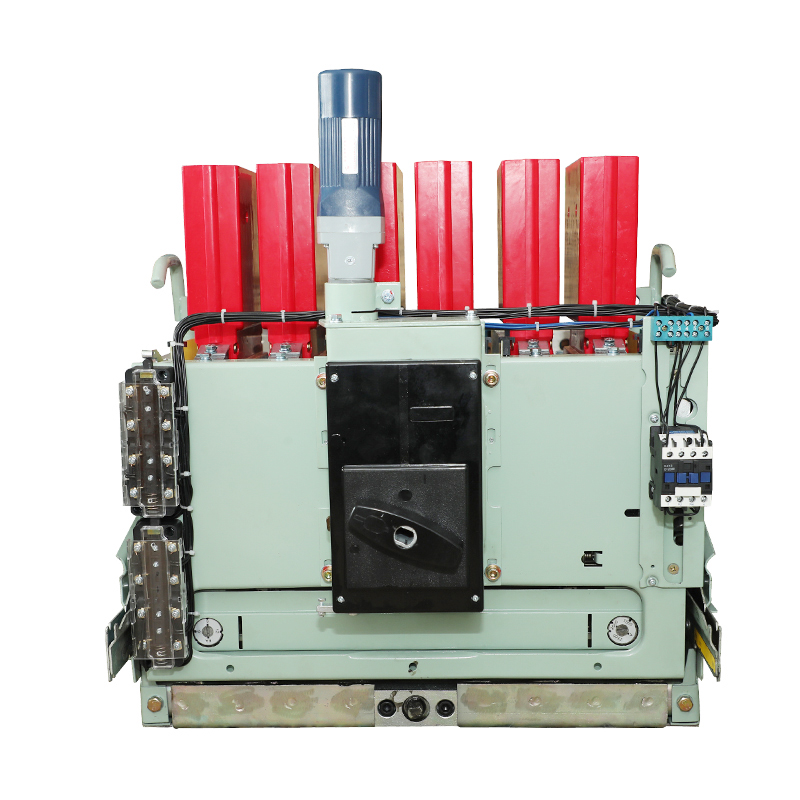
When a breaker trips, most people assume it handled the fault and life goes on. But the numbers stamped on the side tell a different story. Breaking capacity—often listed as 6kA or 10kA—refers to how much fault current the device can interrupt without turning into a fireball. If your panel can deliver more than that during a short circuit, the breaker might weld itself shut or fail to clear the fault. Yet many buyers treat this rating like a garnish instead of the main course.
Trip settings are equally invisible until your equipment starts dropping offline for no obvious reason. Magnetic and thermal curves, adjustable dials, long-time versus instantaneous pickups—these aren't just for industrial gearheads. A residential breaker with the wrong curve can nuisance-trip on motor inrush or sit through a tiny overload long enough to cook a wire. The default assumption that all breakers behave alike is usually the first thing an electrician has to unlearn.
What gets overlooked is how these two specs interact with the actual load profile. A 10kA breaker paired with a soft starter might never see full fault current, but a cheap 6kA unit downstream from an oversized transformer is a gamble nobody thinks about until the lights are out. Reading the breaker's datasheet before purchase—not just the marketing bullet points—saves more money than any flashy feature you'll never use.
How to Match an ACB to Your Actual Load Profile
Matching an air circuit breaker (ACB) to your actual load profile starts with rejecting the habit of sizing solely by the maximum current listed on equipment nameplates. Real loads rarely sit at one steady value; they fluctuate with production cycles, ambient conditions, and operator behavior. Begin by logging current over at least one full operational week using a portable power meter or existing plant monitoring. Look for the true peak demand, but also note how long that peak lasts. A motor starting inrush that lasts two seconds calls for a very different breaker response than a continuous overload that persists for ten minutes. The goal is to capture the shape of your load, not just its highest spike.
Once you have the measured profile, plot it against time and identify patterns. Many facilities discover that their "full load" current only appears for brief windows, while the normal running current is 20–30% lower. This gap is where poor breaker sizing hides. Choose an ACB whose thermal-magnetic or electronic trip settings can be adjusted to sit just above your actual sustained maximum, not the occasional transient. Pay close attention to the breaker's time-current curve: the thermal element should allow harmless short-term surges to pass, while the instantaneous or short-time element must clear genuine faults quickly. If your load includes harmonics from VFDs or rectifiers, derate the breaker accordingly or select a model rated for non-sinusoidal currents.
Finally, avoid the trap of oversizing "for safety." An oversized ACB may never trip on a moderate overload, allowing cables and busbars to heat dangerously before protection acts. At the same time, leave a modest margin for load growth and measurement uncertainty—typically 10–15% above your worst-case sustained reading. If you expect future equipment additions, specify a frame size that accepts higher trip settings without changing the physical breaker. Verify selective coordination with downstream breakers so that a fault in a single branch does not take down the main ACB. The best match is one where the breaker feels almost too small on paper, but its trip curve and measured load profile align closely in practice.
Brand History vs. Current Service Network
The brand's foundation was built on a single workshop and a handful of loyal clients. Decades later, that same name powers a service network spanning over forty countries, yet the core commitment to hands-on problem solving remains unchanged. What started as a regional repair hub gradually evolved through strategic partnerships and field offices, each addition driven by actual demand rather than expansion for its own sake. This organic growth explains why some legacy locations still operate with near-original protocols while newer branches integrate remote diagnostics and on-site rapid response teams.
Contrasting the early days with today's network reveals a deliberate tension between heritage and adaptability. Older service centers often retain direct lines to the founding engineering team, offering repair approaches that predate modular components. Current hubs, however, prioritize same-day dispatch and regional parts depots, cutting average resolution time by nearly half. The network did not replace the old guard; it layered modern logistics around those original values, creating a system where a client in a city without a physical branch can still access a technician trained under the same apprenticeship model used thirty years ago.
What distinguishes this network from competitors is not sheer size but the consistency of its escalation paths. A service request in a legacy market follows the same triage stages as one from a newly opened territory, with localized inventories and bilingual coordinators bridging the gap. That balance means the brand's history is not just a timeline on a wall—it is an active reference point for how current teams handle pressures, whether in a crowded urban center or a remote industrial zone.
Space, Cooling, and Retrofit Constraints You’ll Face
Rarely do you get a blank canvas. Most deployments happen in rooms already shaped by old decisions—door widths that were fine for filing cabinets but choke a loaded server rack, ceiling heights that force you to angle equipment just to get it through, and floor loading limits that turn a dense storage array into a structural question mark. Measure twice doesn't cover it. You'll be tracing the path from loading dock to final row, and you'll probably find that the shortest route runs straight through a column everyone forgot to mention.
Cooling is where good plans go to sweat. The spec sheet tells you how many kilowatts a rack will pull, but it won't tell you about the dead zone behind a pillar, the tenant next door who controls your chilled water loop, or the summer afternoon when the building's aging HVAC wheezes and your inlet temperatures creep past the recommended range. You can add more fans, but that just moves heat around. Eventually you'll learn that airflow isn't something you buy—it's something you have to negotiate with the room.
Retrofitting sounds cleaner than it is. You might think you'll reinforce the floor, run new power, and patch the roof, but every change triggers another constraint: the fire marshal wants a wider aisle, the landlord caps your electrical service, and the roof membrane can't handle the weight of a condenser without a structural review. By the time you've balanced what the building can give against what the equipment needs, the original floor plan has more redlines than a contract in dispute. The trick isn't solving each problem—it's spotting the ones that will ripple into next quarter's budget.
Calculating Ownership Cost Beyond the Price Tag
The sticker price is only the opening line of a much longer story. Many buyers get caught up in negotiating a few hundred dollars off the sale price, then quietly absorb thousands in depreciation, insurance premiums, and routine upkeep over the next several years. A smarter approach starts with mapping out the total cash flow: what you pay upfront, what disappears month by month, and what you can expect to recover when you eventually sell or trade in.
Fuel or electricity costs, tire replacements, brake work, and scheduled service intervals rarely make it into the excitement of a test drive, but they form the backbone of real ownership expense. Even two vehicles with identical window stickers can diverge sharply once you factor in parts pricing, labor rates, and how often each model tends to visit the shop. Pulling repair histories and owner-reported reliability data before signing anything gives you a clearer picture of the financial weight you are actually carrying.
Depreciation is often the largest single cost people forget to calculate. A car that holds its value well might cost more today but leave you far ahead in three years, while a heavily discounted model can quietly erase those savings through steep resale losses. Add in insurance quotes, registration fees, and local taxes, and the "cheaper" option sometimes turns out to be the more expensive one. The real price of ownership is never printed on the windshield — it is hidden in the months that follow.
FAQ
Ignore the marketing sheets for a moment and pin down your actual load profile. You need the full-load current, the maximum fault current at the installation point, and the voltage level. Without those numbers you're guessing. Once you have them, you can start filtering models by frame size and interrupting rating.
Think about how often you expect to service the breaker. If it sits in a main switchboard that can't be de-energized easily, a withdrawable unit makes sense because you can rack it out, inspect the contacts, and swap it without killing the whole board. Fixed versions are cheaper and simpler, so they work for smaller installations where downtime is not a big deal.
It's the maximum fault current the breaker can interrupt without destroying itself. You need this number to be higher than the calculated short-circuit current at the point where the breaker is installed. If the available fault current is 65kA and you install a breaker rated for 50kA, you're gambling. Also check the short-time withstand rating if you need selectivity with downstream breakers.
Not really. They test differently and the numbers don't always line up. In many regions you'll see IEC 60947-2, while North America uses UL 489 or ANSI C37. For international projects, confirm which standard the local authority accepts. Don't just pick an IEC breaker because the spec sheet looks similar; verify the actual performance under the standard that applies to your site.
A lot. The trip unit decides when and how the breaker reacts. Basic thermal-magnetic units only give you overload and short-circuit protection. Electronic trip units add adjustable long-time, short-time, instantaneous, and ground-fault settings. If you need coordination with other breakers or want data logging and communication, go electronic. But don't pay for features you won't use.
Absolutely. High ambient temperature, high humidity, dust, or altitude all affect performance. Most breakers are rated for 40°C and certain altitude limits. If you're installing in a hot electrical room or at 2000 meters above sea level, you'll need to derate the current or choose a larger frame. Also check the IP rating or enclosure requirements if the area is dirty.
This is often overlooked until something fails. Look at how long the manufacturer has been in the market, whether local distributors carry spare contacts and trip units, and how fast they can respond. A cheaper breaker with no local support can end up costing more in downtime. Ask about warranty terms and whether firmware updates are included for electronic trip units.
Specs matter first. If a lesser-known brand meets the same standards, has test reports, and local support, it can be a good value. But be careful with copycat products that look similar but use lower-grade materials. Check for third-party certification and ask for references from similar projects. The brand name often buys you predictable quality and easier sourcing later.
Conclusion
Choosing a good air circuit breaker starts with ignoring the spec-sheet reflex and asking what actually fails in your installation. A reliable unit earns its name through tested interrupting ratings under your fault current, not just a brand sticker: compare the Icu/Ics values and make sure the trip unit's long-time, short-time, and instantaneous settings can be tuned to your actual load profile rather than left at factory defaults. If your facility runs large motors, transformers, or capacitor banks, inrush and harmonic behavior will punish a breaker sized only by ampacity. Also check the breaker's physical envelope, ventilation needs, and whether it can be retrofitted into your existing switchgear without forced cooling or busbar rework; many 'good' breakers become bad buys when they require a new panel line.
The decision often flips when you weigh the service network against the brand's past reputation. A manufacturer with decades of history but no local stock of trip units or trained technicians within your region is riskier than a younger brand with same-day replacement support. Ownership cost means more than purchase price: include arc-flash maintenance, periodic injection testing, spare part lead times, and the cost of a single nuisance trip that shuts down production. Before you buy, request a coordination study and a written trip-curve proposal for your specific fault levels. The best ACB is rarely the most advertised one; it is the one that clears faults safely, matches your load behavior, fits your existing room, and can be serviced without waiting weeks for parts.
Contact Us
Contact Person: Tonglun Chen
Email: [email protected]
Tel/WhatsApp: 8618906642555
Website: https://www.cncsele.com