

Best Active Harmonic Filter Supplier Traits That Ensure Stable Power Quality and Reliable Performance
2026-11-28
Not every active harmonic filter supplier earns the same level of trust once a facility starts running sensitive loads. A filter can appear correct on a datasheet and still let harmonics slip through, leaving behind flicker, overheating, and nuisance trips. The real difference often comes down to the supplier’s design choices, testing habits, and support before and after installation. This post unpacks the supplier traits that keep power quality stable and performance reliable over time — and why GEYA is increasingly used as a benchmark in those conversations.
Engineering Judgment Under Complex Load Scenarios
Load combinations rarely arrive as tidy envelope cases. A bracket on a reactor support, for example, may see thermal expansion opposing dead load in the morning and acting with it after cool-down, so the governing condition can be a partial load factor rather than the full specified maximum. Sorting out which of those combinations actually drives bolt fatigue or fillet-weld root cracking usually requires walking through the sequence of operations, not just checking the largest reaction.
There are also places where the linear elastic model stops being useful. Once a local stress concentration exceeds yield, the surrounding material may shed load into stiffer regions, and the part can remain stable long after a first-run finite element result shows red spots. Engineering judgment here means deciding whether that peak is strain-controlled or load-controlled, and whether the detail has enough ductility to survive a limited number of cycles without initiating a crack.
When multiple actions overlap—wind, temperature, uneven settlement, residual stress from fabrication—the real question is often which assumption dominates the result. A small change in foundation stiffness can flip a member from tension to compression, so a defensible design usually includes simple lower- and upper-bound checks rather than a single refined model. That kind of explicit bounding, documented with the reasons for each choice, tends to be more useful than trying to make the analysis look exact.
Thermal Design That Keeps Performance Stable Over Years
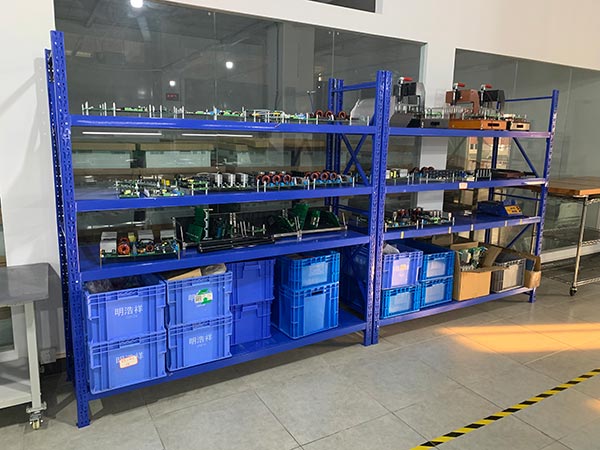
Short-term cooling numbers rarely tell you what a machine will feel like after eighteen months of mixed workloads. This thermal approach focuses on how heat moves through the chassis when filters are partially loaded, ambient temperatures climb, and fan speeds settle into their real-world range rather than a test-bench curve. The result is less fluctuation in clock behavior and fewer moments where the system suddenly gets louder to recover from a thermal soak.
One of the less glamorous parts of long-term stability is the interface between the cooler and the chip. Repeated heating cycles can push low-quality paste out of position or change the clamping force on the board over time. Here the mounting hardware uses a spring-loaded plate with controlled travel, and the thermal pad is selected to resist pump-out rather than just to hit a low initial temperature. The heat spreader surface is also machined with a slight crown so that pressure stays centered after hundreds of hot-cold cycles.
Dust loading and fan bearing wear usually degrade a cooling system quietly. The airflow path separates larger dust from fine particles before they reach the fin stack, and the fans are biased toward lower static pressure with less bearing stress. After several years, the system does not need a perfect environment to stay within its design envelope; it just needs the same clearance and intake path it was shipped with.
Harmonic Cancellation Accuracy Across a Wide Spectrum
Achieving tight harmonic cancellation across a wide spectrum rarely comes down to a single fixed notch. What cancels cleanly at one frequency often leaves measurable residue a few octaves higher, where parasitic capacitance, trace inductance, and subtle gain ripple begin to pull the correction signal out of phase. The result is a cancellation curve that drifts from deep nulls to shallow dips, sometimes with only a few kilohertz separating the two.
Most of the difficulty sits in the phase relationship between the original harmonic and the injected inverse. At narrowband, a static delay line can be tuned until the null disappears into the noise floor. Across a wider span, that same delay becomes a different fraction of a wavelength at every harmonic, so the correction starts to smear. Precision here depends on tracking group delay across the entire chain, not just matching amplitude at a handful of test points.
Practical designs tend to lean on continuous residual measurement and fast coefficient updates to hold cancellation depth as conditions shift. Rather than chasing absolute zero at every frequency, the goal becomes keeping the unwanted components below a defined threshold across the whole operating range. That distinction matters: wideband cancellation is less about perfect mathematical nulls and more about stable, repeatable suppression where the system actually operates.
Response Discipline During Voltage Sags and Load Shifts
Voltage sags rarely announce themselves, so the first discipline is knowing which relays should ride through and which should act. A five-cycle sag on one feeder often sorts itself out before an under voltage trip clears the bus, and that argues for staggered delay curves rather than uniform pickup settings. The less glamorous work is checking that the AVR, governor, and any load-shedding stage all agree on the same sequence: correct the excitation first, let rotating inertia absorb the dip, and only drop nonessential blocks if the sag deepens or outlasts the delay.
Load shifts are where sloppy transfer logic shows up fastest. Before closing a tie breaker or starting a transfer, the sync-check window, phase rotation, and residual voltage on the de-energized side need to be verified, not assumed from the last job. A disciplined operator waits for the incoming source to sit inside the acceptable slip and angle limits, then confirms that downstream load allocation will not push one machine into overload or reverse power. Where automatic transfer schemes exist, the manual bypass path should be tested under light load before it is ever needed during a real sag.
There is also a paperwork-and-people side to response discipline. If someone changes a delay, disables a protection function, or forces a breaker closed, that action should be logged with the reason and a review point. After an event, the fault record and sequence-of-events trace are often more useful than the original alarm list, because they show whether the system responded in the intended order or merely survived in spite of itself. Small setpoint adjustments made after such reviews tend to age better than broad changes made in the middle of a restless shift.
Honest Operating Limits Instead of Inflated Spec Sheets
Most spec sheets read like wishful thinking. A motor that claims ten horsepower until you read the footnote about temperature, altitude, and a tailwind is not really a ten-horsepower motor. We would rather publish the conditions where a tool starts to struggle than the one perfect number from a lab.
That approach means our runtime and load figures come from repeated use in dust, partial loads, and long shifts with tired operators. If a unit overheats after forty minutes in direct sun, that becomes the published limit. No derating curve hidden in a PDF, no ideal-case asterisk.
The result is a smaller number on paper and a far more dependable one in the field. You can plan around an honest limit. You cannot plan around a brochure.
Support Teams That Understand the Electrical Environment, Not Just the Product
A product manual tells you what a device is supposed to do. It rarely explains why the fault cleared when you moved a bonding strap, or why the same rack behaves differently on the second floor than it did in the lab. Support engineers who have spent time inside real electrical environments read those silent details. They ask about neutral-to-ground voltage, harmonic loads, and whether the site shares a transformer with a neighboring building. That line of questioning often solves the issue before a single replacement part is shipped.
The difference becomes obvious when the problem is not the hardware at all. A controller that resets only during a specific shift, a power supply that fails within weeks of installation, or a communication card that drops offline at odd intervals all share a common pattern: the product tested fine, but the environment did not. Teams that understand impedance, grounding schemes, and transient sources can walk a local electrician through the right measurements. They do not just confirm the warranty status. They find the variable frequency drive injecting noise onto the shared neutral, or the undersized conductor causing voltage sag under load.
That kind of support is not built from scripted responses. It comes from field time, from reviewing failed installations, and from talking to the people who actually touch the panels. When a support team knows the difference between a ground loop and a phase imbalance, the conversation changes. You stop explaining the product and start solving the system. And in complex electrical environments, that is the only kind of help that keeps equipment running long after the first commissioning report is filed.
FAQ
It usually comes down to applied knowledge rather than hardware alone. A dependable supplier asks about transformer sizing, load profiles, and existing resonance risks before quoting anything. They also review site measurements or arrange for them, and their filters handle variable loads without excessive derating.
A lot. Many sites have harmonic profiles that move throughout the day as drives ramp up and down. A supplier with fast response algorithms and solid partial-load testing can adapt to those swings instead of only performing well under one steady-state condition.
Buyers often fixate on THD figures and miss more practical points: response time, number of harmonic orders that can be cancelled, losses at rated current, overload capacity, and derating above 40 degrees Celsius. Operating modes and behavior under weak grid conditions also deserve attention.
Yes, more than the brand name. Active harmonic filters need commissioning, firmware updates, and occasional troubleshooting. A supplier with regional engineers and spare parts can fix a control card issue in days, while a distant vendor may leave a production line exposed for weeks.
Be cautious if a supplier guarantees a fixed THD level without studying the network, avoids talking about resonance, or cannot explain how the control algorithm responds when grid impedance changes. Overly simple payback claims and very small reference lists are also warning signs.
Ask for references from plants with similar load types and follow up on performance at least a year after startup. Request before-and-after harmonic measurements at multiple load points, and look for a commissioning report that shows the full spectrum rather than a single headline number.
Yes. Strong suppliers help with placement, cable routing, CT polarity checks, and coordination with existing capacitor banks. They also train facility engineers on reading the filter data. That involvement usually shows up as smoother startups and fewer nuisance trips.
Expect temperature rise tests, EMC compliance reports, and harmonic cancellation data at different load levels. Documentation should include single-line diagrams, communication protocol details, and clear derating curves. Reluctance to share those before delivery is normally a sign to look elsewhere.
Conclusion
Suppliers worth trusting rarely lead with catalog numbers. They ask how the active harmonic filter will behave when a line starts under partially unbalanced conditions or when a nearby drive switches at an awkward firing angle. That kind of engineering judgment under complex load scenarios shows up in component derating, enclosure layout, and the willingness to say a filter should not be placed in a particular spot. It pairs with thermal design that is not treated as an afterthought. Heat paths, capacitor aging, and airflow through dusty panels decide whether performance stays stable after five or ten years, not just during a factory test.
Accuracy across the spectrum matters more than a single lab number. A filter that cancels the fifth harmonic beautifully but drifts on the eleventh creates new headaches. The best suppliers prove cancellation stability under changing impedance and voltage distortion, and they stay composed during voltage sags or sudden load shifts instead of tripping or fighting the source. That discipline extends to honesty about operating limits. Inflated spec sheets waste time; realistic overload curves, temperature derating, and impedance boundaries build confidence. Behind all of this sits a support team that understands the electrical environment: fault levels, resonance risks, grounding, and load mix. When their answers reflect field experience rather than a product manual, stable power quality becomes a practical outcome, not a marketing phrase.
Contact Us
Contact Person: Leo
Email: [email protected]
Tel/WhatsApp: +86-13567770207
Website: https://www.geyapower.com/