

Calcium Chloride 77% Pellets Supplier Insights for Industrial and Commercial Buyers
2026-11-20
Sourcing calcium chloride 77% pellets isn't just about price per ton—it's about consistency, logistics, and knowing exactly what's in the bag before it reaches your production line or de-icing route. In this guide, we break down what industrial and commercial buyers should watch for, from purity and packaging to supply chain risks. Along the way, we look at how Shouguang Golden Chemical positions its material for buyers who need dependable specs without the usual guesswork.
Where 77% Purity Actually Matters in Real-World Deicing and Dust Control
On a gravel haul road in dry weather, the difference between 77% calcium chloride and a lower-grade product shows up within a few passes. The fines and insoluble material in cheaper flakes settle into the roadbed unevenly, so some sections draw moisture while others stay loose. With 77% purity, the moisture retention is steadier, which keeps dust from rising between watering runs instead of only right after application.
Cold-weather work exposes the same distinction. When a loader bucket hits a frozen stockpile at 5 a.m., a 77% blend is easier to break up and spread without clumping in the hopper. Lower purity material often carries extra salt cake or grit that plugs screens and leaves bare stripes on dock ramps, walkways, and ambulance bays. That matters most where a second pass is not an option until the sun comes up.
The practical advantage is not about chasing lab-grade numbers; it is about predictability. Crews can calibrate spreaders, estimate melt-back times, and reduce the amount of leftover crust on concrete. For dust control, fewer insolubles mean less sweeping and less fine powder tracked indoors. In both uses, 77% purity lands in a workable middle: strong enough to perform, clean enough to handle without constant equipment babysitting.
Why Pellet Size and Hardness Change How Much Product You Actually Use
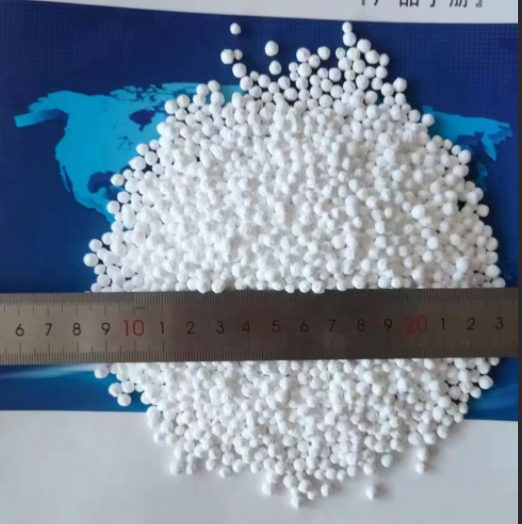
A pellet that arrives at the burner, feeder, or mixing tub already broken into dust behaves differently from one that stays whole. Larger pellets leave bigger gaps when they settle, while smaller pellets fill those gaps and trick the eye into thinking you are applying less. Hardness determines whether the pellet survives the auger, drop, or scoop without turning into unusable fines, so the same nominal weight can still give you a very different working volume.
When pellets are softer or poorly formed, a portion of every bag becomes dust before it ever reaches the job. That dust does not flow the same way, often clings to the container, or gets lost during transfer. As a result, you end up opening another bag sooner even though the scale said you had enough. Denser, harder pellets hold their shape longer, meaning more of what you purchased actually does the work you intended.
Size also changes how a measured scoop or hopper pocket fills. Smaller pellets nest together, so the same volume carries more mass and often forces a slight adjustment in dosing habits. Larger pellets create more void space, which can make a load look fuller while delivering less material by weight. Matching pellet size and hardness to your feeding or spreading equipment removes that hidden drift between batches.
What Bulk Buyers Learn After Their First Railcar of Calcium Chloride
The first noticeable lesson is that calcium chloride does not behave like a passive dry chemical once it's inside a railcar. Even small amounts of ambient moisture turn the material tacky, and if the car sits on a siding for a few hot, humid days, discharge can slow to a crawl. Buyers learn to schedule unloading within a narrow window and to inspect hatch gaskets and outlet gates before the shipment is accepted.
Inventory math changes quickly, too. A full railcar often looks cheaper on paper, but the real cost shows up in bridging, clumping, and the extra labor needed to break loose product around the outlets. Many buyers shift from spot purchases to a steadier cadence that keeps material moving, with covered storage and the right conveying equipment treated as part of the purchase rather than an afterthought.
Over time, buyers also learn to distrust the spec sheet just enough. Not every load of calcium chloride arrives equally dry or uniform, and small differences in flake size or moisture create downstream mixing problems that are easy to blame on the product but often trace back to transport and storage. Buyers who keep a dependable supplier still add their own receiving checks, because the lessons from that first railcar rarely stay theoretical.
How Purchasing Teams Handle Price Swings Without Getting Locked Into Bad Terms
Purchasing teams often avoid locking into a single fixed price by using index-linked formulas with adjustment bands. A packaging buyer, for example, might agree to pay a resin index plus a fixed conversion fee, with the rate reviewed monthly. If the index moves more than a set percentage, both sides return to the table for a narrow pricing discussion rather than reopening the full contract. That keeps the agreement usable instead of forcing either party to eat an unsustainable swing.
Another approach is to mix commitment levels. Teams may place a base volume under a longer-term indexed deal, hold a second tranche at a shorter fixed term, and leave a small portion open to spot buys. This layered structure gives suppliers enough certainty to hold capacity while the buyer retains room to adjust as prices climb or soften. It also avoids the common trap of signing broad, rigid terms during a spike and then being stuck when the market corrects.
The Storage Mistakes That Turn a Good Batch of Pellets Into a Solid Block
Most pellets don't fail because of the fuel itself. They fail because a bag gets left half-open in a damp corner, or stacked so high that the bottom layers start crushing into dust and fines. Once that fine material absorbs even a little humidity, it behaves like glue, binding the whole mass into a stubborn block that has to be chipped apart before it can be used.
The worst part is how quietly it happens. A good batch can sit fine for weeks, then a sudden temperature swing pulls condensation through the packaging. The pellets swell, lose their shape, and fuse together along the edges. By the time you notice, you're not dealing with loose fuel anymore but a solid chunk that clogs hoppers and burns unevenly.
Keeping them dry is not just about avoiding rain. It means keeping them off cold concrete floors, sealing bags fully after each use, and not buying more than you can store without stacking them too deep. If you have to stack, rotate older bags to the front and never let the pile lean against an outside wall where heat and moisture move through the material all day.
When to Lock In Supplier Contracts and When to Buy on the Spot
Locking in a supplier contract tends to pay off when the item sits at the center of your operation and there are only a few reliable sources. Long lead times, tight capacity, or a history of sudden price swings all tilt the math toward a fixed agreement. The point isn't to guess the market correctly; it's to buy yourself a stable runway so one delayed shipment or price shock doesn't force a production halt.
Spot buying earns its place when the material is easy to source and your team can act on short notice. If you aren't relying on a single supplier, the open market becomes a tool for catching lower prices instead of an emergency fallback. The tradeoff is that you accept more variability, so it helps to set a clear ceiling for what you're willing to pay before a purchase, not after the quote lands.
Most operations end up with a mix that shifts by season and supply conditions. Cover the part of your demand that absolutely cannot miss, and keep a smaller slice open for spot opportunities. That way a contract isn't a rigid commitment to yesterday's price, and spot buying isn't a gamble with your core inputs.
FAQ
The 77% usually refers to calcium chloride content, while the rest is water of crystallization, sodium chloride, magnesium chloride, and small insolubles. A shipment can still meet that number yet carry enough magnesium or sulfate to clog spray lines or add extra corrosion risk, so the certificate of analysis matters more than the headline purity.
Fines absorb moisture first and turn into a pasty layer that jams augers and spreaders. Even a load that looks dry can have enough dust to bridge in a silo or cause uneven spreading, so a sieve profile and maximum fines percentage often tell you more than another purity claim.
During a cold snap, trucks and railcars go to regular contract customers first. A low spot quote often comes with delayed loading or rerouted deliveries, and the savings can disappear through demurrage, missed service windows, or a forced switch to expensive packaged product at the last minute.
Check whether the loading area is covered, how old the stockpile looks, and whether there is much moisture or white crusting on the floor. Crusting and clumping near the edges usually mean the product has already pulled in humidity, which makes caking during storage almost certain.
It depends on where the brine goes. For straight pavement de-icing, standard insolubles may not matter much. For liquid blending, drip lines, or spray systems, those small particles settle out, wear pumps, and create extra filter changes, so paying a few percent more often reduces maintenance labor enough to be worthwhile.
Moisture allowance changes how the pellets behave in cold bins and whether they clump under their own weight. A higher allowance can mean the supplier is moving material that has aged or absorbed humidity in storage. Tighter moisture specs usually reflect better warehousing and fresher production, which matters for buyers holding inventory through the season.
When a site can turn inventory within a season and has equipment for a one-ton supersack or pneumatic offloading, bags tend to create more labor, waste, and uneven coverage. For smaller crews, supersacks can be the middle ground because they cut handling without requiring a full silo installation.
Conclusion
Industrial buyers quickly learn that the 77% purity specification only matters where moisture draw and melting performance really affect the job. On loading docks and gravel haul roads, lower purity often leaves more residue and forces reapplication, especially when temperatures sit near the bottom of the working range. Pellet size and hardness change spread patterns and consumption more than many first-time buyers expect; soft or irregular material can break during handling and clog equipment, while overly large pellets drift past the target area. After a first railcar, most teams stop judging the product on spec sheets alone and start checking what actually arrives in the hopper, how it flows, and how much sweep-up is left afterward.
Purchasing groups handle price swings by mixing contract volumes with spot buys instead of relying on a single approach. They typically lock in baseline supply when freight costs and seasonal demand are low, but keep a portion open for spot purchases to avoid being trapped if the market softens. Storage mistakes are where good product goes wrong: leaving bags or bulk piles exposed to humid air turns free-flowing pellets into a solid mass, so sealed handling and rotation practices become part of the real cost. Waiting until the first storm or the start of dust-control season usually means paying more, so experienced buyers watch rail rates, production schedules, and weather outlooks before committing to a delivery window.
Contact Us
Contact Person: Tom Cui
Email: [email protected]
Tel/WhatsApp: +8618663670626
Website: https://www.jinjigoldenchem.com