
Cast Parts from Original Manufacturers: Quality and Reliability You Can Trust
2026-09-30
Sourcing cast parts that won't fail in the field often feels like a gamble—until you find a supplier who treats OEM standards as the bare minimum. At Zhaoyuqi, original manufacturer quality isn't a marketing phrase; it's a process you can trace from pattern design to final inspection. This post breaks down what actually separates reliable iron castings from cheap lookalikes, and why partnering with a proven manufacturer saves more than just money.
Why Original Cast Parts Outlast the Aftermarket Alternatives
The longevity gap starts with metallurgy. Original cast parts are poured from alloys that have been matched to the specific thermal and mechanical loads of that component—sometimes through dozens of iterations. Aftermarket foundries rarely have access to these exact recipes, so they substitute similar-sounding alloys. The result may look identical on the outside, but the grain structure and impurity levels differ. Over thousands of heat cycles, those differences accumulate as micro-cracking and warpage that the factory part simply does not experience in the same time frame.
Casting process control is another differentiator. Original equipment manufacturers monitor mold temperature, pour rate, and cooling curves within narrow bands. This prevents the formation of internal shrinkage porosity, which acts as a starting point for fatigue failure. Many aftermarket castings are produced on older tooling with less stringent process checks. A few extra seconds of cooling or a slightly worn core can leave voids just below the surface. Those voids are invisible during installation but become critical once the part is subjected to real-world vibration and load.
Finally, factory cast parts are validated as part of the entire vehicle system. They undergo thermal shock testing, salt spray exposure, and full-durability cycling on actual suspension or engine rigs. Aftermarket parts are often reverse-engineered from a sample, not from the original design data. That means tolerances, clearances, and material thicknesses may be slightly off—just enough to change how the part expands, flexes, and seats against mating components. Premature failure is rarely dramatic; it shows up as a slow loss of clamping force, increased wear on adjacent parts, or leaks that reappear after the first hard season of use.
Inside the Foundry: Where Dimensional Accuracy Is Decided
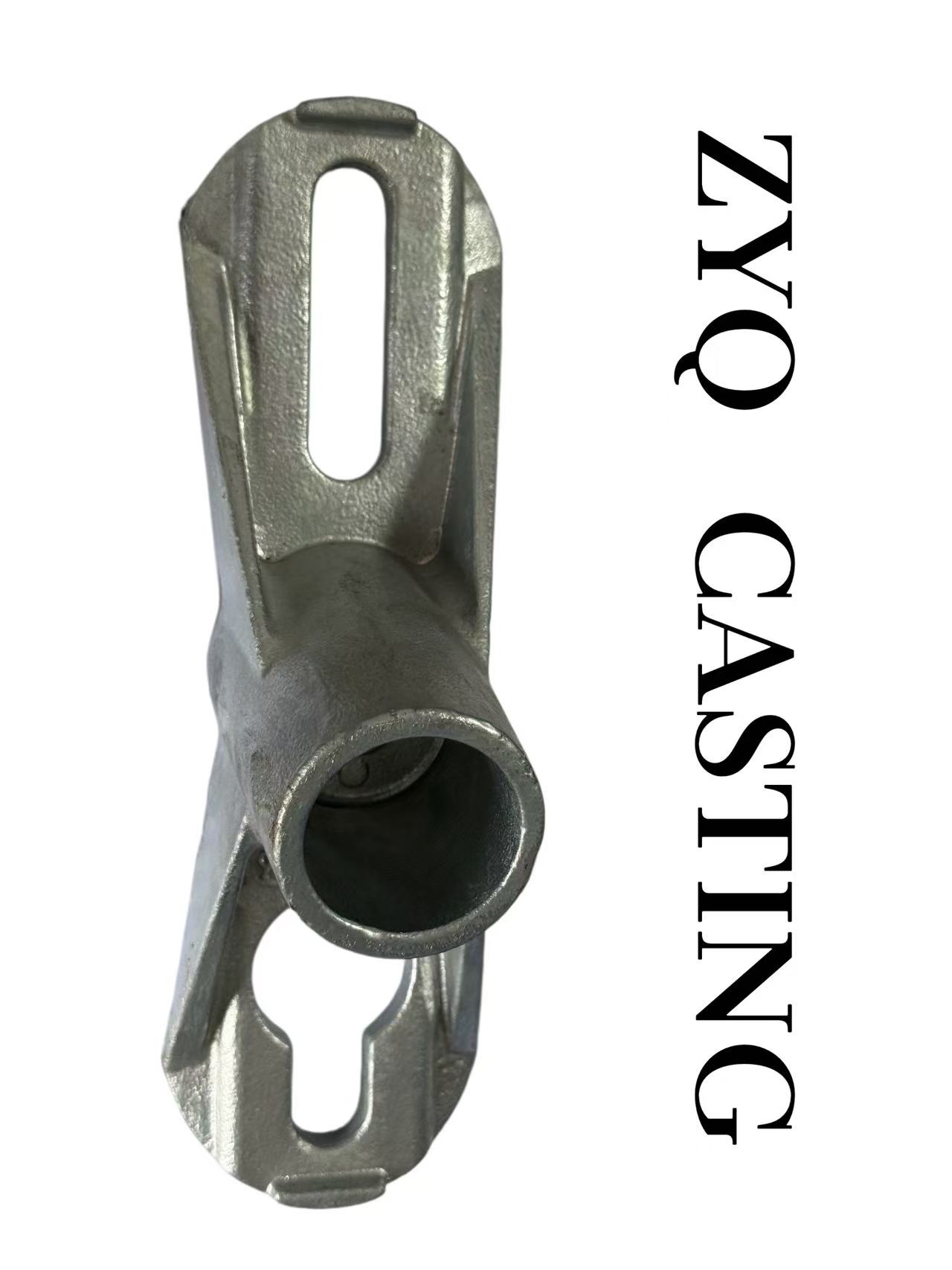
Walk onto the foundry floor and you'll quickly realize that dimensional accuracy isn't some abstract ideal—it's a physical negotiation between molten metal, sand, and human judgment. Every pattern, every drag and cope, every cooling curve carries the potential to shift a casting by a few thousandths of an inch. The real decision happens long before the pour: in how the mold is rammed, how the cores are seated, and how the gating system directs turbulent metal into quiet, even fill.
What separates a foundry that holds true dimensions from one that fights constant rework is less about high-tech scanners and more about disciplined process control. The best teams read the sand like a map—moisture content, compaction, binder burn-out—and adjust in real time. Shrinkage allowances are not copied from a chart but tuned to each alloy and section thickness. It's a craft built on small, deliberate choices: where to place a riser, how to orient a parting line, when to let a mold rest before closing.
Ultimately, dimensional accuracy gets decided at every handoff, from patternmaker to molder to shakeout. A foundry that treats each step as a variable to stabilize, not a step to rush, produces castings that fit the blueprint without grinding, shimming, or apology. That's the quiet advantage you can feel when a part drops into its fixture on the first try—no adjustment, no debate, just the clean confirmation that the foundry knew exactly what it was doing.
The Material Traceability Promise Most Suppliers Can’t Keep
Ask a supplier for full material traceability and you'll likely get a confident yes, followed by a spreadsheet that dead-ends at a trading desk in Shenzhen or a warehouse in Rotterdam. The actual origin—the mine, the smelter, the recycler—stays blank or gets filled with a generic code nobody can verify.
The problem isn't lack of data; it's lack of custodial proof. A certificate of analysis can be copied, a batch number can be reused, and a supplier's assurance means little when the underlying material changed hands four times. Most firms simply don't control enough of the chain to keep the promise under audit conditions, so the traceability they sell is really just a paper trail with convenient gaps.
How to Spot a Casting That Will Fail Under Pressure
Most pressure failures start at a visible defect that got ignored. Run your fingers over the surface and look for rough patches, small cavities, or a seam that doesn’t quite close. These are often gas porosity or cold shuts. Under load, those tiny discontinuities act like a notch — stress piles up at the edge and the crack begins long before the part ever reaches its rated limit.
If the outside looks clean, go deeper. A quick X-ray or ultrasonic scan will reveal shrinkage cavities, slag inclusions, or centerline porosity hiding just below the skin. Pay extra attention to areas where the wall thickness changes suddenly, because that's where cooling rates diverge and internal tears form. A casting with a sound surface but a spongy core is a pressure vessel waiting to split.
Don't ignore the material itself. A wrong alloy batch or a sloppy heat treatment leaves clues like uneven hardness, discolored patches, or coarse grains at the fracture face. Tap the casting with a small hammer — a dull thud instead of a clear ring can mean internal cracking. If the hardness readings jump around or the microstructure looks mixed, walk away. It will fail when it matters.
What Quality Control Looks Like When Nobody Is Watching
True quality control doesn’t announce itself. It lives in the small, unglamorous moments: the extra pass of a lint roller over a freshly cleaned jacket, the second glance at a tightened bolt before the shift ends, the quiet decision to re-run a test because the result felt “off” even though it fell within spec. When nobody is watching, there’s no reward for thoroughness, no audience for diligence—just a private standard that either holds or quietly slips.
In practice, this looks like a machinist wiping down a tool not because a supervisor will check, but because the next setup deserves a clean start. It’s a line cook who labels and dates every container in the walk-in, not out of fear of inspection, but out of a habit formed over years of caring about the invisible flow of the kitchen. The difference between teams that merely pass audits and teams that rarely need them often comes down to how people behave when the door closes and the camera angle shifts.
The most revealing test of quality control is the abandoned one—the check that nobody asked for, the calibration that could have waited until Monday, the documentation filled out at 4:50 p.m. on a Friday. When those actions happen consistently, they stop being chores and become reflexes. That’s when quality stops being a procedure and becomes a culture, one that doesn’t need surveillance because it has already been internalized.
The True Cost of a “Just as Good” Cast Part
When a supplier tells you their cast part is "just as good" as the original, the price tag rarely tells the whole story. Those savings on the invoice can evaporate the moment the component lands on the production floor. A slightly off tolerance here, a cheaper alloy there—and suddenly your maintenance team is chasing failures that never happened with the OEM part.
Consider the downtime that comes from premature wear or unexpected cracking. Every hour a machine sits idle while someone replaces a "just as good" casting is an hour of lost output, labor, and customer trust. Then add the rework: machining that doesn't quite line up, sealing surfaces that weep, threads that strip under normal torque. The cost of fixing these problems often exceeds what you saved upfront, not to mention the overtime and expedited shipping to get a proper replacement.
And when that part fails in a critical application, the real expense isn't financial at all. It's the safety risk to your crew, the liability exposure to your business, and the slow erosion of a reputation you spent years building. The true cost of a "just as good" cast part is the one you don't see until it's already been paid—in downtime, in rework, and in the confidence you lose every time a shortcut part lets you down.
FAQ
These are components produced using the same tooling, alloys, and process controls as the parts originally installed in the equipment. They're not reverse-engineered copies; they come from the source that designed the casting.
The main advantage is dimensional accuracy and metallurgical consistency. Cheaper options often have subtle porosity, incorrect heat treatment, or slightly off tolerances that can lead to premature wear or sudden failure. Original parts are made to the exact engineering drawings with batch traceability.
They typically use spectrographic analysis on every heat, X-ray or ultrasonic inspection for critical castings, and coordinate measuring machines to verify dimensions. Material certifications are kept on file. This is not a one-time check; it's a continuous process.
Upfront cost is often higher, but the total cost of ownership can be lower. You avoid downtime from early failures, reduce the risk of mismatched wear patterns, and often get longer service intervals. In heavy machinery, one avoided breakdown can justify the price difference many times over.
Many have a foundry mark, part number, or heat code cast into the surface. Some also come with documentation such as a certificate of conformance. However, visual checks alone aren't foolproof; buying through authorized channels is the safest way.
Mining, construction, agriculture, marine propulsion, and industrial pumps all depend on original castings for high-stress components. Anything that involves abrasive wear, impact loads, or high temperatures is a candidate.
Warranty terms vary by manufacturer, but most offer coverage against defects in material and workmanship. The key point is that they stand behind the part because they control the entire manufacturing chain, from raw material to final machining.
It helps maintain the designed load paths and wear characteristics. When every component fits as intended, stress is distributed correctly, and the system runs smoother. This often extends the overall life of the machine beyond just the replaced part.
Conclusion
A cast part from the original manufacturer rarely wins on price at first glance, but it earns its keep over years of service. The difference begins in the foundry, where dimensional accuracy is locked in before the metal cools. Original suppliers hold tighter tolerances and keep full material traceability—batch numbers, heat treat records, and alloy certificates—so a failed component can be traced back to a single pour. Most aftermarket shops either cannot or will not provide that paper trail. When you see micro-porosity near stress points, uneven wall thickness, or a rough surface that hides inclusions, you are looking at a casting that will crack under cyclic load or burst under high pressure. Original parts are not just copies; they are re-engineered to match the exact service conditions the equipment was designed for.
Quality control is where the real divide widens. A reputable foundry checks hardness, ultrasonic integrity, and x-ray soundness even when no customer inspector is on site. That discipline does not happen by accident—it is built into the process because the manufacturer's name is stamped on every part. The true cost of a 'just as good' cast part shows up later: unplanned downtime, ruined mating components, safety incidents, and the labor spent on repeat replacements. Paying less up front often means buying the same failure twice. Original cast parts hold their shape, resist wear, and carry the assurance that someone stood behind the pour long after the delivery truck left.
Contact Us
Contact Person: Nico Yin
Email: [email protected]
Tel/WhatsApp: 8618561567088
Website: https://www.ductileironparts.com/