

China Dry-type Transformer: Key Benefits and Industry Applications
2026-08-15
China has become a global hub for dry-type transformer production, driven by rapid urbanization and the push for safer, more efficient power distribution. Unlike oil-filled units, dry-type transformers eliminate fire and leakage risks, making them ideal for hospitals, data centers, and commercial buildings. As industries increasingly prioritize sustainability and reliability, Chang Song stands out as a manufacturer that combines advanced engineering with rigorous testing. In this post, we'll explore the key benefits of dry-type transformers and the diverse industry applications that make them a smart choice for modern infrastructure.
When Fire Codes Rule, Dry-Type Becomes the Default in China
In China, fire safety rules rarely leave room for debate. Once a building falls into a regulated category—whether a high-rise tower, an underground substation, or a crowded public venue—liquid-filled transformers are typically pushed off the table. The national codes treat oil as an unacceptable fuel load, and local enforcement tends to be even stricter. As a result, dry-type units aren’t chosen after comparing options; they become the starting point.
This shift isn’t driven by performance metrics alone. It comes from hard compliance boundaries: minimum separation distances, containment pits, and automatic suppression systems that oil-filled designs demand indoors. Dry-type transformers bypass most of those requirements, which shortens approval cycles and simplifies the entire electrical room layout. For engineers and owners, that often tips the decision before cost or efficiency even enters the conversation.
Why Maintenance Teams at Wind Farms Prefer Sealed Windings
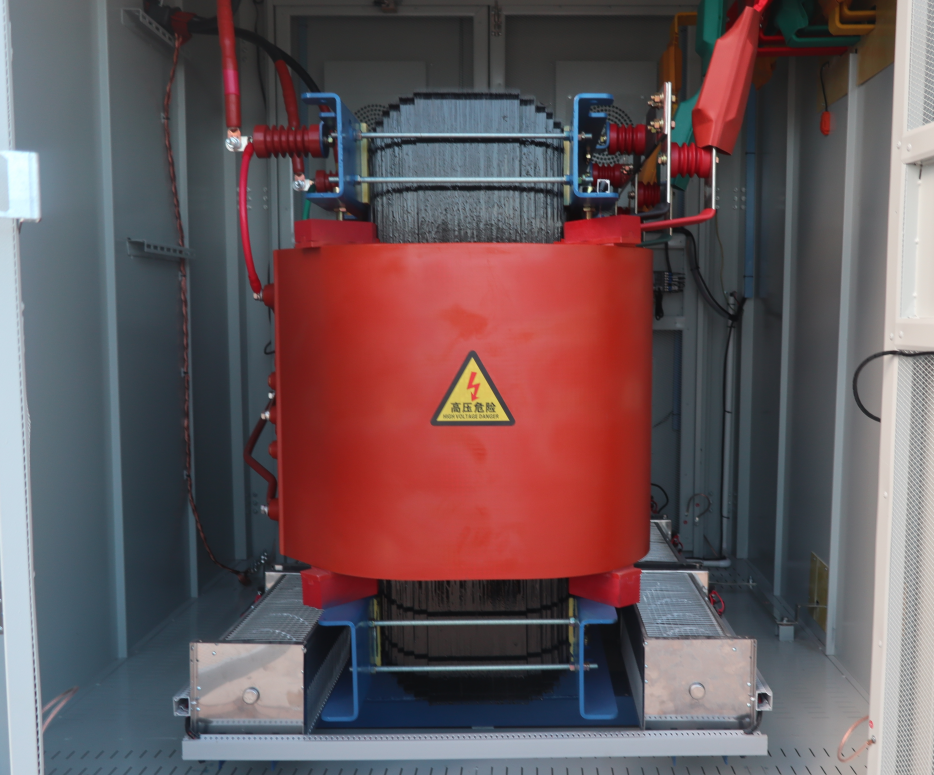
Wind farm maintenance crews have learned through hard experience that moisture and airborne contaminants are the silent killers of generator health. Traditional open windings demand regular cleaning and insulation testing, and even then, a single foggy season can lead to tracking or partial discharge failures. Sealed windings eliminate that exposure entirely — there are no exposed coil turns for salt spray, dust, or condensation to settle on. That alone shifts the maintenance conversation from reactive troubleshooting to a much lighter preventive schedule.
The real preference, though, shows up in the work orders that never get written. A sealed winding typically uses encapsulated coils and a fully closed housing, which means no more megger tests after every storm, no more vacuuming iron dust out of stator cores, and no more mid-season bearing replacements caused by corrosion migrating from exposed copper. Technicians at remote sites especially value the reduction in unplanned trips; when a turbine is three hours from the nearest service hub, every avoided call-out matters.
There is also a longer-term economic angle that maintenance managers talk about less often but weigh heavily. Sealed windings tend to retain their insulation resistance over five to eight years, whereas open designs can degrade measurably after just two or three years in coastal or high-humidity environments. The result is not only fewer component replacements but also better planning predictability — crews can schedule overhauls based on wear data instead of chasing intermittent insulation faults. For teams managing dozens of turbines, that consistency is the strongest argument of all.
The Data Center Case for Cast-Resin Transformers in Shanghai
Shanghai's dense urban grid and strict fire codes push data center operators toward equipment that can handle tight footprints without compromising safety. Cast-resin transformers have become a practical choice here, largely because they skip the oil-filled design that triggers extra containment and suppression requirements. In high-rise facilities or those tucked into mixed-use buildings, the dry-type construction removes a layer of regulatory friction and lets engineering teams focus on power density instead of hazmat logistics.
A closer look at recent deployments shows the appeal goes beyond compliance. The city's humid summers and salt-laden air near the coast demand components that resist moisture ingress and surface tracking. Cast-resin units, with their encapsulated windings, hold up better under partial discharge stress than older varnished designs. Operators also report fewer false alarms from temperature sensors, since the winding insulation handles thermal cycling without the micro-cracks that plague cheaper alternatives.
What often gets overlooked is the maintenance math. In Shanghai, where skilled electrical technicians command premium wages and scheduled downtime is tightly negotiated with tenants, cast-resin transformers reduce the routine upkeep to visual checks and occasional air-filter cleaning. No oil sampling, no dissolved gas analysis, no secondary containment testing. That frees up facility teams to focus on cooling optimization and UPS battery health, areas that actually move the needle on uptime in a competitive colocation market.
Oil-Free Design Keeps Water Protection Zones Spill-Proof
Keeping oil out of the system entirely is the cleanest way to protect sensitive water zones. Without lubricants, compressors and pumps run on advanced dry-running materials that never leak a drop. This eliminates the risk of hydrocarbon contamination before it can even start.
The absence of oil also means no routine condensate disposal, no oily wastewater, and no chance of a cracked line seeping into groundwater. It is a design choice that turns spill prevention from a maintenance task into a built-in guarantee.
For facilities near reservoirs, wellheads, or ecological buffers, this approach removes a whole category of compliance headaches. Operators can focus on output without double-checking every fitting for the faint sheen that signals trouble.
Subway Tunnels and Factory Floors Demand Silent Voltage Stepping
Underground transit systems pack a lot of electrical gear into tight, reverberant spaces. The high-frequency whine from a standard switch-mode supply bounces off concrete walls and steel rails, making maintenance crews reach for ear protection even before the train arrives. Signal and communication lines running parallel to power cables pick up that same noise, which can garble the very systems meant to keep passengers safe. Quiet voltage conversion here isn't a luxury; it's how you avoid turning a tunnel into an echo chamber of interference.
On a busy factory floor, the problem shifts from echoes to unpredictability. Conveyor motors, robotic arms, and welding stations all tug at the mains, causing sags and spikes. A power converter that reacts with audible clicks or hisses adds another layer of chaos for workers already coping with mechanical din. Worse, sensitive sensors and PLCs can misread a noisy rail as a command glitch. Designers tackle this with spread-spectrum switching, soft-start ramps, and shielded magnetics—techniques that keep voltage steps smooth without broadcasting their presence.
Both settings share a demand that goes beyond raw efficiency: the conversion must behave like good background music—present, steady, and entirely unnoticed. That means choosing topologies and components rated for low acoustic output and minimal radiated emissions, then validating them under load with actual vibration and airflow, not just on a bench. When a supply runs silently in a tunnel or a plant, it's usually because someone sweated the details that never show up on a datasheet.
Amorphous Cores Help Chinese Manufacturers Cut No-Load Losses
Traditional silicon steel cores have long been the default choice for distribution transformers, but their inherent hysteresis and eddy current losses keep no-load consumption stubbornly high. Amorphous metal cores, by contrast, strip away much of that waste. The ribbon-thin alloy—typically an iron-boron-silicon mix—freezes into a disordered atomic structure during ultra-rapid cooling, which slashes coercivity and boosts resistivity. For Chinese manufacturers pushing to meet tighter grid efficiency standards, this isn't just a lab curiosity; it's a direct path to trimming kilowatt-hours that vanish even when a transformer sits idle.
The economics are hard to ignore. While amorphous cores cost more upfront than grain-oriented silicon steel, the energy saved over a transformer's 20-year life often outweighs the price difference within three to five years. A typical 500 kVA unit with an amorphous core might cut no-load losses by 60–70%, translating to thousands of yuan saved annually per transformer in a country where millions of distribution units are in service. Smaller workshops and large state-owned manufacturers alike are reworking their production lines, adding specialized cutting and winding equipment to handle the brittle ribbons without cracking them. The learning curve is real, but so is the payoff: lower reactive power demands, reduced heat stress, and a cleaner fit with China's push toward carbon neutrality.
Field data from rural and industrial installations tells the same story. Utilities in provinces like Jiangsu and Shandong have begun swapping out older transformers for amorphous-core models during routine upgrades, noting measurable drops in aggregate no-load demand—especially on lightly loaded feeders where idle losses dominate. The technology won't replace silicon steel overnight, but for manufacturers eyeing export markets and domestic efficiency mandates, it's quickly shifting from an option to a baseline requirement.
FAQ
They remove the need for oil containment, fire suppression systems, and leak monitoring. Epoxy resin encapsulation restricts moisture ingress and supports safe operation near occupied spaces, while reduced weight simplifies floor loading in commercial and hospital projects.
For offshore wind, compact cast-resin units fit inside nacelles and withstand salt spray, vibration, and wide temperature swings. In solar farms, they step up inverter output with high partial discharge resistance and low no-load losses, helping maintain efficiency during light-load periods.
Because they contain no flammable liquid, fire spread risk drops sharply. Many models use self-extinguishing resin systems that emit very little toxic smoke, allowing installation in electrical rooms without special fire-rated barriers.
Data centers need high reliability with minimal maintenance windows. Dry-type units avoid oil testing and cleanup, tolerate high harmonic loads from UPS systems, and can be fitted with temperature sensors for remote monitoring, which aligns with 24/7 operational demands.
Mining, chemical processing, marine, and rail traction frequently specify dry-type transformers. They handle dusty or corrosive atmospheres better when equipped with protective enclosures, and their solid insulation withstands mechanical stresses from heavy equipment starts and stops.
They use high-thermal-conductivity epoxy compounds, optimize air duct geometry between windings, and offer natural or forced air cooling variants. Embedded thermal sensors and winding temperature indicators allow real-time load adjustments to prevent hot spots.
Routine checks focus on visual inspection, tightening connections, cleaning ventilation paths, and verifying cooling fans and temperature alarms. There is no need for oil sampling, dissolved gas analysis, or leak repairs, which lowers annual service costs and unplanned downtime.
Conclusion
In China's rapidly expanding electrical infrastructure, dry-type transformers have become the practical choice wherever fire codes tighten their grip and liquid-filled units face restrictions. The cast-resin design, free of mineral oil, eliminates the risk of spills and combustion, which is why water protection zones and densely built urban substations now routinely specify these units without hesitation. Maintenance crews at wind farms also favor the sealed winding construction because it shrugs off dust, salt spray, and humidity that punish exposed coil designs in coastal and desert sites. In Shanghai, data center operators lean on cast-resin transformers not just for code compliance but for their ability to sit close to server halls without requiring expensive fire vaults or oil containment basins.
The same traits show up underground and on factory floors. Subway tunnels demand low-noise voltage stepping because ventilation systems carry hum into passenger areas, and dry-type units with damped cores and rigid frames deliver that without extra sound enclosures. On production lines, the absence of cooling pumps and oil leaks means fewer shutdown calls and cleaner working zones. Chinese manufacturers have also pushed efficiency forward by pairing dry-type construction with amorphous metal cores, cutting no-load losses enough to matter across thousands of hours of idle or light-load operation. Combined with the straightforward disposal and recycling of cast-resin coils at end of life, these advantages explain why dry-type equipment keeps taking market share from oil-filled alternatives in projects where safety, noise, and long-term running costs outweigh the initial price difference.
Contact Us
Contact Person: Tonglun Chen
Email: [email protected]
Tel/WhatsApp: 8618906642555
Website: https://www.cncsele.com