

China Tamping Rammer Manufacturer Insights for Smart Equipment Buyers
2026-10-17
Choosing the right tamping rammer supplier in China can feel like navigating a maze of specs and promises. But for smart equipment buyers, the real differentiator isn't just horsepower or price—it's insight. That's where Dynamic comes in. As a manufacturer that thinks beyond the machine, Dynamic turns field data, compaction science, and buyer pain points into clear guidance. In this post, we skip the sales pitch and share what actually matters: how to evaluate build quality, avoid common sourcing traps, and match a rammer to your soil conditions. If you're tired of guesswork, you're in the right place.
Inside a Real China Tamping Rammer Manufacturer: What to Look For
A genuine factory floor rarely looks like a catalog photo. Pay attention to the casting area first: raw housings should be stacked by heat number, not scattered by color. Look for a machining line that handles both the foot plate and the gearbox casing in-house. If those parts arrive pre-machined from an outside shop, the "manufacturer" is likely just assembling kits. Ask to see the torque station where the piston rod gets locked into the shoe, and count how many test bays are running at once. A real line runs multiple rammer models through the same vibration test, not one polished demo unit.
The next thing to check is component traceability. Walk over to the engine rack and read the labels: are they unbranded clones, or do the serial numbers match the crate outside? A factory that prints its own date codes on the bottom side of the foot plate, instead of using paper stickers, usually has tighter process control. Also watch the workers during assembly. If they use preset torque wrenches instead of impact guns for the guide cylinder bolts, that tells you they care about clamp load creep in hard-packed soil. Noise-testing each unit inside a small booth, even for thirty seconds, is another sign the line is run by people who understand why a rammer fails in the field.
Finally, ask to see the spare parts shelf for units shipped three years ago, not just current production. A real manufacturer keeps service kits for older models and can pull a parts diagram for a ST-80 clone within minutes. If they hesitate to let you check the returned warranty units or the rework corner, treat that as a quiet admission. The best China rammer factories will show you the bad castings they rejected last week, because that pile proves they are not just moving boxes to the port.
Why Rammer Weight, Shoe Size, and Stroke Matter More Than Horsepower
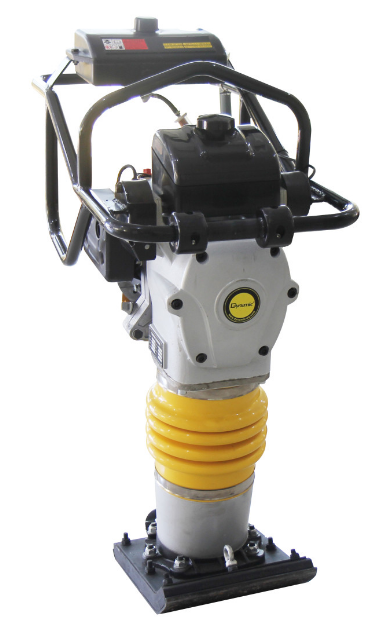
On a rammer, horsepower gets all the glory, but it's the least useful number when you're actually trying to compact soil. Weight, shoe size, and stroke dictate how much energy reaches the ground, how evenly it's distributed, and how deep the compaction goes. A high-horsepower engine spinning a poorly matched shoe just wastes fuel and leaves soft spots.
Shoe size controls the pressure per blow. A narrower shoe concentrates force into a smaller area, driving compaction deeper in cohesive soils, while a wider shoe spreads the impact for granular lifts. Stroke length determines the amplitude of each hit—longer strokes deliver more vertical travel and punch, but they also require more counterweight to keep the machine controllable.
Weight is what keeps the shoe in contact with the ground long enough to transfer energy. Too light, and the rammer bounces instead of compacting. Too heavy, and you lose maneuverability on slopes or in trenches. Horsepower only matters insofar as it sustains the cycle rate under load; once you have enough, adding more does nothing for density. That's why experienced crews look past the spec sheet and ask about shoe width, stroke, and operating weight first.
Engine Checks That Catch Counterfeit Honda or Loncin Units Early
Start with the casting numbers and machining marks. On a genuine Honda or Loncin block, the engine code is stamped or cast with a clean, even depth, usually on a flat pad near the cylinder base. Counterfeit units often show shallow or uneven stamping, blurred edges around the logo, or a pad that has been ground down and restamped. Run a fingernail across the number—if it catches on rough tool marks or the surrounding surface looks freshly abraded, that’s a red flag. Also compare the font against known photos; fakes frequently use a slightly wider or taller character set.
Next, check the fasteners and hose fittings. Honda and Loncin use specific JIS or metric bolts with consistent zinc plating and a dull, slightly textured finish. Clones tend to have mismatched hardware, shiny chrome bolts, or washers that don’t seat flat. Pull one bolt from the valve cover or oil filter housing if possible—the thread pitch should feel firm, not loose or cross-threaded. Rubber hoses and grommets are another giveaway: genuine parts carry small manufacturer logos or part numbers, while counterfeit rubber is often softer, shinier, and starts cracking at the bends after a few heat cycles.
Finally, do a cold-start and pay attention to sound and seepage. A real Honda or Loncin engine typically has a crisp starter engagement and settles into a steady idle without excessive rocking. Counterfeit units often vibrate harder at the mounting bolts, and the intake port casting may look rough or porous when you shine a light inside. After running for a few minutes, check the base gasket and oil drain plug area—early seepage or a wet film around the seam is common on fakes because the gasket surfaces are not machined flat.
Lead Time Reality: How Chinese Factories Slip and How to Prevent It
Manufacturers in China often quote lead times based on ideal conditions rather than the messy reality of material arrivals, line changeovers, and workforce fluctuations around major holidays. A factory might promise 30 days, but the first two weeks disappear waiting for a specific fabric or component that was supposed to be in stock. Then the order gets queued behind a larger client, and a last-minute quality issue forces rework. None of these steps appears on the initial timeline, which is why the original date slips again and again.
The most reliable way to prevent this is to stop treating lead time as a single number and start treating it as a series of checkpoints that you can actually verify. Ask for a production schedule broken into stages such as material preparation, first-piece approval, bulk production, and final inspection. Request photos or short videos at each stage, not just a verbal update. Build a buffer by giving the factory an internal deadline that is seven to ten days earlier than your real one, and split large orders into partial shipments so a delay in one batch does not hold up the entire project.
A better approach is to manage lead time at the supplier level before the order is even placed. Maintain two or three qualified factories for the same product category, and compare their past on-time delivery rates rather than their promises. Tie progress payments to verified milestones, and make it clear that late shipment triggers a discount or a penalty on future orders. If the product runs repeatedly, keep a safety stock of critical components or finished goods domestically. In practice, the buyers who avoid lead time disasters are the ones who assume the first date is optimistic and build their own reality around that assumption.
Fast-Wearing Parts: Handles, Bellows, and Springs You’ll Replace Often
Handles on frequently used equipment bear the brunt of daily grip and torque. Over time, even sturdy metal or reinforced plastic handles develop micro-fractures around stress points, eventually cracking or snapping without warning. The wear is rarely dramatic—it starts as a slightly looser feel, then progresses to visible hairline splits near mounting bolts. For anyone who relies on a tool or machine daily, keeping a spare handle on hand is less about expecting failure and more about avoiding the inevitable downtime when it does.
Bellows are the silent workhorses that flex millions of times before showing fatigue. They protect moving shafts and joints from dust, moisture, and debris, but each cycle stretches the rubber or fabric just a little further. The first signs are usually tiny pinholes or a loss of elasticity that lets contaminants sneak past. By the time a bellow looks visibly cracked or collapsed, the internal components it was guarding may already be compromised. Replacement is cheap compared to repairing a scored piston or corroded bearing.
Springs live and die by their cycle life—the number of compressions or extensions they can endure before losing tension. A worn spring rarely breaks outright; instead, it gets shorter, weaker, or develops a permanent set. You notice it when a door no longer closes firmly, a trigger feels mushy, or a return mechanism hangs up halfway. Swapping out tired springs restores the crisp, decisive action that new equipment had, and it's often the single fastest fix for a machine that just doesn't feel right anymore.
Price vs. Plate Thickness: Where Low Quotes Actually Cut Corners
The relationship between quoted price and actual plate thickness is rarely linear, but in metal fabrication it's often the first place budgets get quietly trimmed. A supplier who comes in significantly under the competition is usually not magically more efficient; they're calculating with thinner stock. That missing half millimeter might not sound like much until you realize it can reduce load-bearing capacity by a noticeable margin and make the entire structure more prone to flexing.
Some shops play tolerance games too. They quote a thickness that meets the nominal spec, but then deliver material at the lower end of the allowable range -- or slightly under it, counting on the fact that most buyers won't break out calipers. Over a large order, that adds up to serious material savings for them, while you end up with plates that warp during welding, dent too easily, or fail inspection later.
Another corner cut is skipping the flatness and surface prep that thicker, properly processed plates normally get. Cheap quotes often come with mill-scale still on, edges not trimmed square, and no stress relieving. That means more prep time on your end, more consumables, and a higher chance of distortion when you cut or weld. In the end, the "savings" evaporate once you factor in rework and rejected parts.
FAQ
Pay attention to the casting quality of the footplate, the thickness of the shock-mount springs, and whether the manufacturer can provide a full teardown video. A dependable supplier will also share real test data for vibration frequency and impact force under load, not just catalog numbers.
Most builders offer several engine choices, often Honda, Loncin, or Lifan, and some have long-term partnerships with engine plants. Ask whether the engine is EPA or EU emissions certified for your region, and whether the manufacturer has the proper documentation for customs clearance.
Top-tier models can deliver an impact force of 15–18 kN with an adjustable stroke, and use wear-resistant manganese steel or ductile iron plates. These handle cohesive soil and semi-clay well, but confirm the maximum continuous run time and cooling design before committing to large projects.
Look for incoming material inspection, weld seam testing, at least 30 minutes of hot-run testing after assembly, flatness checks on the base plate, and vibration frequency verification. ISO 9001 and CE marks are a good sign, but detailed QC checklists matter more than certificates alone.
Usually yes. Common requests include custom paint colors, private label decals, slight base plate size adjustments, different engine options, and extra fuel filters. Keep in mind that smaller orders may limit how deep the customization can go without raising unit cost.
Standard orders often ship within two to four weeks, while custom builds may take four to six weeks. Sea freight or the China-Europe rail network are typical, and crates need fumigated wood. Check destination emission rules for places like Singapore, the UAE, or Brazil, as they can delay clearance.
Cheap models sometimes use thin base plates or simplified shock absorber springs, which reduce compaction depth and increase operator fatigue. Ask for disassembly photos, a load test video, and a clear statement of warranty coverage and spare parts availability before paying a deposit.
Established manufacturers provide an English manual, online troubleshooting help, and a recommended spare parts kit with items like air filters, springs, and throttle cables. Some also keep regional service agents or bonded warehouses, and warranties typically run six to twelve months depending on the component.
Conclusion
A serious look at a Chinese tamping rammer supplier starts well before you compare spec sheets. Walk the floor and check whether gearbox housings are machined in-house or bought as generic castings, because that single detail tells you more about quality control than any brochure. Once you're past the factory tour, stop obsessing over horsepower. A rammer's ability to compact soil comes from its weight, shoe size, and stroke—those three determine impact force and lift, while an extra half horsepower often just masks poor balance. Pay close attention to the engine too: counterfeit Honda and Loncin units are common enough that you should verify serial numbers, casting marks, and air filter details before accepting a sample. And never trust a promised 20-day lead time without a written penalty clause. Chinese factories slip when they share production lines or wait for consolidated shipments, so insist on weekly progress photos and a confirmed vessel booking number before you send the deposit.
After the first hundred hours, the parts that actually fail are rarely the ones buyers focus on. Handles crack at the weld points, bellows tear from constant flexing, and springs lose tension long before the engine needs anything beyond oil. Order a spare kit with your first container and ask the factory to list the exact rubber compound and spring wire diameter, not just 'heavy duty.' Then look at the base plate. Low quotes almost always come from thinner steel—sometimes 6 mm instead of 10 mm—which bends or wears through on rocky soil within a season. Ask for the plate thickness in writing and weigh a sample if you can; a real 90 kg rammer feels solid, not hollow. Combining these checks keeps you from buying a machine that looks right in photos but falls apart on the job site.
Contact Us
Contact Person: Annie
Email: [email protected]
Tel/WhatsApp: 8613391442963
Website: https://www.dynamic-eq.com