

Chinese IBC Tank Solutions for Reliable Bulk Liquid Storage
2026-08-15
When it comes to storing and transporting bulk liquids, the right IBC tank can make all the difference. Chinese manufacturers have long been recognized for their engineering expertise, and DYE stands out by combining that heritage with modern reliability. Whether you're handling chemicals, food-grade liquids, or industrial fluids, understanding what makes these solutions dependable is the first step toward safer, more efficient operations.
Why Bulk Liquid Users Are Switching to Chinese IBC Tanks
For years, the default choice for intermediate bulk containers leaned heavily toward familiar European or North American brands. That comfort came with a price tag that procurement teams are increasingly finding hard to justify. Chinese IBC tanks now routinely match—and in pressure testing and valve reliability, often exceed—the performance of legacy suppliers at roughly 60 to 70 percent of the cost. When you multiply that across dozens of units per production cycle, the savings land directly on the balance sheet without a whisper of compromise on UN certification or chemical compatibility.
What finally pushed many operations over the line was lead time. A stainless steel or composite IBC from a traditional source could sit in a shipping queue for eight to twelve weeks. Chinese manufacturers, with vertically integrated production and dedicated export lines, routinely deliver custom-fitted tanks in under a month. For food-grade and pharma users, that speed means less capital frozen in inventory and the ability to respond to sudden demand spikes without paying air freight on an emergency order.
There is also a quiet shift in materials engineering happening. Instead of chasing the lowest possible steel gauge, top Chinese fabricators are investing in robotic welding and real-time leak detection that produce a more uniform bead than many hand-welded Western equivalents. The result is a tank that survives rough handling at ports and repeated CIP cycles without micro-cracks. Once word spread through supply chain networks that the durability was no longer a gamble, switching became less about saving money and more about avoiding the hidden costs of early replacement.
The Material Science Behind Leak-Free Storage
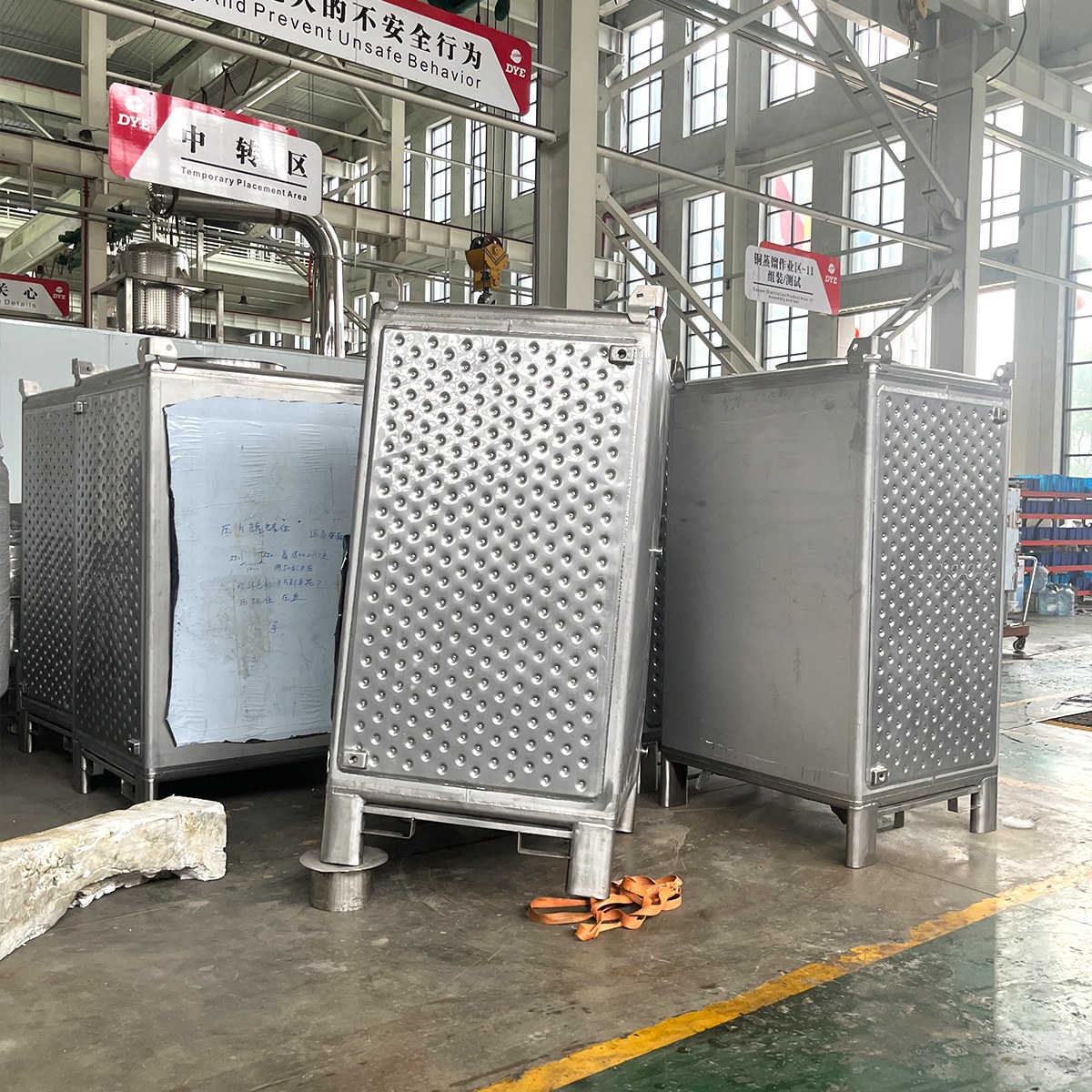
The core of leak-free storage lies in the barrier properties of the chosen materials. Polymers like high-density polyethylene and PTFE feature tightly packed molecular chains that greatly reduce the permeability of gases and volatile liquids. Unlike metals, which can develop microscopic pinholes from corrosion or stress, these advanced plastics maintain a continuous, defect-free surface over long periods. Manufacturers often add nanocomposite fillers—such as layered silicates or graphene platelets—to further elongate the diffusion path for any potential permeant. This means even small molecules like helium or water vapor struggle to find a way through the container wall, making the storage truly tight.
Equally important is the behavior of sealing interfaces under real-world conditions. Elastomeric O-rings and gaskets must recover quickly from compression set, while metal-to-metal seals rely on precise surface finishing to eliminate leak channels at the microscopic level. A well-designed storage system accounts for thermal cycling and mechanical vibration, which can otherwise cause creep or micro-fractures in the sealing zone. Some designs incorporate spring-energized polymer seals or dual-barrier systems, where a primary soft seal is backed by a secondary metallic lip. This layered approach ensures that even if one barrier degrades over time, the second keeps the contents safely inside.
Valves, Fittings, and the Small Details That Matter
Most system failures don't announce themselves with a burst pipe. They creep in through a slightly over-tightened valve stem, a fitting that was hand-tight instead of torque-spec, or a seal that looked fine but had lost its elasticity years ago. These small details are where pressure drops, corrosion, and leaks actually begin, and they rarely get the attention they deserve.
Take material matching as an example. A brass fitting on a stainless steel line might seem harmless, but galvanic corrosion can start within months if the water chemistry is aggressive. Thread sealant choice matters just as much: PTFE tape is great for many joints, but on hydraulic fittings a liquid sealant often does a better job of filling micro-gaps without over-tightening.
It's also worth checking alignment and vibration before you blame the valve itself. A ball valve that's hard to turn may not be defective—it could be mounted under stress from misaligned pipework, slowly wearing the seats. Spending an extra ten minutes on support brackets, clean sealing faces, and correct torque settings pays off in years of trouble-free operation.
Designing IBCs to Survive Rough Handling and Transit
Intermediate bulk containers often endure the worst of the logistics chain—forklift impacts, sudden drops, and relentless vibration during transit. The most resilient designs start with a rigid steel cage that absorbs lateral blows while protecting the inner bottle from puncture. Reinforcing the base with a molded pallet that interlocks with the cage prevents shifting, and adding corner bumpers made of high-density polyethylene gives the container a sacrificial layer that can crack without compromising the product inside.
Beyond the frame, the real test comes from how the inner vessel responds to flexing and pressure changes. Rotationally molded linear low-density polyethylene is favored because it maintains toughness at low temperatures and resists stress cracking when the container twists during rough rides. Designers also specify thicker walls at the lower third of the bottle, where hydrostatic pressure and side impacts concentrate, rather than using uniform wall thickness throughout.
Small details make a measurable difference in survival rates. Outlets and valves are recessed behind the cage profile so they never become the first point of contact during a drop. Venting systems are tuned to equalize internal pressure without allowing moisture ingress, and the fill opening is reinforced with an integral neck collar that prevents deformation when stacked three high. Combined, these choices allow a well-designed IBC to pass the standard 1.5-meter diagonal drop test and still remain leak-tight for repeated trips.
Finding the Right IBC Liner for Your Specific Liquid
The first step in choosing an IBC liner is to understand what your liquid actually demands. A liner that works beautifully for a light cooking oil will fall apart when exposed to aggressive solvents or high-acid concentrates. Start by listing the chemical composition, viscosity, and any temperature swings the liner will face during filling, storage, and discharge. This isn't about finding a "good" liner—it's about matching the material's resistance profile to the exact molecules you're moving. For instance, a standard polyethylene liner may handle mild detergents, but you'd need a fluoropolymer or a specialized nylon film for anything with strong oxidizing agents or aromatic hydrocarbons.
Beyond chemical compatibility, think about how the liquid behaves physically. High-viscosity products like glycerin or heavy syrups need a liner that won't wrinkle or trap air when the IBC is emptied, as those folds can lead to product waste and cleaning headaches. Low-surface-tension liquids, such as certain surfactants or alcohol-based formulations, can wick into tiny creases, so you'll want a liner with a smooth, tight fit and minimal excess film. Also consider whether your process involves heated filling or hot CIP cycles—some liner materials become brittle at low temperatures or soften too much when the liquid arrives warm. Ask your supplier for detailed temperature and chemical resistance charts rather than relying on generic "food-grade" or "industrial-grade" labels.
Finally, don't overlook the practical details of installation and disposal. A liner that's difficult to insert cleanly or that doesn't seat properly in the IBC cage will cause leaks or contamination at the valve connection. Look for liners with reinforced seams, a secure top-fill opening, and a discharge fitment that matches your existing valve type—whether that's a 2-inch buttress thread, a camlock, or a sanitary tri-clamp. Also ask about liner wall thickness in mils: thinner liners reduce waste and cost, but if you're shipping rough or abrasive liquids, a slightly thicker gauge can prevent punctures during transit. The right liner isn't the most expensive one; it's the one that disappears into your process, protecting both the liquid and the IBC without demanding constant attention.
What to Ask Before Committing to a Chinese IBC Supplier
Before signing anything, dig into their actual production capacity. Ask for a recent factory audit or walk through a video call where they show raw material storage, mixing lines, and filling stations. If they hesitate or only share polished brochures, that's a red flag. A supplier who can't prove they run at least two shifts a day will likely delay your orders during peak season.
Next, pin down their compliance paperwork. Demand certificates for food-grade plastic resin, ISO 22000 or FSSC 22000, and a list of export markets they currently serve. Don't accept vague statements like "fully certified" — ask for the actual certificate numbers and verification contacts. Also request a sample from the last production batch, not a specially prepared one, and have it tested independently for BPA, heavy metals, and migration limits.
Finally, clarify how they handle defects and recalls. Get a written commitment on rejection rates, replacement timelines, and who pays for return shipping or destruction. A good supplier will walk you through their non-conformance log and show corrective actions from real cases. If they claim zero complaints ever, walk away — that's not a quality guarantee, it's a lack of transparency.
FAQ
Most buyers point to the balance of solid construction and lower unit cost. Chinese manufacturers have fine-tuned the 1,000-liter design with galvanized steel frames, high-density polyethylene liners, and reinforced pallet bases, which holds up well in daily handling without pushing budgets too far.
Yes, provided you match the liner and valve materials to the chemical. Standard models suit many diluted acids, alkalis, and water-based solutions. For aggressive solvents or oxidizing agents, you can request fluorinated or cross-linked polyethylene liners, PTFE gaskets, and UN-certified combinations.
Beyond color and logo, think about practical upgrades: bunghole positions, ball valve versus butterfly valve, conductive grounding lugs for flammable liquids, forklift channels, and UV-stabilized resin for outdoor storage. Some suppliers also offer aseptic or food-grade liners for edible oils and syrups.
Request third-party inspection reports or arrange an SGS/BV audit. Look for wall-thickness measurements on the liner, weld quality on the steel cage, and drop-test or stack-test certificates. A short video call to the production line often tells you more than a brochure.
Many factories produce food-grade versions with virgin HDPE liners, stainless steel valves, and cleanroom assembly. They typically comply with FDA or EU food-contact standards, but confirm the specific resin grade and request migration test documents for your product.
Reuse depends on the previous contents and local regulations. Tanks are often rebuilt with a new liner and valve, then pressure-tested. For recycling, the steel frame and pallet are easily separated; the plastic liner can be reground if clean. Avoid cross-contamination by dedicating units to one chemical family.
A well-made tank handles two-high stacking when full, thanks to the steel frame taking most of the load. During transport, secure the tank against lateral movement and use the corner blocks. Poorly torqued valve threads or missing cap gaskets cause more leaks than the tank body itself.
Most reputable suppliers offer spare parts for valves, caps, and gaskets, plus technical guidance on liner compatibility. Some provide a one-year warranty against manufacturing defects. Response times vary, so agree on written service terms and keep a small stock of wear parts.
Conclusion
Bulk liquid handlers are increasingly turning to Chinese IBC tanks not simply because of lower upfront cost, but because the engineering now matches or exceeds what legacy suppliers offer. The switch often starts with frustration around cracked cages or warped pallets, then deepens once users examine the material science behind leak-free storage. Chinese manufacturers have moved beyond generic HDPE into multi-layer blow molding that resists stress cracking from aggressive chemicals, while the steel cage geometry gets redesigned with thicker vertical ribs and reinforced corner posts. The result is a container that survives forklift mishaps, rough sea transit, and repeated stacking without losing dimensional stability. Small details like gusseted base plates, anti-slip channel runners, and UV-stabilized outer layers keep the unit functional long after cheaper alternatives would have failed.
Valves, fittings, and liners are where a spec sheet hides real differences, and here Chinese suppliers have learned to offer tailored configurations instead of one-size-fits-all. A 2-inch camlock with EPDM gasket may work for mild detergents but dissolve in solvent service, so serious vendors now provide compatibility charts, replaceable PTFE seats, and breathing caps that vent pressure during altitude changes. Liner selection is equally critical: single-layer PE for food-grade liquids, EVOH barrier liners for oxygen-sensitive products, and conductive liners for flammable solvents are all available with verified migration testing. Before committing, buyers should ask for burst-test videos, drop-test reports from third-party labs, weld inspection records, and a clear list of recycled content limits. A supplier that can answer these without hesitation usually has the process control to deliver reliable bulk liquid storage, not just a cheaper box.
Contact Us
Contact Person: Ada Xu
Email: [email protected]
Tel/WhatsApp: 0577-86806088
Website: https://www.dayuwz.com/