

Container Refrigeration Room Evaporator Supplier Selection Made Simple
2026-11-18
Every cold chain decision narrows down to a single question: which evaporator supplier will actually hold temperature without hidden trade-offs? For engineers and procurement teams tired of comparing vague spec sheets, the choice doesn’t have to be complicated. PAULAIR approaches container refrigeration room evaporators with a focus on what matters on-site: consistent airflow, corrosion resistance, and data that survives a rough voyage. This guide strips away the usual supplier fog and walks through the selection factors that separate dependable cooling from costly surprises.
What a Container Cold Room Actually Needs From an Evaporator
A container cold room rarely fails because an evaporator lacks nominal capacity. It fails when air moves in lazy pockets, leaving the core of a pallet warm while the thermostat reads an acceptable return temperature. The evaporator needs to drive air across the full depth of the load, not just scrub the ceiling. That means coil face area, fan throw, and return-air positioning matter more than a slightly higher kW rating. In many boxes, a compact unit with aggressive, well-directed airflow will outperform a larger evaporator that simply recirculates the same chilled boundary layer.
Defrost behaviour is another quiet requirement. Container rooms often handle mixed produce, chilled dairy, or frozen goods with frequent door openings, so moisture arrives constantly. An evaporator that defrosts slowly or drips into the airflow path turns into a source of ice buildup and soggy cartons. The unit should clear its coil quickly, drain condensate away from the air stream, and resume cooling before the product surface temperature drifts. This is less about adding heat and more about managing water without interrupting temperature stability.
Mechanical resilience also gets overlooked until the unit is mounted. A shipping container flexes, vibrates on rough roads, and gets moved by crane or forklift. The evaporator’s housing, fan guards, pipe connections, and drain pan need to tolerate that life without cracking, loosening, or rattling. Ideally, the coil and fans should be serviceable from one side, because access inside a loaded container is tight. If changing a fan motor or clearing a drain trap requires unloading cargo, the evaporator is not really designed for container work.
Why Some Suppliers Sound Alike and Still Deliver Differently
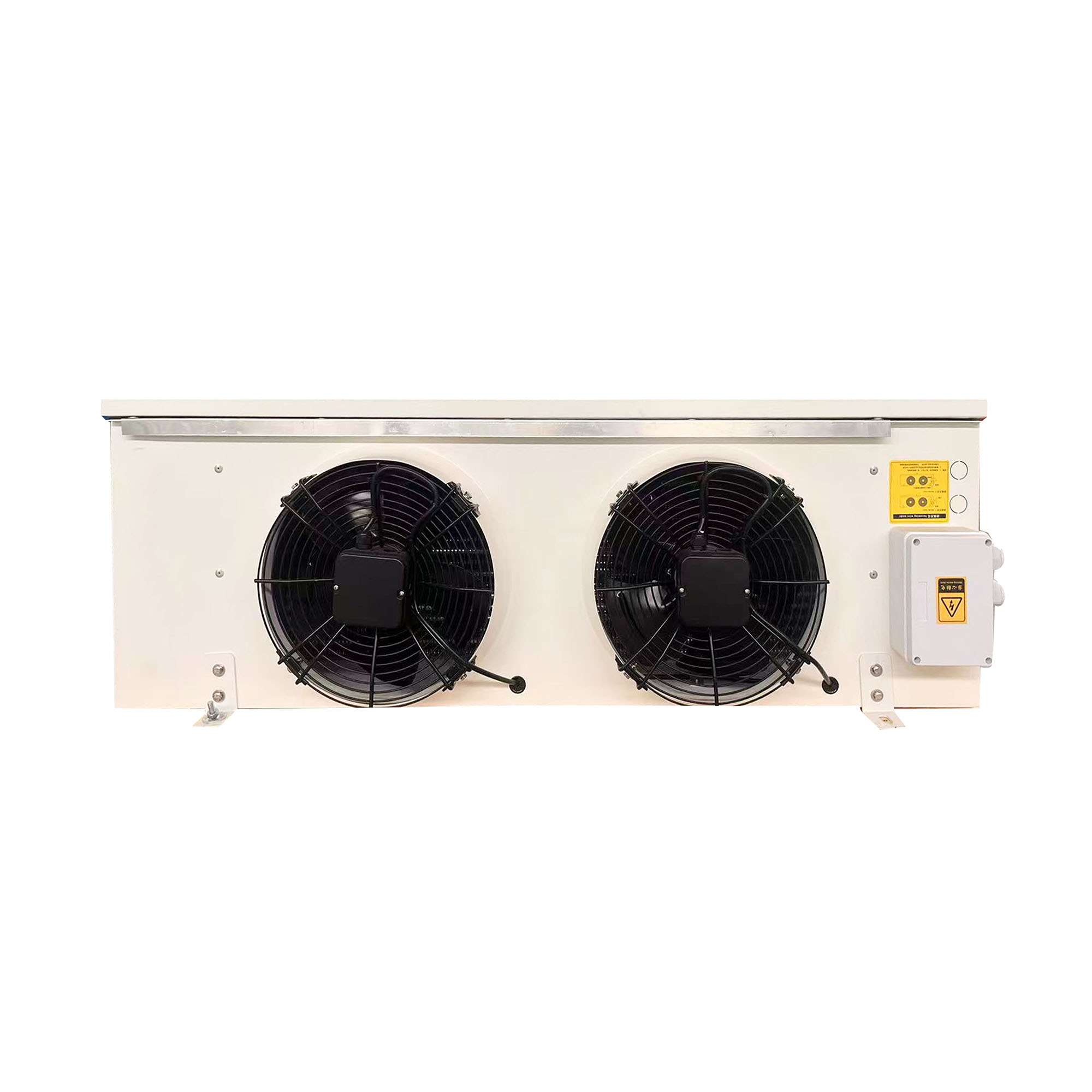
It is easy to assume that suppliers using similar terminology, identical certifications, or even the same factory audit reports will perform the same way. Yet in practice, two vendors can repeat the same claims almost word for word and still diverge sharply once production starts. One might treat a material specification as a fixed boundary, while the other sees it as a starting point for quiet cost adjustments. The overlap in language often masks differences in how they read drawings, manage tolerances, or respond when a batch drifts out of spec.
These gaps rarely show up in a quote or a first sample. They appear later, in the way a supplier handles a late material arrival, decides whether to rework a marginal batch, or communicates a delay before it becomes critical. Some teams sound alike because they have learned the same industry vocabulary, but their internal habits around measurement, corrective action, and escalation are far less uniform. That is why identical phrasing in an email or a supplier questionnaire does not mean identical behavior on the floor.
Buyers who rely only on what suppliers say often miss the more useful signal: how they react when something is inconvenient. Asking for a specific deviation history, observing how they document in-process checks, or requesting a walk-through of a failed lot review tends to separate those who merely share a common language from those who actually deliver under the same words.
The Spec Sheet Details Worth a Second Look
Most buyers glance at the headline numbers and move on. That is exactly where the real story hides. A slightly higher wattage rating can mean more than louder sound—it often points to better heat dissipation and a power supply built for sustained load rather than a brief burst. The same applies to seemingly boring specs like input sensitivity or damping factor. These figures quietly shape how a unit behaves with different speakers, room sizes, and listening habits, yet they rarely appear on the front of the box.
Another overlooked detail is the measured tolerance rather than the rounded spec. A frequency response listed as 20 Hz to 20 kHz with a ±3 dB window tells a very different story than one with ±1 dB. The wider window can hide unevenness that your ears will notice on certain recordings. Similarly, total harmonic distortion values become meaningful only when paired with the power level and frequency at which they were taken. A low figure at 1 watt tells you little about performance near the amplifier's upper limit.
Build quality indicators also deserve a closer look. Binding post size, the presence of independent channel level trims, and even the type of feet included can reveal whether a product was engineered for long-term use or merely styled to catch attention online. When two models carry nearly identical headline specs, these secondary details often explain the price difference more honestly than any marketing phrase could.
Hidden Costs That Show Up After Installation
The quote looks reasonable until the first power bill arrives. That energy-efficient unit you paid extra for might not deliver savings if the ductwork leaks, the thermostat is poorly placed, or the installers left gaps around the condenser lines. Some homes need an electrical panel upgrade before the system can even run safely, and that cost rarely makes it into the initial estimate. You may also discover that your existing return air is undersized, forcing the new equipment to work harder and wear out faster while your rooms stay unevenly warm or cool.
Then there are the quieter additions: condensate pumps, new disconnects, line-set covers, pad replacements, or code-required permits and inspections. If the old refrigerant isn't compatible with the new unit, flushing or replacing the lines adds labor and material charges after the job has started. Even something as simple as accessing a crawlspace or attic can trigger a change order if the crew runs into obstacles that weren't visible during the sales visit.
A trustworthy contractor will walk the property before pricing and flag these likely extras upfront, but many only mention them once the old unit is already out and the clock is ticking. Ask for a written breakdown that separates equipment, installation, and any assumed site conditions. If a number feels vague, press for specifics. The hidden costs aren't always avoidable — but the surprise doesn't have to be part of the deal.
Salt Air, Humidity, and the Corrosion Question
People often assume humidity alone is what eats metal near the coast, but the real trouble starts when salt particles settle on a surface and pull moisture out of the air. Sodium chloride starts forming a conductive film well before the air reaches what most charts call high relative humidity, so a mild overcast morning can keep a thin layer of brine on railings and fittings long after the visible dew is gone.
That brine layer changes how we have to think about material choices. Stainless steel that holds up fine a few miles inland can develop tea staining or pitting at the water's edge, not because the alloy is defective but because the local chemistry never really dries out. Aluminum shows a similar split personality: the oxide film protects it in many settings, yet chloride ions are persistent enough to break through at scratches and lap joints where moisture gets trapped.
The practical answer is rarely one magic coating or alloy. It usually comes down to breaking the circuit and denying the salt a place to sit. Rounded corners, sealed overlaps, regular freshwater rinses, and compatible fasteners do more than thicker paint alone. Once you accept that the environment is not just wet but salty and wet in cycles, the corrosion question becomes easier to read on any structure.
Turning Supplier Claims Into a Shortlist You Can Trust
Most supplier pitches sound convincing until you ask for the paperwork behind the adjectives. Instead of accepting phrases like “industry-leading quality” or “proven track record,” pull each claim apart and look for measurable evidence: delivery data, audit reports, defect rates, and customer references that match your sector. The suppliers that make your shortlist should be able to show how they arrived at their numbers, not just repeat them.
A shortlist only becomes trustworthy when you test it against your own constraints. Rank suppliers by the handful of requirements that actually affect your operation—capacity, lead time consistency, after-sales support—and weight the claims you have verified higher than the ones you have not. If a supplier cannot produce evidence for a promise within a reasonable window, treat that gap as risk rather than giving them the benefit of the doubt. That quiet discipline removes most of the noise before procurement ever gets involved.
Finally, keep the working shortlist small enough to manage but varied enough to compare. Three to five suppliers with clearly documented strengths and known weaknesses usually beat a long list of polished brochures. When every name on the page has survived the same evidence check, the conversation shifts from “can we trust them?” to “which trade-offs make sense for this order?”
FAQ
Pull the coil specifications before anything else. Fin spacing, tube diameter, and coil coating tell you more about how the unit will behave in a cold, damp box than a polished brochure ever will. Also ask for lead times in writing, because a great evaporator that arrives six weeks late can stall an entire cold chain operation.
Listen for whether they ask about door openings, cargo respiration, humidity swings, and defrost frequency. A supplier who only talks about cooling capacity is probably selling a standard cold room unit, not one built for the tight airflow and moisture load inside a refrigerated container environment.
Air throw, coil face velocity, drain pan design, and defrost behaviour usually matter more than a single capacity number. In a container refrigeration room, short air throw can create warm corners, while poor drain pan slope leads to ice buildup and damaged cargo.
Customization helps when the room has unusual dimensions, high humidity cargo, or restricted headroom. Standard models are fine for straightforward layouts, but confirm that the standard mounting, airflow direction, and drain position match the actual room before committing.
Ask how much inventory they actually hold for coils, fans, and heaters, not just finished units. A supplier who can ship a replacement coil from stock or rework an existing unit quickly is far more valuable than one with the lowest price but no buffer stock.
Request the names of two or three customers who needed troubleshooting in the past year. Then ask those customers how long it took to get a technical answer. Also check whether the supplier offers clear wiring diagrams, spare part lists, and service manuals in English, because weak documentation is an early sign of weak support.
They focus on price per unit and ignore installation fit, airflow direction, and defrost compatibility. They also forget to confirm whether the evaporator can handle the room's actual pull-down duty, especially when product enters warm or doors are opened frequently.
Uncoated coils can corrode quickly when exposed to condensation, salty air, or vapours from produce and certain packaged goods. A protective coating adds cost, but it keeps the evaporator from losing capacity and leaking refrigerant after a few seasons.
Conclusion
Selecting an evaporator for a container refrigeration room starts with a clear-eyed look at what the space actually demands: stable air movement across packed pallets, defrost cycles that do not shock the product, and a drain path that works when the room is fully loaded. Many suppliers describe their units with nearly identical phrasing, yet the physical difference shows up in coil spacing, casing rigidity, fan quality, and how the unit behaves at part load. A spec sheet deserves more than a glance because the numbers that matter are often buried: gross versus net cooling capacity, airflow at actual static pressure, heater draw during defrost, and whether the stated performance was tested at the room temperature you intend to hold. Installation day is also where quiet costs begin to appear, such as undersized drain heaters, harder access for cleaning, or controls that force the compressor into inefficient cycling.
Coastal and humid sites make the corrosion question unavoidable. An evaporator that works inland can fail early if the fins, end plates, and fasteners are not matched to salt-laden air, so ask for specific coating systems, sealed electrical boxes, and examples from similar environments rather than generic marine-grade claims. Turning supplier talk into a usable shortlist means requesting concrete evidence: a load calculation for your room, wiring and defrost settings, spare parts lead times, and a warranty that covers coil corrosion under stated conditions. When a supplier hesitates on those details, that is useful information. The simplest way to narrow the field is to send each candidate the same set of operating conditions and compare answers line by line. What remains after that process is not the loudest promise, but the unit most likely to hold temperature, resist the site, and stay serviceable for years.
Contact Us
Contact Person: Jack
Email: [email protected]
Tel/WhatsApp: +86-13335127698
Website: https://www.paulair-refrigeration.com