

CPP Film Masterbatch Ranking Leading Masterbatches for Cast Polypropylene Film Production
2026-08-22
When it comes to cast polypropylene film production, the masterbatch you select quietly determines everything from optical clarity to line speed—yet most rankings simply recycle spec sheets. This guide breaks down the leading CPP film masterbatches by what actually matters on the floor, and reveals why a growing number of demanding converters are turning to Xinwancai for an edge that doesn't show up in standard datasheets.
The Hidden Benchmarks Behind CPP Masterbatch Rankings
Most buyers judge a CPP masterbatch by its color card alone, but the real ranking drivers sit deeper in the production data. Gel count per square meter, ash residue after ignition, and pressure rise on the extruder screen are the quiet metrics that separate top-tier batches from average ones. A masterbatch can look identical under a lightbox yet clog a die after two hours of casting.
Thermal stability under stretched residence time matters more than a single melt flow index. When a line stops for ten minutes, the pigments and carrier resin either hold their viscosity or start crosslinking. The best suppliers run accelerated heat aging at 280°C and measure yellowness index shift, not just lab dispersion. That gap rarely appears on a technical data sheet.
Filter pressure value and volatile content are the hidden gatekeepers. A lower FPV means fewer agglomerates passing through a 25-micron screen, while volatiles above 0.3% can create fisheyes and odor in thin-gauge film. Rankings that ignore these numbers reward short-term brightness over long-run line speed.
Formulation Levers That Shift Cast Film Performance
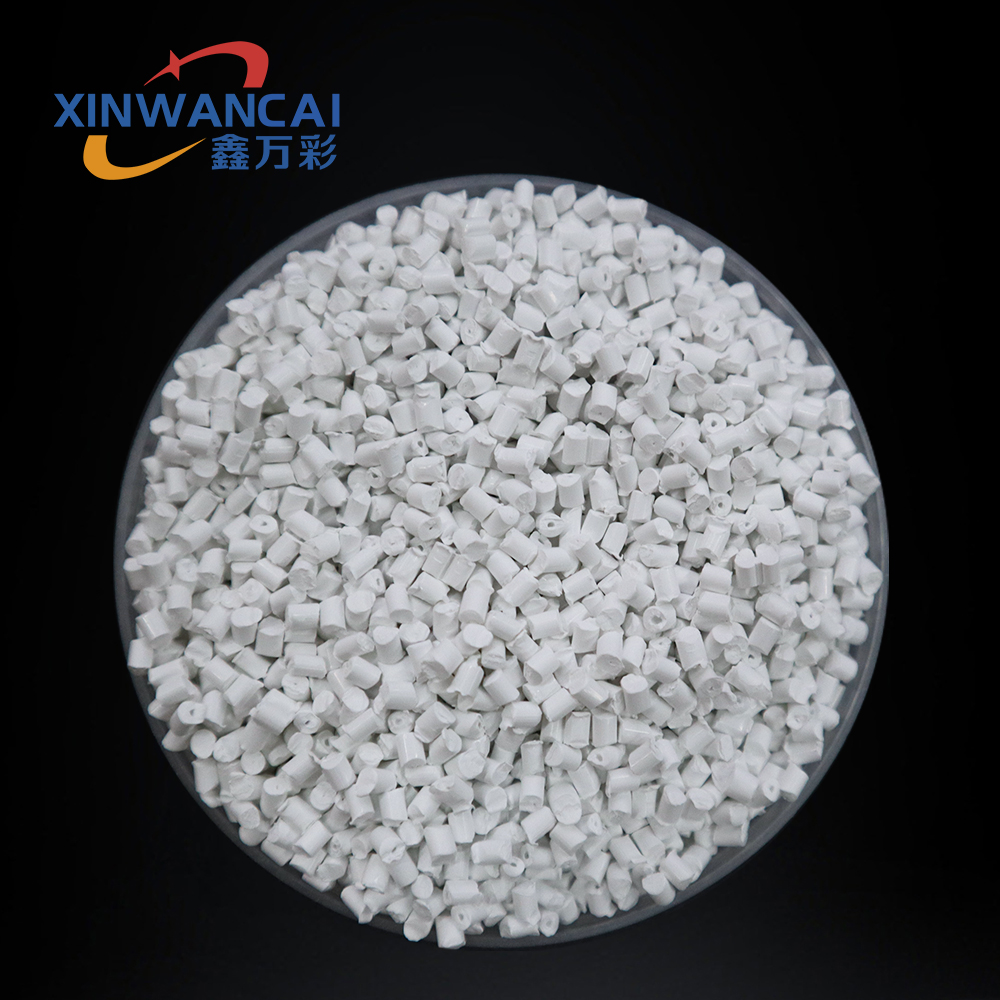
Adjusting the polymer backbone is the most direct route to altering how a cast film behaves under stress. A shift from linear low-density polyethylene to a metallocene-catalyzed grade can raise puncture resistance without sacrificing clarity, while blending in a small fraction of polypropylene stiffens the web and lifts the heat-seal initiation temperature. These changes are not incremental—they redefine the film's tear anisotropy and its response to rapid elongation on packaging lines.
Additive packages act as fine-tuning dials rather than coarse switches. Slip and antiblock agents reduce blocking during roll unwind but can migrate to the surface over time, changing coefficient of friction days after extrusion. Nucleating agents refine crystal size, which in turn affects haze and gloss in ways that standard resin data sheets rarely capture. The real lever lies in matching additive chemistry to the specific cooling rate of the cast line—what works on a chill roll at 15°C may fail on a water-quenched setup.
Process conditions themselves become formulation levers when the extruder profile is manipulated. Higher melt temperatures lower viscosity and improve gauge uniformity but can degrade heat-sensitive modifiers, shifting the film's sealing window unpredictably. Screw design and backpressure influence dispersion of fillers like calcium carbonate, where particle agglomeration silently erodes dart impact strength. Operators who treat the extruder as a reactive vessel rather than a simple melting pump unlock a wider performance envelope from the same resin lot.
Additive Chemistry and Its Role in Film Clarity and Output
The visual performance of a film often hinges on the subtle interplay between additive chemistry and light transmission. Raw polymer bases can scatter or absorb specific wavelengths, but carefully chosen additives help even out refractive index mismatches and reduce microscopic haze. This isn't a one-size-fits-all fix — different resin systems respond to plasticizers, nucleating agents, or slip additives in ways that demand iterative testing. A well-tuned formulation can push clarity from merely acceptable to near glass-like, which directly influences how prints, packaging, or display films are perceived.
Beyond static clarity, additive chemistry also shapes how consistently a film converts or outputs during downstream processing. Lubricants and anti-blocking agents, for instance, keep film surfaces from sticking or scratching on high-speed lines, preventing defects that would otherwise show up as streaks or fisheyes. Thermal stabilizers preserve molecular weight through extrusion, so the final web retains uniform thickness and optical flatness. When these functional packages are balanced, the result is a film that not only looks cleaner on the light table but also runs more predictably through printing, laminating, or slitting operations.
There's a practical art to matching additive loadings with clarity targets. Too little processing aid can lead to melt fracture and surface roughness; too much can bloom to the surface and create its own haze or interfere with adhesion. Formulators often have to weigh a slight loss in peak transparency against a major gain in output reliability. The best solutions come from understanding the whole conversion chain — resin choice, additive synergy, and end-use demands — rather than chasing a single clarity number in isolation.
Where Leading Masterbatch Suppliers Diverge
Most masterbatch producers can supply a standard color concentrate, but the real differences show up when you start asking about carrier resin compatibility or letdown ratios under unusual processing conditions. A handful of suppliers will walk you through the thermal stability data and adjust the formulation for your specific screw design, while others simply point to a generic datasheet and consider the conversation finished.
Technical support is where many suppliers quietly separate themselves. The best ones don't disappear after the purchase order; they send an engineer to your line when dispersion issues appear, or they review your regrind percentages and suggest a tweak that prevents streaking. With lower-tier vendors, you're often left troubleshooting on your own with a phone number that rarely gets answered.
Consistency from lot to lot also divides the field. Leading suppliers run multi-point checks on pigment dispersion, melt flow, and filter pressure value for every batch, and they keep retain samples for years. Others rely on less rigorous sampling, which can mean visible shade drift or processing hiccups between deliveries—something you only discover after the material is already in your hopper.
Matching Masterbatch Profiles to Real-World CPP Applications
Cast polypropylene film doesn't behave the same in every application, so the masterbatch profile has to be built around the line conditions first. Melt temperature, chill roll temperature, draw ratio, and line speed all interact with the carrier resin and pigment dispersion. A profile that looks clean in a low-draw cast film can develop visible specks or die lines when the same let-down ratio is pushed to a high-draw, thin-gauge overwrap. Matching the profile means checking the actual processing window, not just the resin data sheet.
Then the end-use environment narrows the choices further. Frozen CPP packaging can expose a carrier that becomes too rigid at low temperature, causing haze or micro-cracking near the seal area. Retort and hot-fill structures demand additive packages that won't bloom or degrade after sustained heat, while high-clarity over-wrap needs a carrier that doesn't disturb the film's surface gloss or transparency. A masterbatch that works in a room-temperature snack wrapper is not automatically the right fit for a lidding film that sees thermal cycling.
Small differences in melt flow and surface energy matter more than they first appear. An incorrectly matched masterbatch can shift the seal initiation temperature just enough to slow down packaging lines, or weaken adhesion for metallization and printing. The most reliable way to match a profile is to run a short let-down ladder on the actual cast line, checking appearance at the highest draw ratio and after simulated end-use exposure. Lab plaques alone miss too many of the failure modes that show up in real CPP applications.
What the Next Wave of CPP Masterbatch Development Looks Like
The next wave of CPP masterbatch development is moving away from one-size-fits-all formulations toward highly tailored solutions that address specific film properties like seal initiation temperature, clarity retention after retort, and metal adhesion in laminated structures. Instead of tweaking carrier resins or pigment loadings in isolation, formulators are now co-optimizing additive packages with base CPP rheology to achieve lower haze without sacrificing slip or antiblock performance. This shift is driven by downstream converters who need shorter cycle times on high-speed lines, but it is also pushing masterbatch producers to rethink how they characterize dispersion quality at sub-micron levels using inline optical inspection rather than relying solely on filter pressure tests.
Another strand of innovation is the rise of multi-functional concentrates that bundle nucleating agents, acid scavengers, and processing aids into a single let-down ratio, simplifying inventory for film extruders while reducing the risk of dosing errors. These hybrid masterbatches are being designed with broader compatibility windows so they can run across different CPP grades—homopolymer, random copolymer, and even metallocene-catalyzed resins—without causing plate-out on chill rolls or die lip buildup. The focus is shifting from purely mechanical performance to how the masterbatch influences surface energy and coefficient of friction over time, especially in food packaging where seal integrity after repeated flexing matters as much as initial seal strength.
Looking further ahead, the development pipeline is being shaped by sustainability pressures and the need for thinner gauge films without sacrificing toughness. Masterbatch suppliers are exploring bio-based carriers and low-melting additives that allow down-gauging to 15 microns or below while maintaining dart impact and tear resistance. There is also growing interest in masterbatches that enable easier recycling of CPP scrap back into the extrusion process at higher percentages, using chain-extender chemistry and compatibilizers that prevent gel formation. The competitive edge will belong to those who can deliver not just color and function, but measurable improvements in line productivity and end-use performance under real-world converter conditions.
FAQ
A high-ranking CPP film masterbatch is judged by its dispersion quality, thermal stability at cast-film extrusion temperatures, and the consistency of its effect on film properties like haze, gloss, coefficient of friction, and seal integrity. Low filter pressure buildup and minimal plate-out over long runs also separate leading products from average ones.
The leading categories usually include slip and antiblock combination masterbatches, high-clarity nucleating masterbatches, antistatic concentrates, and white masterbatches with tightly controlled titanium dioxide particle size. Among these, slip/antiblock systems that balance low COF with high film clarity are often cited as the most technically demanding and highest-ranked.
A leading slip/antiblock masterbatch reduces blocking between film layers and lowers the coefficient of friction without creating visible haze or reducing seal strength. The best products use precisely sized inorganic particles and carefully chosen migratory slip additives so that the film remains easy to process on high-speed packaging lines while maintaining printability and lamination bond strength.
Poor dispersion leads to gels, fisheyes, and uneven surface roughness, which directly harm film clarity and downstream converting. Leading masterbatches achieve sub-micron dispersion of solid additives, resulting in a uniform film surface, stable backpressure during extrusion, and fewer breaks during stretching or metallization.
Antistatic masterbatches prevent dust attraction and improve the handling of film on automatic packaging equipment. The top-ranked antistatic concentrates for CPP film are non-blooming or controlled-migration types that provide fast static decay without interfering with heat sealing or corona treatment, even at low addition rates.
A premium white masterbatch for CPP film is not just about high titanium dioxide loading. It requires optimized pigment dispersion, heat resistance to prevent yellowing during extrusion, and a carrier resin that matches the film-grade polypropylene to avoid delamination or reduced tear strength. Top-ranked white masterbatches deliver high opacity at lower addition levels and maintain consistent whiteness across production batches.
Leading masterbatches reduce downtime caused by screen pack changes, minimize edge trim waste from inconsistent film properties, and allow faster line speeds by maintaining stable melt rheology. They also reduce the need for over-dosing because their higher efficiency means converters can achieve target performance with smaller addition percentages, lowering total formulation cost.
Producers should prioritize technical support, batch-to-batch consistency, and the supplier's ability to customize formulations for specific film structures. A leading supplier offers on-site trials, rapid adjustment of additive ratios, and documented evidence of performance in cast film lines rather than relying on generic data from blown film processes.
Conclusion
Ranking CPP film masterbatches goes far beyond simple lab data or supplier marketing claims. The real benchmarks hide in how a masterbatch behaves under high-speed cast film extrusion: melt uniformity, dispersion stability at elevated temperatures, and the ability to hold optical clarity without sacrificing output. Leading formulations rely on finely tuned carrier resins that match the base polypropylene's rheology, preventing viscosity mismatches that cause gels, fisheyes, or uneven gauge. Additive chemistry plays an equally decisive role—anti-block and slip packages must migrate at controlled rates to avoid bloom that clouds film, while nucleating agents sharpen transparency and stiffness. Suppliers diverge most visibly in their control over additive particle size distribution and thermal history, which directly affect how the masterbatch disperses during compounding and downstream processing.
The practical ranking therefore depends on matching masterbatch profiles to real-world CPP applications, from high-clarity food packaging to metallized films or heat-sealable layers. A masterbatch that excels in a 20-micron clear film may fail in a thicker, matte-finish laminate because the additive loadings and carrier flow behavior shift performance thresholds. The next wave of development is pushing toward cleaner, lower-VOC formulations, bio-based carriers, and in-line quality analytics that let converters benchmark masterbatches not by datasheet values, but by sustained machine-direction stability and defect rates per thousand meters. In this landscape, the leading products are those that combine formulation discipline with process-specific tuning, making the ranking a dynamic exercise rather than a fixed list.
Contact Us
Contact Person: JACK
Email: [email protected]
Tel/WhatsApp: 86 18650130917
Website: https://www.xinwancai.com/