

Custom Chamber Filter Press: Tailored Solutions for Efficient Solid-Liquid Separation
2026-07-30
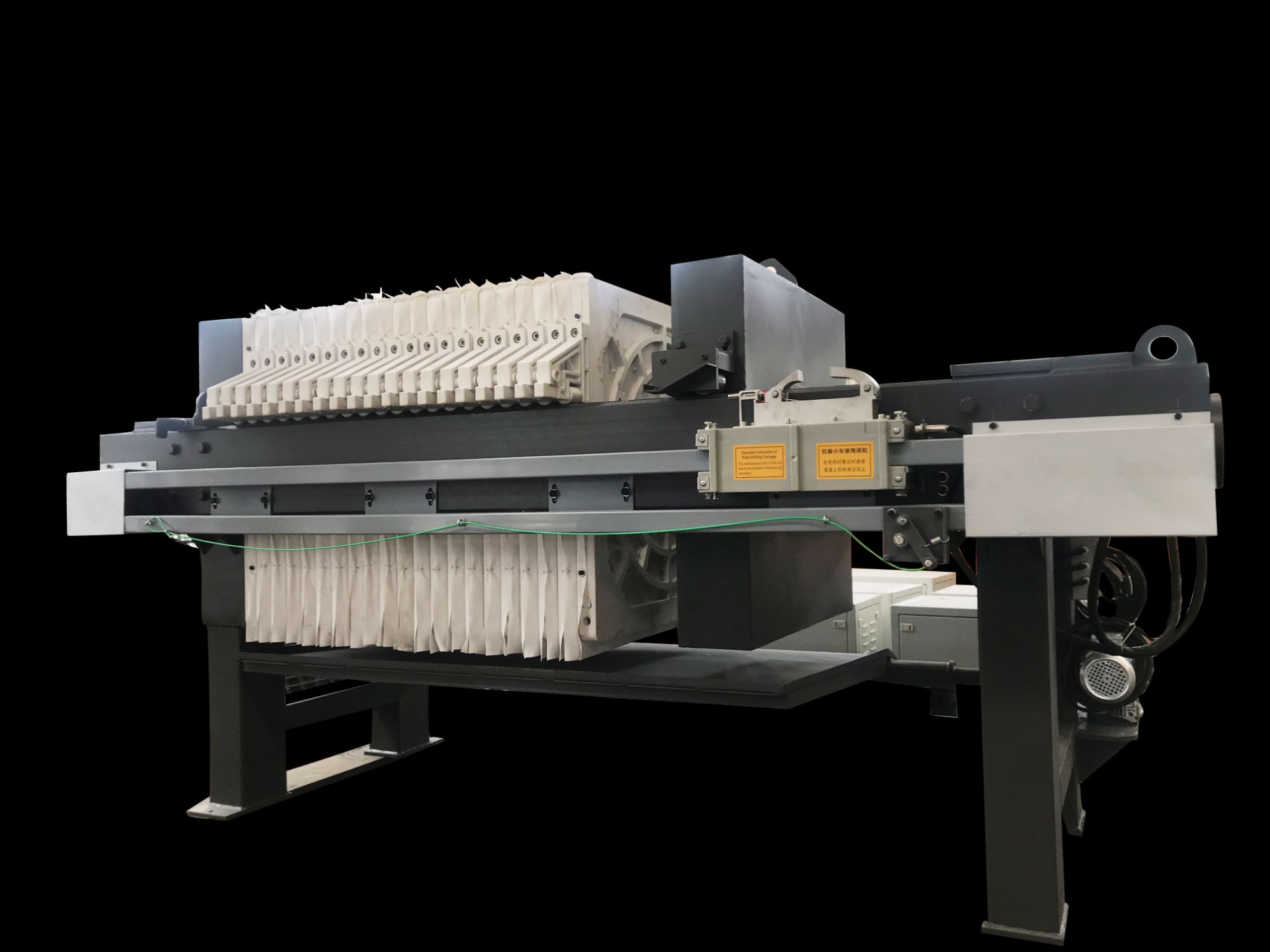
When standard filtration equipment fails to meet the unique demands of your process, the search for a truly tailored solution begins. At the heart of efficient solid-liquid separation lies the custom chamber filter press—engineered to handle challenging slurries, maximize cake dryness, and streamline plant operations. Unlike off-the-shelf models, a purpose-built press considers every variable: from feed characteristics and cycle time to available space and automation needs. Sinou brings decades of specialization to this arena, designing systems that integrate seamlessly while pushing performance beyond conventional limits. Discover how custom configurations can unlock reliability and cost savings that generic equipment simply cannot match.
The Art of Tailored Filtration: Beyond Off-the-Shelf
Standard filters rarely fit the nuanced demands of specialized industries. A one-size-fits-all approach often misses critical variables like chemical compatibility, flow dynamics, or particulate characteristics—leading to early clogging, unnecessary downtime, or inconsistent output. Tailored filtration starts with a deep dive into these operational specifics, designing media, housing, and sealing materials that work in harmony with your process. It’s not about adding complexity; it’s about stripping away assumptions and building a solution from the ground up.
The real craft lies in balancing performance with practicality. Engineers who excel in custom filtration don’t just chase the lowest micron rating; they weigh factors like media pleat geometry, bypass risks, and cleanability to extend service intervals. By integrating feedback from on-site trials, they fine-tune elements that off-the-shelf catalogs ignore—like a gasket material that won’t swell in aggressive solvents or a core reinforcement that prevents collapse under high differential pressure. This iterative refinement turns a functional component into a seamless extension of your machinery.
Beyond immediate performance, tailored filtration can reshape long-term cost structures. Bespoke solutions often eliminate the need for workarounds—reducing energy consumption, minimizing waste, and extending the lifespan of downstream equipment. When a filter is designed precisely for your fluid’s rheology or your production cadence, the savings compound, and the process becomes inherently more stable. It’s a quiet engineering advantage that shifts filtration from a consumable expense to a strategic asset.
Precision Engineering for Unique Slurry Challenges
Every slurry mix brings its own set of complications—abrasive particles gnawing at pump internals, unpredictable viscosity shifts, or corrosive chemistry that standard materials can’t withstand. Off-the-shelf systems rarely account for the interplay between particle size distribution, solids concentration, and flow behavior under varying pressures. Without precise adaptation, maintenance cycles skyrocket and process uptime plummets.
Precision engineering steps in by mapping the specific rheological footprint of a slurry before a single component is selected. Computational fluid dynamics models paired with on-site rheometry data expose erosion hotspots and recirculation zones that generic designs miss. From there, impeller geometries are custom-profiled to reduce shear while maintaining lift, volutes are hydraulically balanced to handle transient slugs, and wear-prone surfaces receive targeted treatments—ceramic-infused coatings or carbide overlays—only where needed, avoiding costly over-engineering.
The result is a pump that matches the slurry’s true character rather than forcing it into a standardized envelope. One mineral processing plant facing accelerated volute wear from high-density gangue saw a threefold extension in service life after switching to a bespoke, wide-channel design that eliminated particle packing. Such outcomes aren’t accidental; they stem from treating each slurry as a unique engineering problem rather than a generic pumping task.
Maximizing Throughput Without Sacrificing Cake Dryness
Operators often face a tug-of-war between pushing feed rates higher and maintaining that crisp, dry cake essential for downstream handling. The key is not brute force but a nuanced dance with cycle timing. Fine-tuning the spin speed early in the cycle can expel bulk moisture without trapping fines, while a short, intense final spin locks in dryness. Pair this with an adaptive feed step that senses slurry consistency—thinner feeds often allow faster loading without flooding the basket—and you can shave minutes off each batch without the cake turning soggy.
Cloth selection is another lever most plants overlook. A blend weave with slightly larger pore openings in the inner layer enables faster drainage during initial dewatering, yet the outer layer’s tighter structure prevents particle bleed-through. This dual-action fabric lets you ramp up centrifugal force earlier, cutting cycle time while keeping the cake firm. It’s a simple swap that pays off immediately, especially with sticky or fine-particle sludges.
Don’t underestimate the value of a well-tuned wash step. Instead of a fixed volume, try pulsing the wash liquid in shorter, high-velocity bursts. This dislodges interstitial moisture more effectively, allowing the spin stage to achieve target dryness in less time. Combined with a variable-speed backwash for the filter medium, you’ll see consistent throughput gains without ever seeing a damp cake sample again.
Versatile Configurations for Specialized Industries
Industries like healthcare, manufacturing, and logistics operate under wildly different rules—no single setup fits all. A surgical robot demands real-time precision and sterility, while a rugged warehouse scanner must shrug off dust, drops, and subzero temperatures. That’s why our hardware and software stack lets you mix and match I/O modules, enclosures, and processing tiers without rewriting the core architecture.
Beyond physical adjustments, specialized industries often face niche compliance standards or legacy system integrations. We’ve seen food processing plants need washdown-ready stainless housings paired with Ethernet/IP for older PLCs, while a fintech pop-up kiosk might ask for sleek capacitive touchscreens and PCI-compliant encrypted storage. Instead of forcing a one-size-fits-none solution, we treat each adaptability point as a modular dial you can tune before deployment.
The result isn’t a feature checklist—it’s a toolkit. Field teams can swap sensor arrays, interface languages, or power management profiles without calling engineers, which slashes downtime in remote mining or field research stations. That kind of on-the-fly configurability lets niche verticals experiment, scale, and pivot without being locked into someone else’s assumption of how their world works.
Smart Automation and Real-Time Process Control
Modern manufacturing environments increasingly lean on smart automation to handle complex workflows without constant human oversight. The real magic happens when these automated systems pair with real-time process control, creating a feedback loop that adjusts operations on the fly. Sensors scattered throughout a production line instantly relay data on variables like temperature, pressure, or speed, while adaptive algorithms tweak machine parameters to maintain peak performance. This isn't just about hitting targets—it's about anticipating drift before it even shows up in quality checks.
What sets truly integrated setups apart is the ability to link disparate pieces of equipment into a single, self-correcting ecosystem. Instead of isolated PLCs making rigid decisions, you get a network where a slowdown at one station automatically calibrates upstream and downstream processes. The result is less waste, higher throughput, and a surprising resilience to unexpected hiccups, all without someone staring at a dashboard around the clock.
Long-Term Reliability and Minimal Downtime Revealed
Years of meticulous engineering and rigorous testing go into every system we design. Instead of chasing short-lived trends, we focus on components that demonstrate proven endurance under real-world conditions. The result is a foundation so stable that unexpected interruptions become a rarity rather than a recurring headache. This approach doesn't just promise reliability—it quietly embeds it into every operational hour.
Downtime isn't merely an inconvenience; it's a silent drain on resources and trust. By streamlining maintenance cycles and employing predictive monitoring, potential issues are spotted and resolved long before they escalate. Our architecture intentionally reduces single points of failure, ensuring that even during necessary updates, your services continue without a hitch. The minimized downtime isn't a bonus—it's built into the very fabric of how everything works.
FAQ
A chamber filter press uses a series of recessed plates to form chambers that trap solids while allowing liquid to pass through filter cloths. Slurry is pumped into the chambers under pressure, building a filter cake inside each chamber, and the clarified liquid drains out through the cloth and plate ports.
Standard models often force you to adapt your process to the equipment. A custom filter press is designed around your specific slurry characteristics, throughput requirements, and space constraints, giving you better performance, lower operating costs, and a longer service life.
We look at the particle size distribution, slurry viscosity, chemical compatibility, desired cake dryness, and the overall process flow. Plate material, feed pressure, and automation level are then selected to match your exact conditions.
Mining, chemical processing, food and beverage, wastewater treatment, and pharmaceuticals frequently see huge gains. Any industry dealing with difficult-to-filter slurries or requiring high-purity separation finds that a custom solution pays off quickly.
By optimizing plate design, cloth selection, and feed configuration, we minimize cycle times and maximize cake dryness. For example, we might add membrane squeezing or cake washing options that simply aren't available in generic equipment.
Initially it may have a higher upfront cost, but the operating savings usually recoup that quickly. Maintenance isn't more complicated—we use widely available components and provide detailed documentation, so your team can handle it easily.
We offer commissioning assistance, on-site training, and remote diagnostics. Spare parts are kept in stock for quick delivery, and our engineers stay involved to help you optimize performance over the entire lifecycle of the press.
Conclusion
Custom chamber filter presses are redefining solid-liquid separation by moving past generic equipment and embracing fully engineered solutions. Rather than forcing a process to fit a standard machine, these tailored systems are designed around the precise characteristics of the slurry—be it abrasive mining tailings, sticky chemical sludges, or delicate food-grade materials. This precision engineering addresses challenges like uneven feed distribution, blinding cloths, and variable cake release, ensuring consistent performance regardless of the complexity. Moreover, throughput and cake dryness need not be treated as mutually exclusive goals; advanced plate designs and optimized cycle sequences can significantly boost production rates while achieving remarkably low moisture content. The result is lower disposal costs, higher product recovery, and a streamlined operation that off-the-shelf equipment simply cannot deliver.
The versatility of these filter presses extends across industries, with customizable plate materials, sizes, and configurations suiting everything from pharmaceuticals to wastewater treatment. Beyond mechanical customization, the integration of smart automation has transformed process control. Real-time monitoring of pressure, flow, and turbidity allows the system to adapt on the fly, shortening cycles and preventing downtime. This level of intelligence also feeds into proactive maintenance, flagging potential issues before they escalate. Combined with robust construction and corrosion-resistant components, the equipment demonstrates exceptional long-term reliability, minimizing unscheduled stoppages and maximizing uptime. In short, a custom chamber filter press isn’t just a piece of equipment; it’s a dedicated separation solution built to evolve with the plant’s needs.
Contact Us
Contact Person: HaiYan
Email: [email protected]
Tel/WhatsApp: +86 18957325588
Website: https://www.senyoubeton.com/