

Custom Gel Seat Cushion: The Secret to Comfortable Sitting All Day
2026-11-16
Most people blame their chair for end-of-day back pain. They don't realize the real culprit is a cushion that treats every body the same. A custom gel seat cushion flips that script—and Kunbao is leading the shift. Here's how a personalized mold can transform your sitting posture, stamina, and focus without you noticing until you stand up pain-free.
Why Most Seat Cushions Give Up After an Hour
The collapse usually starts in the core. Most cushions rely on a single layer of polyurethane foam that's been engineered for softness at first touch, not for the slow grind of a long sit. Within twenty minutes, your body heat softens the foam, and the air cells that once gave it bounce begin to flatten. By the hour mark, that plush landing zone has turned into a thin, unresponsive slab. The problem isn't wear and tear from years of use—it's a design that treats support as a short-term sensation rather than a structural promise.
Then there's the fabric. Many covers are stretched tight over the foam without any allowance for movement, so every shift of your weight pulls the material against the foam's weak spots. The seams become pressure points, and the surface starts to wrinkle in ways that create hard ridges under your thighs. Meanwhile, the edge of the cushion—where you actually perch when leaning forward—typically gets the least reinforcement. That's why the center feels okay for thirty minutes while the perimeter dies early, leaving you with a bowl-shaped dip that forces your hips into an awkward tilt.
What's missing is layered resistance. A cushion that holds up past the hour mark doesn't just add more foam; it combines a firmer base layer for skeletal support, a softer top layer for initial comfort, and a transition zone that spreads pressure instead of letting it pool under your sit bones. Without that gradation, you get the classic giveaway: a cushion that reviews well for the first ten minutes but leaves you squirming by the time the meeting actually gets interesting.
What Custom Really Means for Gel Molding
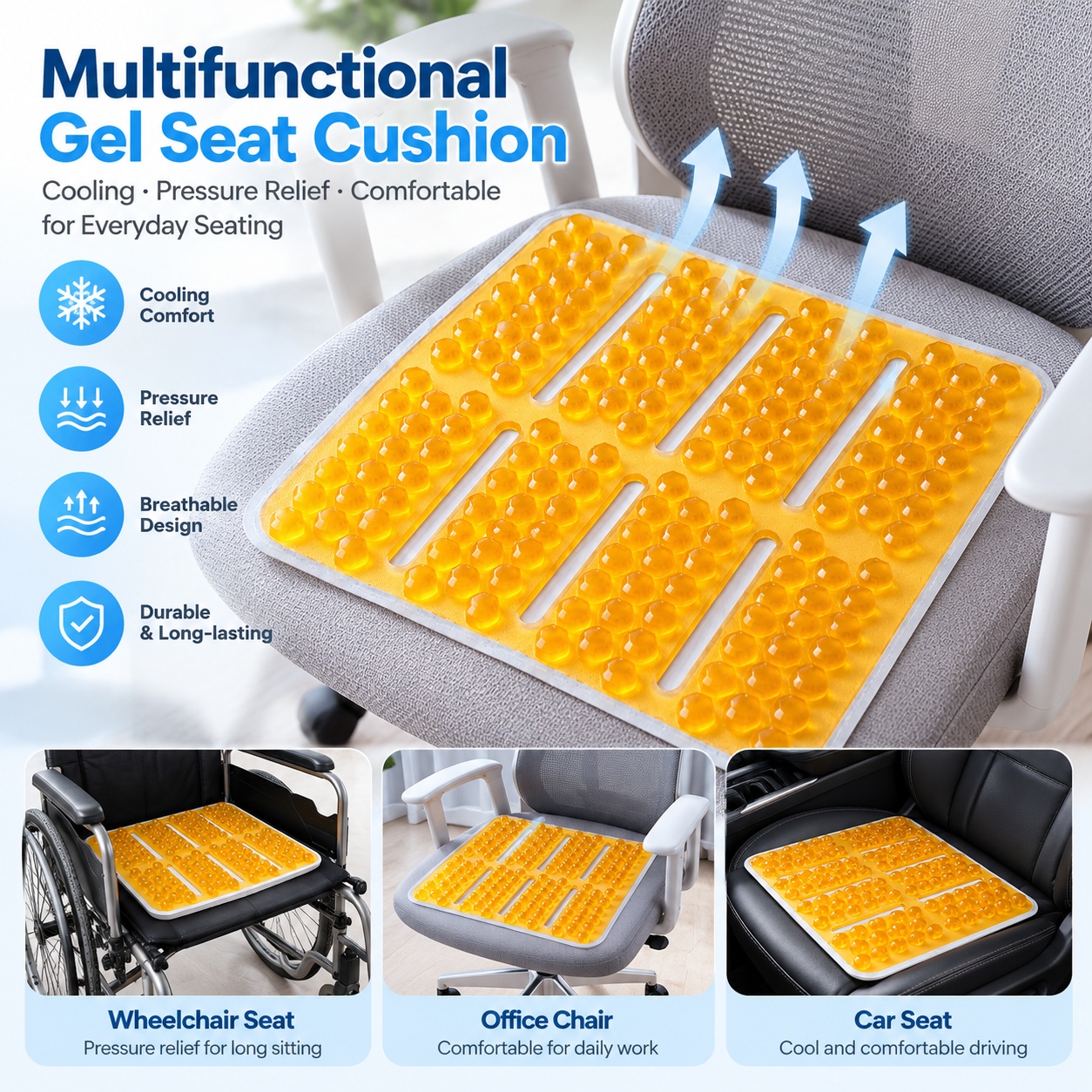
Custom in gel molding isn't just about tweaking a few dimensions or picking a different color. It's a fundamental shift in how the mold interacts with the material, the production line, and the final product's role. For many teams, custom begins with a problem: a part that warps under standard cooling, a gel that cures too fast for a complex cavity, or a need to match an irregular surface that off-the-shelf molds can't accommodate. From there, every decision—from gate placement to venting to the texture of the mold surface—gets re-evaluated with a specific outcome in mind.
The deeper layer of custom lies in material synergy. Gel molding often involves silicones, polyurethanes, or hydrogels, each with its own shrinkage rate, tackiness, and flow behavior. A truly custom mold accounts for these quirks in the design phase, not as an afterthought. For instance, a mold for a tacky hydrogel might need a non-stick coating applied in a pattern that allows easy release without compromising surface finish. That kind of nuance rarely appears in standard catalogs; it comes from iterative prototyping and direct feedback from the production floor.
Finally, custom means ownership of the process. Once a mold is tailored to a specific gel and a specific part geometry, the team develops an intimate understanding of exactly how temperature, pressure, and time interact within that space. This isn't a one-off purchase—it's building a knowledge base that informs future designs and reduces trial-and-error downstream. In that sense, custom gel molding is less about the mold itself and more about turning a repeated manufacturing challenge into a controlled, repeatable advantage.
Tailbone Pressure That Eases Before Your First Break
You know that dull, nagging ache right at the base of your spine when you've been sitting for hours? It often builds slowly through the morning, making you shift in your seat or lean forward to take the weight off. But here's the thing—many people notice that tailbone pressure actually starts to fade just before they stand up for that first real break of the day.
It sounds backwards, but the relief isn't from changing position. Your body seems to anticipate the movement, releasing some of the tension around the coccyx as you get ready to rise. Maybe it's the subtle shift of your pelvis or the way you unconsciously brace your feet, but the sharpest edge of the discomfort dulls for a few minutes. That brief window can feel like a small mercy.
If you've felt this, you're not imagining it. The pattern is common enough that people mention it in passing—no dramatic revelation, just a quiet observation that the pressure eases right before you finally push back your chair. It doesn't mean the underlying cause is gone, but it does make that first stretch and walk away from the desk a little easier to reach.
Staying Cool When the Office Thermostat Fights You
Few workplace battles are as quietly relentless as the one over the thermostat. You sit at your desk, the air conditioning blasting arctic gusts while your coworker across the aisle has a space heater humming under their desk. The result is a daily rhythm of shivering, layering, and sneaking glances at the wall-mounted dial, wondering if you can nudge it a degree or two without starting a cold war. The first step to staying comfortable is accepting that you may never fully win the temperature tug-of-war, but you can control your own microclimate.
Start by dressing in adaptable layers that let you adjust without drawing attention. A lightweight cardigan, a scarf that doubles as a lap blanket, or even a pair of fingerless gloves can turn a frigid afternoon into a manageable one. If the opposite problem plagues you and the office feels like a sauna, keep a small desk fan angled just for yourself, or stash a cooling towel in your bag. Strategic placement matters too: request a desk away from direct vents or sunny windows if you have that flexibility, and use a plant or a monitor riser to deflect a direct blast of air.
Beyond personal adjustments, consider a gentle conversation with your office manager or facilities team. Frame the issue not as a personal preference but as a productivity matter, mentioning that extreme temperatures make it hard to focus. Propose a trial period with a slightly adjusted set point, or ask if personal comfort devices are allowed. And remember, hydration and regular movement help your body regulate its own temperature, so keep a water bottle within reach and take short walks to reset your internal thermostat. With a mix of quiet self-care and low-key advocacy, you can stop fighting the office climate and start working with it.
One Cushion That Moves Between Desk, Car, and Couch
Most cushions earn a single spot and stay there. This one doesn't. Mornings start with it tucked behind your lower back at the desk, keeping your spine from rounding during long calls. By noon, it's wedged between your hip and the car's door panel, softening the pressure that builds on longer drives. The same foam that felt firm at 9 a.m. has enough give at 5 p.m. to sink into the couch without losing its shape.
The trick is a core that recovers quickly and a cover that doesn't cling to crumbs or pet hair. A small strap lets you clip it to a bag when your hands are full, and the zippered shell comes off for a fast wash. Instead of buying three different supports for three different seats, you grab the one that already knows your body.
Washing and Care That Won't Flatten the Gel Core
Remove the cover before you do anything else. Most covers zip off and can be machine washed in cold water on a gentle cycle, but the gel core itself should never go into the washer. The agitation and spin will crush the gel structure and leave it uneven.
For the core, spot clean only. Mix a small amount of mild detergent with cool water, dip a clean cloth, wring it out until it's barely damp, and dab the stained area. Don't rub hard or soak the core. Excess moisture can break down the gel and cause it to flatten permanently.
Drying matters more than washing. Air dry the core flat on a towel, away from direct heat or sunlight. Never use a dryer, iron, or heater. Once it's completely dry, fluff it by hand from the center outward to restore its shape. A quick shake every week also keeps the gel evenly distributed.
FAQ
It’s shaped or molded to match the user’s specific sitting profile—hip width, weight distribution, and pressure points—rather than a one-size-fits-all slab. Some versions use heat-mapping or simple measurements to create zones that support the sit bones and tailbone more precisely.
Gel tends to spread pressure more evenly and doesn’t retain heat as much as memory foam. It also bounces back faster after you stand up, so the support stays consistent through long meetings or drives instead of slowly flattening.
People who already feel numbness, tailbone pain, or lower back stiffness after a few hours in a chair. Desk workers, long-haul drivers, wheelchair users, and even gamers often report that the targeted support keeps their hips from tilting forward.
If you sit for eight or more hours a day, yes—because the fit reduces the need to shift around constantly. A generic cushion may feel okay at first but can create new pressure spots. A custom one is built around your anatomy, so there’s less trial and error.
Most have a removable, machine-washable cover, and the gel core can be wiped with mild soap and water. Avoid harsh cleaners or soaking the gel itself, and let it air dry completely before putting the cover back on.
It’s usually portable and works on office chairs, car seats, dining chairs, and even stadium benches. The custom part is the contouring under your body, not the outer dimensions, so it doesn’t lock you into a single chair.
With daily use, expect three to five years before the gel begins to lose resilience. Cheaper gels may soften sooner, but a well-made custom cushion should keep its shape and pressure relief much longer than a foam pad.
Conclusion
Ask anyone who's spent a full workday in a standard chair cushion and you'll hear the same complaint: after an hour, the padding gives up. Foam breaks down just where you need support, leaving your tailbone to press against the seat pan. A custom gel seat cushion changes that timeline. Instead of a one-size-fits-all slab, the gel is molded to distribute weight away from sensitive spots, so the pressure on your tailbone starts easing well before your first coffee break. That early relief isn't a fluke; it's the result of shaping the gel core to your sitting profile rather than relying on generic thickness. And while your office thermostat might swing from freezing to stuffy, the gel's open-cell structure keeps air moving, so heat doesn't get trapped under your thighs.
The same cushion that saves you at your desk can slide onto a driver's seat, a couch, or a dining chair without losing its shape. Because the gel core is protected by a removable, washable cover, you can toss the fabric in the machine without worrying about flattening the support underneath. Unlike foam that clumps or pancakes after a few washes, this gel holds its contour, so the relief you feel on Monday is still there on Friday. That's the real difference: a cushion designed around your pressure points, not around a factory mold, turns sitting from something you endure into something you barely notice. Once the tailbone pressure fades and the heat stays down, all-day comfort stops being a marketing promise and starts being the quiet background of your work.
Contact Us
Contact Person: Catherine Peng
Email: [email protected]
Tel/WhatsApp: +86-13434169510
Website: https://www.kbcoolgel.com/