

Custom Massage Gun: Why Personalized Percussion Therapy Is a Game Changer for Your Recovery
2026-11-16
Recovery shouldn't be one-size-fits-all. A custom massage gun turns generic percussion into a tool that reads your body's needs, adjusting speed, depth, and attachment choices to your unique recovery patterns. XINGBU is leading this shift away from preset routines, helping you target stubborn knots and post-workout soreness with far more precision. If you've ever felt like standard massage guns miss the mark, here's why personalized percussion therapy might finally be the game changer your recovery has been waiting for.
Why Generic Massage Guns Aren’t Built for Your Body
Most massage guns are engineered around a fictional "average" body—same head shape, same stroke depth, same force curve. Yet your body isn't average. The density of your quads, the knot near your shoulder blade, the way your lower back responds to pressure: these are unique variables that a one-size-fits-all device simply ignores.
When speed and amplitude are locked into preset modes, you're forced to either tolerate uncomfortable pounding or back off entirely. That often means deeper tension never gets addressed, while sensitive areas get overstimulated. The result is a recovery tool that feels more like a blunt instrument than a precise aid.
A truly tailored approach starts with adjusting stroke length, head geometry, and force to match your specific muscle condition—not some generic baseline. Without that, even the most expensive motor is just delivering generic vibration, not the targeted relief your body actually needs.
Designing a Percussion Profile Around Your Recovery Needs
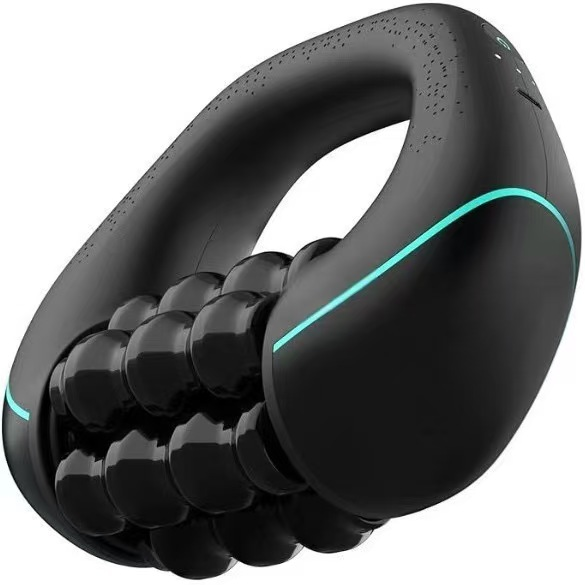
Your recovery isn't a one-size-fits-all protocol, so why should your percussion device run on a fixed setting? Start by mapping where your body holds tension after training. For dense areas like the glutes or quads, a slower, deeper stroke with higher amplitude helps break up adhesions without triggering a defensive muscle spasm. For smaller or more sensitive regions — calves, forearms, around the knees — dial back the speed and let the head glide rather than dig. The goal is to match the mechanical load to the tissue's tolerance, not to push through pain.
Timing matters as much as force. Immediately after a heavy session, a brief low-frequency pass over the worked muscles can ease vasoconstriction and gently restore range of motion. On rest days, a mid-range percussive rhythm for 60-90 seconds per muscle group supports nutrient exchange and keeps fascia from stiffening. If you're actively rehabbing a strain, avoid direct pressure on the injured site; instead work above and below the area to reduce guarding patterns. Adjust the angle of the attachment too — a flat head spreads impact across a broad plane, while a bullet tip concentrates it for trigger points that need focused release.
Finally, let your nervous system guide the settings. If a muscle twitches or you find yourself bracing against the device, the amplitude is likely too aggressive for that tissue at that moment. Ease back until the sensation feels like deep pressure rather than a jackhammer. Over weeks, you'll learn which profiles serve you on heavy squat days versus long run days — and that personalized map is what turns a generic gadget into a recovery tool.
The Role of Interchangeable Heads in Targeted Relief
Interchangeable heads turn a single tool into a versatile solution for different kinds of discomfort. Instead of relying on a one-size-fits-all attachment, you can swap in a broader surface for large muscle groups or a narrow point for precise work around joints and trigger points. This flexibility means the pressure and contact area are always matched to what your body actually needs at that moment.
Each head shape changes how force is delivered. A flat, wide head spreads pressure evenly across the back or thighs, making it suitable for general relaxation. A bullet or cone-shaped head focuses energy into a small area, which helps release stubborn knots without overworking surrounding tissue. By rotating through these options, you can address both broad tension and specific sore spots in a single session.
The real advantage is that you don't need multiple devices cluttering your space. One handle with a few well-designed heads covers most self-care routines, from warming up muscles before activity to easing tightness after long hours at a desk. This practical approach keeps relief accessible and tailored, rather than forcing you to adapt your body to a fixed tool.
Speed, Stall Force, and the Feel of a Custom Session
It's tempting to fixate on peak torque numbers when evaluating a direct drive base, but speed and stall force tell a far more honest story. Speed determines how quickly the motor can reverse direction—essential for catching snap oversteer or threading through a chicane without the wheel going limp. Stall force, on the other hand, is the sustained torque delivered while the wheel is nearly stationary, like when you're muscling through a long, loaded corner. Together they shape whether the base feels alive or just strong.
During a custom session, you start to realize these aren't just specs to brag about. Dialing in speed too high can make the wheel feel nervous, almost twitchy, while too little leaves a rubber-band lag that numbs fast transitions. Stall force adjustments change the weight under your palms—lower it and high-speed sweepers become floaty; raise it and the wheel fights you in a way that builds real muscle memory. The sweet spot is where the base stops feeling like hardware and starts reading your intentions.
What surprises most people is how much the feel of a session changes once you stop chasing maximum numbers. A base with moderate stall force but excellent speed can communicate kerbs and tire slip more clearly than a brute-force unit that just shoves back. After a few laps of fine-tuning, you forget you're testing a device—you're just driving, and the wheel becomes an extension of your hands rather than a spec sheet.
How Personalization Shortens the Gap Between Soreness and Readiness
For most athletes, the distance between feeling sore and actually being ready to train again isn't just about time. It's shaped by dozens of signals that change daily: sleep quality, resting heart rate, muscle oxygen levels, even how the same workout felt last month. When recovery advice treats everyone the same, it ignores those fluctuations. A generic "take 48 hours off" might leave one person undertrained and another still not recovered. Personalization closes that gap by turning raw recovery data into a clear, individual threshold for what "ready" means.
The real breakthrough comes when soreness stops being a guess. Instead of waiting until pain subsides, athletes can track objective markers like heart rate variability or jump height, then map those to their own past performance. If a runner's HRV dips below a personal baseline, the system knows the body is still absorbing the last hard session, even if muscle soreness has faded. Conversely, a lifter whose power output has returned to normal might be cleared to go heavy again a day earlier than a generic schedule would suggest. This isn't about replacing how you feel; it's about giving that feeling a reliable reference point.
Perhaps the biggest difference shows up in everyday training choices. A personalized readiness score can turn a vague "listen to your body" into something actionable: pick the interval session, drop volume by 20%, or take an extra rest day. That kind of precision matters most when you're managing back-to-back workouts or returning from injury. Over time, athletes stop overtraining out of guilt and undertraining out of caution. They begin to trust a system that adjusts as their baseline shifts, so the gap between sore and ready finally shrinks to a usable margin.
Real Routines: From Desk Shoulders to Marathon Legs
The knot between my shoulder blades used to be a permanent fixture by 3 p.m. I'd roll my neck, hear a crunch, and promise myself I'd stretch later. Later never came. So I stopped treating mobility like a separate workout and started stapling it to things I already did. A resistance band lives next to my keyboard now. Every time I send an email, I do ten pull-aparts. It takes twenty seconds, looks weird to my cat, and after two weeks the crunch was gone.
Running wasn't something I planned to take seriously. I started by jogging the mile to the grocery store instead of driving, mostly because parking is a nightmare. Then I'd add a loop around the block when the weather held. Those tiny, unglamorous runs stacked up. My legs stopped feeling heavy on stairs. My knees stopped complaining. No track workouts, no pace goals—just lacing up when I had the energy and stopping before I hated it.
The surprise was how connected everything became. Once my shoulders loosened up, my arm swing stopped fighting my stride, and running felt less like a chore. The stronger my legs got, the less my lower back ached during long desk days. You don't need a fancy program. You need a few honest routines that fit between the work calls and the laundry, and the patience to let small reps turn into real change.
FAQ
Most standard massage guns are built for a generic body, but your recovery needs are rarely generic. Maybe you have an old shoulder injury that flares up after overhead presses, or your calves stay tight from running on concrete. A custom unit lets you pick the amplitude, stall force, and even the grip shape so the tool actually works with your body instead of fighting it. That kind of tailoring is hard to get from a one-size-fits-all device.
It means the speed, depth, and attachment selection are matched to your specific muscle groups and how they respond. For example, a lighter percussion setting with a flat head might be ideal for your lower back, while deeper, slower strokes work better on your quads. You can also adjust the handle angle or battery position if you're using it solo. It's less about having more power and more about having the right kind of pressure where you need it.
Start by identifying two or three areas that consistently need work, like tight hip flexors from sitting or forearms from climbing. Experiment with different attachment heads and speeds, but keep notes on what leaves you feeling looser an hour later rather than just numb in the moment. A good custom build will let you save those preferences or swap parts quickly. Over time, you'll develop a few go-to protocols that beat any preset program.
Percussion therapy can get into deeper layers of muscle that foam rolling often misses, especially around dense areas like the glutes or pecs. When the frequency and amplitude are tuned to your tissue tolerance, you get better blood flow and reduced muscle guarding without the bruising that aggressive rolling can cause. It won't replace sleep or nutrition, but it can make your between-workout recovery noticeably more efficient.
It depends on how often you use the one you have and whether it's actually addressing your problem spots. If you find yourself avoiding it because it's too loud, too aggressive, or the head doesn't reach your mid-back, a custom setup can solve those specific annoyances. Think of it like moving from a rental wetsuit to one tailored to your measurements—the basic function is the same, but the daily experience is different enough to matter.
Focus on stall force first, because that determines whether the gun keeps hammering under pressure or bogs down on dense muscle. Next consider noise level and ergonomic grip, especially if you use it while watching TV or after a long day when your hands are tired. Battery life is nice, but a swappable battery or shorter charge time often matters more than a huge capacity. Don't overlook attachment material—softer rubber heads can be kinder to bony areas.
The biggest mistake is thinking that more speed or deeper amplitude automatically equals better recovery. Overdoing percussion on an already inflamed tendon or nerve area can make things worse. Another issue is ignoring the angle of the handle: a custom gun set up for your partner's back may torque your wrist if you try to use it on your own hamstrings. Always test on a low setting and avoid pressing directly on joints or bones.
Absolutely, because both groups deal with repetitive stress patterns—just different ones. Desk workers often need relief in the upper traps, wrist flexors, and lower back, which responds well to lighter, faster percussion with a small head. Athletes might need deeper, slower work on quads, hamstrings, or calves after heavy training. The beauty of a custom unit is that you can swap attachments and settings to fit either scenario without buying separate tools.
Conclusion
Most massage guns you find on the shelf are tuned to a one-size-fits-all spec, which ignores how your body actually responds to pressure, angle, and rhythm. A custom massage gun flips that by letting you adjust the percussion profile—speed, stall force, and even the attachment head—so the treatment follows your recovery needs rather than forcing you to adapt to the machine. For example, a flat head works well for broad muscle groups like quads, while a bullet head can dig into a knot near the shoulder blade that a generic device would miss entirely. That kind of targeted relief is what separates a forgettable gadget from a tool you reach for daily.
The real payoff shows up when you move from soreness to readiness faster. By tuning the session to match your activity—slow, deep strokes for tight desk shoulders or rapid, lighter percussion for tired marathon legs—you shorten the window between feeling wrecked and feeling ready to train again. Personalization also removes guesswork: instead of cycling through random speeds and hoping something works, you build a routine that matches your body’s feedback. Over time, that consistency adds up, making the custom massage gun less of a novelty and more of a legitimate part of your recovery stack.
Contact Us
Contact Person: Hannah
Email: [email protected]
Tel/WhatsApp: +86 18266954198
Website: https://www.okmassager.com/