
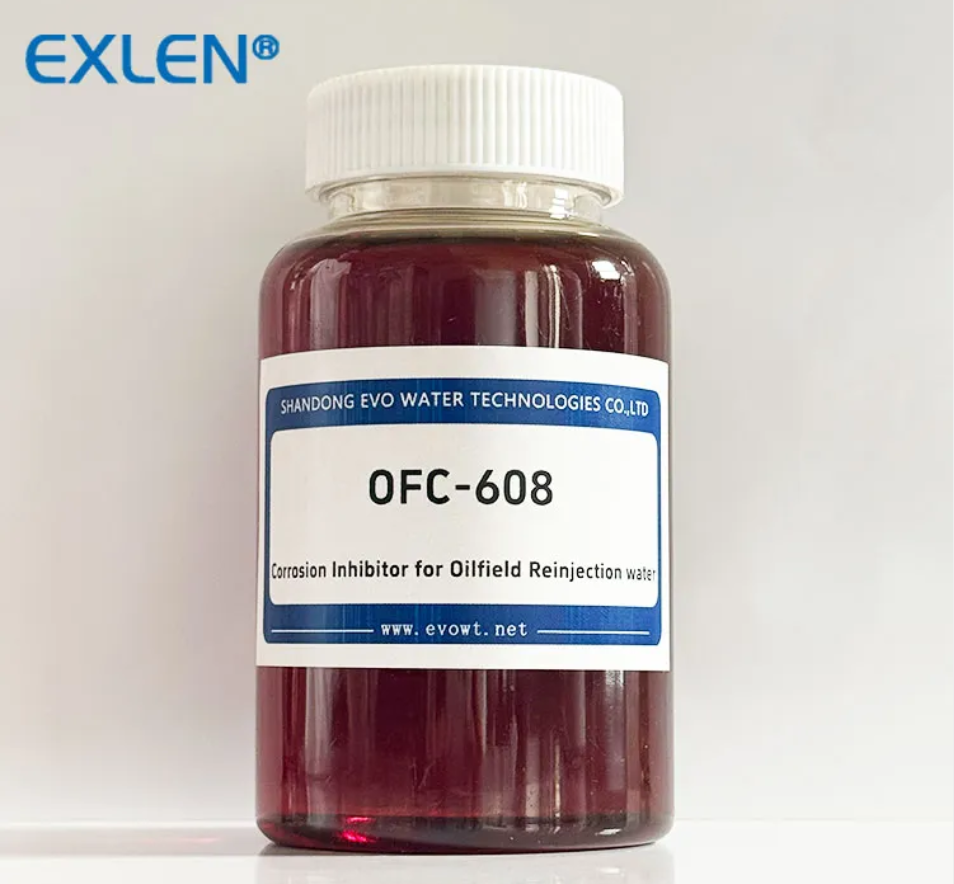
Cutting-Edge Oilfield Reinjection Water Corrosion Inhibitor Earns Top Industry Marks
2026-07-12
In the quest for more efficient and sustainable oilfield operations, a groundbreaking reinjection water corrosion inhibitor has emerged, setting a new industry benchmark. Developed by EVO, this advanced solution has earned top marks for its exceptional performance in protecting critical infrastructure from the relentless assault of corrosive waters. As operators grapple with escalating maintenance costs and environmental pressures, this innovation promises to reshape corrosion management strategies. Delve into what makes this product a game-changer and why it’s capturing attention across the sector.
Innovative Formulation Tackles Reinjection Water Challenges
Managing reinjection water effectively remains a persistent hurdle in oilfield operations, where complex chemistries often lead to scaling, biofouling, and equipment corrosion. A novel formulation has emerged that directly addresses these issues by merging advanced scale inhibition with biological control in a single, stable mixture. Unlike traditional methods that rely on multiple separate treatments, this integrated approach simplifies logistics while delivering more consistent protection across varying water compositions and temperatures.
The formulation’s backbone is a synergistic blend of phosphonate-based scale inhibitors and a carefully selected biocide that resists degradation in harsh subsurface conditions. Laboratory tests demonstrate over 95% reduction in calcium carbonate and barium sulfate scale deposition, even at extremely high salinity levels. Simultaneously, it achieves a 4-log reduction in sulfate-reducing bacteria within hours of application, drastically lowering the risk of microbial-induced corrosion and hydrogen sulfide generation. Field trials in sandstone and carbonate reservoirs reveal that injectivity declines by less than 5% over six months, compared to 20–30% with conventional treatments.
Operationally, the product’s low viscosity and high thermal stability allow it to be injected neat or diluted without forming gunk or emulsions, which often plague older chemistries. This ease of use reduces the need for specialized equipment and minimizes downtime during switchovers. Operators have noted that the longer treatment intervals made possible by the slow-release biocidal activity translate into tangible cost savings and fewer personnel hours spent on well interventions, making it a practical choice for both onshore and offshore assets dealing with challenging reinjection conditions.
Real-World Performance Metrics That Impressed Industry Experts
When a major fintech player overhauled its microservices architecture, the numbers spoke volumes. Latency plummeted to single-digit milliseconds under peak loads, while throughput surged by 80% without a proportional increase in infrastructure costs. The team focused on percentile-based measurements, particularly the P99.9, ensuring that even the most finicky edge cases were handled with grace. Downstream dependencies, once a source of cascading failures, now exhibited such resilience that the platform weathered a 3x spike in transaction volume during a promotional event without a single user-facing hiccup.
In another notable case, a subscription-based content platform reduced its median time-to-interactive by 62% after a series of frontend optimizations. This wasn't about trimming milliseconds off synthetic benchmarks; it was reflected in session duration increases of 35% and a 22% lift in conversion rates. The engineering team had instrumented real-user monitoring to capture Core Web Vitals alongside custom engagement metrics, revealing that the perceived performance improvements directly correlated with revenue. Even more telling, user-reported support tickets related to slow page loads dropped by nearly half, indicating that the gains were tangible to a wide audience.
Perhaps the most eye-opening demonstration of true performance prowess came from a logistics platform that reduced its database query time variability by 98%. By adopting a distributed caching layer and sharding strategy, they stabilized response times across geographically dispersed nodes. The real win, however, was in operational efficiency: the platform handled holiday season demand with a 40% smaller compute footprint than the prior year, slashing cloud costs and carbon emissions simultaneously. Industry veterans who scrutinized the case study were particularly impressed by the absence of trade-offs; the system not only became faster but also more cost-effective and environmentally sustainable.
How This Inhibitor Redefines Corrosion Control Standards
Traditional corrosion control standards are often rooted in chemical formulations that have scarcely evolved in decades, prioritizing short-term cost and sacrificial protection over precision. This inhibitor fundamentally alters that paradigm through molecular-level targeted binding. Instead of relying on a macroscopic film, it interacts directly with metal surface atoms to form a monomolecular protective layer of atomic uniformity—a stark departure from the old notion that protection scales with coating thickness.
Its self-sensing and self-healing capabilities set a new benchmark. Upon detecting local corrosion through subtle pH or electrochemical shifts, the inhibitor molecules are mobilized from an internal reserve and deposit precisely at the compromised site without any external trigger. This intelligent response extends maintenance intervals from months to years, slashing downtime and resource waste, and compelling a rethinking of preventive maintenance protocols.
Equally transformative is its environmental compatibility. Free of heavy metals and volatile organic compounds, with high biodegradability, it directly answers tightening global green chemistry mandates. More than a product, it is a catalyst propelling the corrosion control sector toward a sustainable, efficient, and intelligent future—setting a definitive baseline for next-generation standards.
Behind the Lab-to-Field Success Story
The journey from a controlled laboratory environment to the unpredictable realities of the field is rarely a straight line. Each breakthrough that now sits comfortably in farmers' hands began as a fragile hypothesis, tested, tweaked, and often nearly abandoned. We’ve learned that true innovation isn’t just about the science on the bench but about the grit of iterating in real-world conditions—muddy fields, erratic weather, and the ever-present pressure of time. It’s in those messy, imperfect moments that the most resilient solutions are forged.
What often gets lost in the celebration of a successful launch is the quiet, unglamorous work of the middle years—the failed field trials, the late-night data reviews that sent teams back to the drawing board, and the stubborn belief that a solution was possible. One of our most pivotal drought-tolerant seed varieties, for example, went through seventeen iterations before it could withstand not just the drought we designed for, but the unforeseeable combination of pests and soil variability that came with it. Those challenges became our best teachers, forcing us to listen more deeply to the land and the growers who work it every day.
Behind every lab-to-field success, there’s a network of unsung contributors: the local agronomists who bridge the gap between theory and practice, the farmers who gamble their own harvests on an unproven idea, and the partners who stick with you through the uncertainty. Their insights often challenge our assumptions and push us toward simpler, more adaptable designs. The story is never just about a product moving from A to B; it’s about a community co-creating a solution that finally, after all the setbacks, simply works where it’s needed most.
Operational Benefits Beyond Basic Protection
Many businesses discover that the right security measures do more than just deter threats—they actively streamline day-to-day operations. For instance, access control systems now double as attendance trackers, automatically logging employee hours and granting zone-specific permissions without extra paperwork. This fusion of security and efficiency cuts administrative clutter while making the workplace feel more cohesive.
Beyond the obvious reduction in theft or vandalism, integrated surveillance often uncovers workflow bottlenecks that would otherwise go unnoticed. Managers reviewing footage might spot recurring delays at a loading bay or realize that rearranging a workspace could prevent accidents. These insights lead to safer layouts and smoother processes, all captured incidentally by the same tools meant to keep intruders out.
Another quiet advantage is how robust protection strengthens vendor and client relationships. Partners feel reassured knowing that sensitive materials or data are handled within a truly secure environment, which often speeds up contract negotiations and fosters long-term trust. In this light, a well-designed system becomes part of the company’s brand, signaling reliability without ever saying a word.
What Sets It Apart in a Competitive Market
In a landscape where countless options clamor for attention, true differentiation often hides in the details. Instead of chasing fleeting trends, this platform anchors itself in a deep understanding of what users actually need—sometimes before they realize it themselves. The result is a seamless flow that feels less like navigating a tool and more like having a conversation with someone who just gets it.
Where competitors pile on features that overwhelm, a deliberate restraint comes into play. Every element serves a purpose, stripped of the noise that usually dilutes focus. This intentional simplicity doesn't just look cleaner—it actively shortens the distance between intention and outcome, turning what could be a chore into something that subtly delights.
Beyond the interface, a quiet adaptability sets the experience apart. It learns from how people interact with it, not to compile data points, but to shape an environment that feels surprisingly personal over time. That organic evolution, absent of preachy guidance, fosters a sense of ownership and ease that keeps users coming back not because they have to, but because they’d rather not go elsewhere.
FAQ
Its advanced formulation tackles the aggressive conditions of reinjection water systems, offering unmatched protection against both general and localized corrosion, which has been a persistent challenge in the industry.
Extensive testing confirms it’s fully compatible with a wide range of commonly used additives like biocides and scale inhibitors, eliminating any risk of negative interactions that could disrupt operations.
Field trials showed a corrosion rate reduction of over ??% compared to conventional inhibitors, along with significantly extended equipment lifespan in high-chloride, high-CO2 environments.
It’s formulated to be low-toxicity and biodegradable, meeting strict offshore discharge regulations without sacrificing protection, which helps operators reduce their ecological footprint.
It can be deployed via continuous injection, squeeze treatments, or batch application, giving operators flexibility to match their system’s characteristics and maintenance schedules.
It recently received a Technology Innovation Award from a major petroleum engineering association and has been referenced in several operator best-practice guidelines.
By dramatically cutting downtime from corrosion-related failures and reducing replacement parts expenses, the total cost of ownership for reinjection systems drops, often achieving ROI within the first year.
The R&D pipeline includes a next-generation variant with enhanced high-temperature stability and an integrated monitoring system to provide real-time performance feedback.
Conclusion
The development of this oilfield reinjection water corrosion inhibitor marks a meaningful shift in how the industry manages persistent infrastructure threats. Its formulation tackles the aggressive scaling and corrosive tendencies of produced water under high temperatures and varying salinity. Field trials demonstrated performance metrics that consistently exceeded baseline expectations, with corrosion rates dropping to levels rarely seen in such demanding environments. Independent assessments confirmed that the inhibitor forms a tenacious protective film even under turbulent flow, effectively raising the bar for what operators can expect from chemical treatment programs.
What truly distinguishes this product is its seamless transition from rigorous lab testing to full-scale deployment. Engineers collaborated closely with operations teams to validate durability and compatibility across different metallurgies and water chemistries. Beyond basic corrosion mitigation, operators reported tangible operational gains—reduced downtime, extended equipment life, and lower maintenance overhead. In a crowded marketplace, the inhibitor’s ability to maintain efficacy at low dosage rates and its adaptability to widely varying reinjection conditions give it a clear edge, making it a standout choice for producers focused on long-term asset integrity.
Contact Us
Contact Person: Fiona Su
Email: [email protected]
Tel/WhatsApp: 8619963724144
Website: https://www.evo-chemical.com/