

High Speed Paper Bag Machine Factory Capabilities That Drive Reliable Packaging Output
2026-11-22
Packaging lines only stay profitable when speed and consistency work together, but that balance is easy to claim and harder to build into a machine. High speed paper bag production demands more than rapid cycling—it requires precise web control, stable sealing, and minimal downtime under real factory conditions. ROKIN approaches that challenge from the manufacturing floor up, refining core capabilities that turn rated speed into dependable output. This blog looks at the factory strengths behind ROKIN high speed paper bag machines and why they matter for reliable packaging performance.
Precision Tooling That Keeps Every Pouch Dimension Consistent
Small shifts in seal bar alignment or blade wear show up quickly as pouches that vary by a millimeter or two—enough to jam downstream fillers or leave an uneven edge. The tooling here is machined to a tight tolerance and checked against master samples at the start of every shift, so width, gusset depth, and header placement stay where they should be.
Rather than relying on one fixed setting, the forming collars and sealing dies are adjusted to compensate for film thickness and stretch. That matters when running laminated films that recover differently after cutting. The result is a pouch that holds its shape from the first piece off the line to the last.
Routine maintenance is tied to actual cycle counts, not a calendar guess. Cutting edges are inspected under magnification, and any wear beyond the allowed limit triggers a tool change before it can drift into finished dimensions.
Material Tension Control That Avoids the Usual Snags
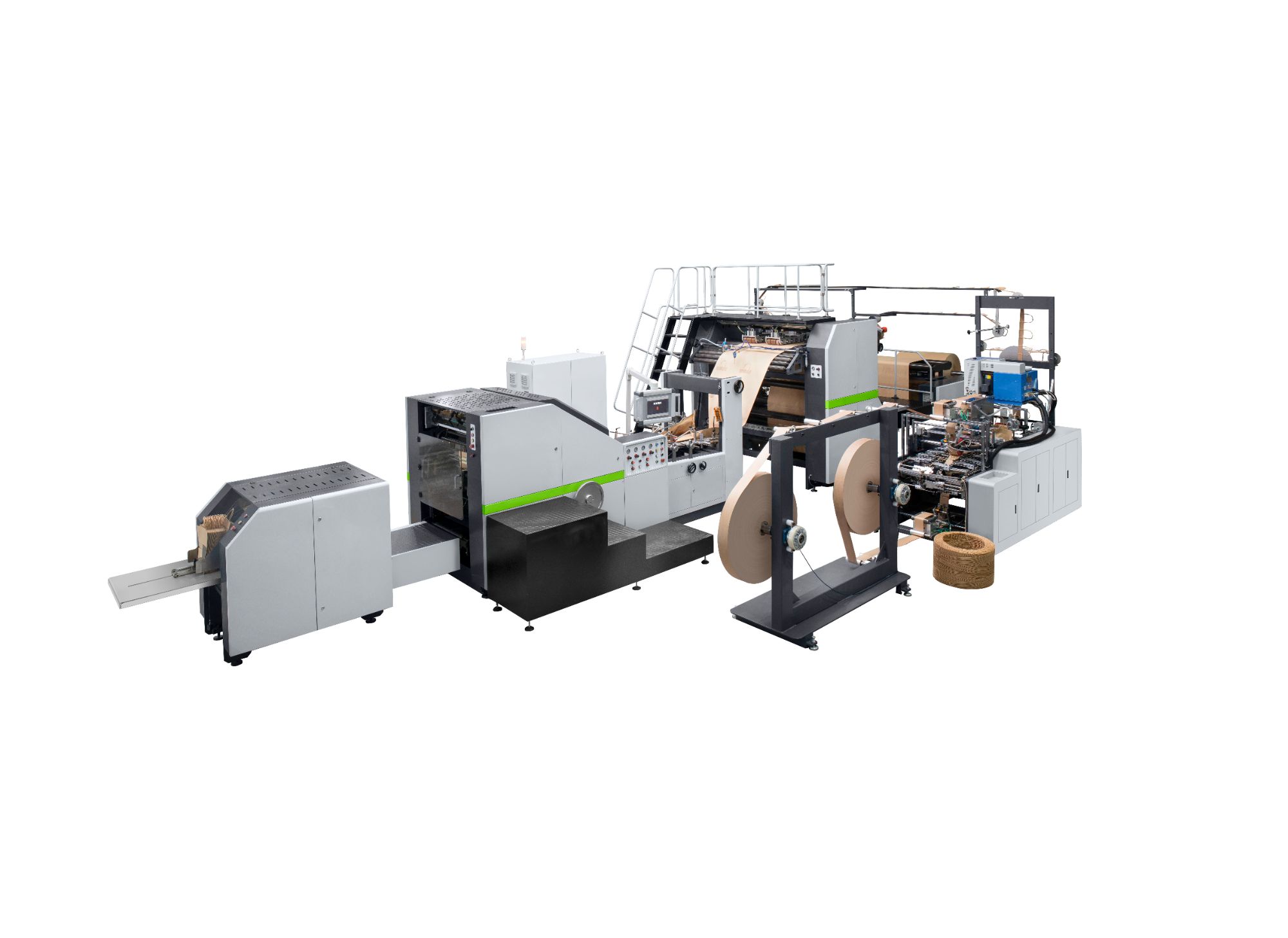
Most tension control setups spend their time reacting after a problem has already started. A roller grabs, the web drifts, and the correction arrives just late enough to leave a crease or a torn edge. Here, the material is held inside a controlled range from the moment it leaves the unwind, so changes in speed, roll build-up, or surface slip are absorbed before they turn into stoppages.
The difference comes from keeping the control effort small and constant instead of waiting for a large error to trigger a violent adjustment. By the time a splice passes through or a new roll beds in, the system has already compensated for the shift in pull. That means the web stays centered on the rollers, edges remain clean, and the usual grabbing at guides and coating stations simply does not get a chance to build.
On the floor, this translates into fewer slow-downs to clear wrapped film or paper and far less scrap caused by stretched or wrinkled material. Operators can leave the line at full speed and pay attention to product quality rather than watching for the next jam. The tension control works quietly in the background, which is often the clearest sign that it is doing its job.
Rapid Changeovers That Keep the Line Humming
Speed matters, but only if the setup holds. The best changeover routines aren't about rushing the crew; they're about removing every pointless step before the line ever stops. One plant we worked with cut a forty-minute die swap to twelve by staging tools on a cart that rolled up minutes ahead of the shutdown, preheating the next mold, and marking the exact torque sequence on the clamp with paint. No heroics, no shouting—just the next batch starting while the last one was still cooling.
The real trick is treating a changeover like a pit stop instead of a repair job. Every second of downtime has a price, so assign one person to own the checklist and another to handle only the consumables. Split the work into what can happen before the line stops, what has to happen while it's stopped, and what can wait until it's running again. A printed one-page sheet beats a tablet when hands are greasy, and a quick debrief after each swap catches the small delays that would otherwise become permanent habits.
Don't aim for a perfect changeover on day one. Time each one, keep the tally on a whiteboard near the line, and let the crew suggest the next cut. When people see their own idea shave thirty seconds off the clock, they stop guarding the old way and start hunting the next bottleneck. That's how a line keeps humming long after the consultants leave.
In-Line Inspection Points for Fewer Hidden Flaws
Most hidden flaws don't appear at the end of a production run; they start as small drifts in material, alignment, or pressure. Placing inspection points directly in the line, immediately after forming, cutting, or joining steps, makes those drifts visible while there is still time to correct them. A sensor mounted a few feet from a weld head or a camera checking seal edges right after cooling can catch what final sampling often misses.
The value comes from tight feedback rather than extra documentation. When an in-line check flags a trend, operators can pause a single station instead of scrapping an entire batch. That shifts the conversation from counting defects to tuning the process, which usually reduces variation faster than adding more end-of-line gates.
Spacing matters more than the number of devices. Inspection points should sit where a defect becomes detectable and before it gets buried under subsequent layers or assemblies. A few well-placed checks after high-risk transitions tend to reveal more hidden flaws than a dense array of redundant sensors.
Long-Run Durability Built Into the Frame
Most durability claims stop at the paint. This frame starts with the grain of the metal itself, aligning tube butting so the thickest walls sit exactly where fatigue cracks like to begin. The result is a chassis that doesn't just survive rough use, it stays predictable while doing it.
Instead of adding gussets as an afterthought, the rear triangle was laid out around them. That keeps the chainstays from flexing independently of the seat tube under loaded climbing or heavy cargo. Over thousands of miles, that unified movement prevents the hairline creaks that make a frame feel worn out before its time.
Hardware isolation matters too. Every threaded insert and cable guide is seated in a corrosion-resistant bed, so galvanic wear doesn't gradually erode the surrounding tube. Even in wet, salted conditions, the contact points stay intact and the frame retains its original stiffness rather than softening into a vague, tired ride.
Production Support That Steps In Before Output Slips
The most useful production support rarely announces itself. It lives in the small gaps between a stable run and a near miss—watching torque values wander, listening for a change in press rhythm, noticing that a fixture needs a fraction more pressure than it did yesterday. These are the warnings that don’t yet have a defect code, and that’s exactly when they should be caught.
Support teams work best when they are embedded in the rhythm of the line rather than called in after a stop. They set practical thresholds, walk the floor during shift changes, and ask operators what feels different. Minor adjustments to feed rates, cooling times, or tooling checks are made while output is still within tolerance, so a slow drift never becomes a rejected batch or an unplanned pause.
The result is less dramatic than firefighting, and that is the point. Output holds its quality because interruptions are denied the chance to form. Trust comes from consistency: the line keeps moving, specifications stay tight, and the support that protected the run is almost invisible by design.
FAQ
A factory that builds machines around heavy-duty frames, direct-drive servo systems, and precisely machined rollers tends to deliver far fewer surprises on the floor. Instead of relying on bolt-on fixes, the best shops keep the entire production process in-house, from cutting and welding to final assembly, so every tolerance is controlled before the machine reaches your packaging line.
The main thing is keeping tension steady across the paper web and controlling each forming station electronically. Machines with closed-loop tension control, automatic splice detection, and servo-synchronized draw rollers can run for hours without drifting out of register. That consistency is what keeps bag length, gusset depth, and seal placement stable from the first bag to the last.
Look for a factory that understands material handling as much as machinery. That means stainless steel contact parts where needed, oil-free bearings in sensitive zones, and options for inline perforation or handle attachment without contaminating the bag. A capable shop will also run trial batches with your actual paper grade, not just a standard sample, so the final machine is set up for the exact stiffness and surface finish you use.
Modular forming plates, quick-release gusset folders, and digitally saved job recipes make a big difference. The best designs avoid requiring a full teardown between sizes. Operators can swap a few sections, call up the stored parameters, and be back in production in under twenty minutes rather than losing half a shift to mechanical adjustments.
Yes, if the feeder and creasing sections are built for that range from the start. A well-designed machine handles everything from lightweight recycled stock to heavier kraft, and can switch between flat bags, gusseted bags, and satchel styles by changing forming components. The key is that the frame and drive system are rated for the full range, so you are not pushing a light-duty machine beyond its limits.
It usually comes down to inline inspection and tight mechanical repeatability. Cameras or laser sensors check for open seams, missing patches, or incorrect fold positions without slowing the line. At the same time, precision-ground cylinders and hardened creasing tools hold their shape over millions of cycles, which prevents the slow quality drift that cheaper machines show after a few months.
The frame should be thick, stress-relieved steel rather than light formed sheet metal. Gears and cams need to be hardened and ground, not just machined. Pay attention to the bearings and rollers as well. If those are cheap, the machine will fight itself at speed. A factory that stands behind its castings, shafts, and drive components is usually confident enough to offer a longer mechanical warranty.
Conclusion
A packaging line only stays dependable when the equipment underneath it absorbs variation without constant intervention. For high speed paper bag production, that begins with tooling that holds pouch dimensions steady across long batches so downstream sealing and filling never fight a drifting shape. Tension control is equally quiet but just as important: paper and film move through without the snags, wrinkles, or abrupt stops that usually force operators to slow the line. When a product switch is needed, rapid changeover equipment keeps the interruption short, which matters as much as raw speed in a busy plant.
The structure and inspection points are built for continuous output. In-line checks catch small flaws before they turn into packed defects, so fewer hidden rejects reach the customer. The frame itself is designed to hold alignment and timing over months of use instead of relying on frequent repairs. If output starts to slip, production support gets involved early with adjustments and spare parts guidance, bringing the line back to full pace before a minor issue turns into downtime. That combination is what keeps paper bag output steady and predictable without demanding constant operator intervention.
Contact Us
Contact Person: CARA
Email: [email protected]
Tel/WhatsApp: +8619519778302
Website: https://www.rokinmachinery.com