

High Strength Steel Soil Foundation Formwork: Expert Recommendations for Durable Construction
2026-07-17
Every construction professional knows that a solid foundation is the bedrock of any lasting structure. Yet, when it comes to soil foundation formwork, many still settle for conventional solutions that compromise on durability. High strength steel soil foundation formwork is changing the game, offering unmatched resilience against pressure, corrosion, and time. But what makes it truly indispensable for modern projects? In this post, we’ll cut through the noise and share expert recommendations that can elevate your next build. Discover how LugongMachinery is pioneering innovations in this space, and why your choice of formwork could be the smartest investment you make.
Why High-Strength Steel Outperforms Traditional Formwork in Soil Foundations
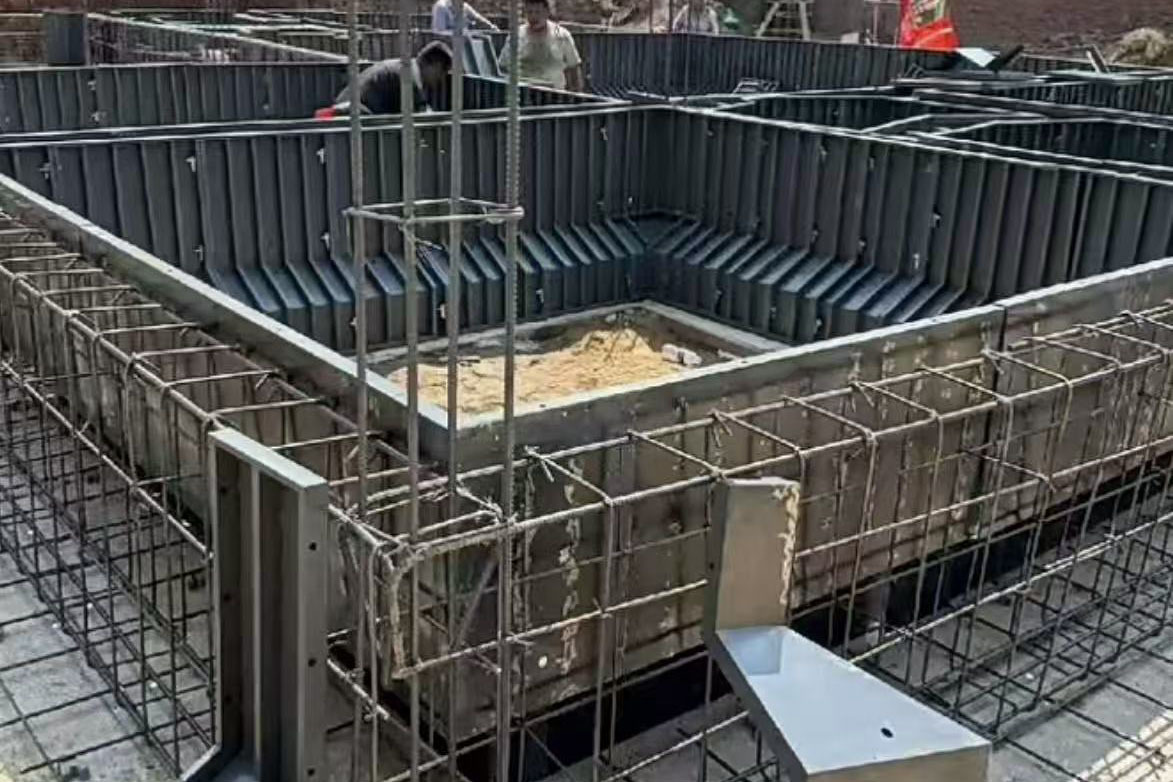
High-strength steel brings a level of resilience that timber or plywood simply can't match when dealing with the unpredictable nature of soil. Soil shifts, moisture fluctuations, and uneven compaction create constant pressure changes against formwork. Traditional materials absorb moisture, warp, and gradually lose their shape under these cycles, leading to misaligned pours and costly rework. Steel, on the other hand, maintains its dimensional stability regardless of ground conditions, ensuring that foundation walls remain plumb and true even as the earth around them settles or expands.
Another overlooked advantage is the sheer reusability factor in demanding soil environments. Wood forms often degrade rapidly after a few uses in damp or abrasive soil conditions, splintering or rotting at contact points. Steel forms, especially those with anti-corrosion coatings, can be stripped, cleaned, and reused dozens of times without significant wear. This durability matters on sites where the soil composition varies—from sandy to clay-heavy—because the formwork must endure scraping, pressure washing, and rough handling without losing its surface quality or structural integrity.
Perhaps most critical is how steel handles the hydrostatic and lateral pressures exerted by wet concrete and surrounding soil simultaneously. In deep excavations, traditional bracing systems can bow or fail when the ground pushes back against the form. Steel’s high modulus of elasticity allows for thinner, lighter panels that still resist deflection better than bulkier wooden alternatives. This means less bracing is needed, reducing underground obstructions and allowing for faster, safer pours in tight footing trenches where soil stability is often questionable.
Key Material Properties That Ensure Long-Term Durability
The real secret behind materials that stand the test of time isn't a single magic ingredient—it's how their fundamental properties work in concert. Take high-density polyethylene used in chemical storage tanks: its low moisture absorption and exceptional chemical resistance stop corrosive cracking before it starts, while its flexibility absorbs impacts that would shatter more rigid alternatives. This sort of built-in toughness doesn't come from lab shortcuts but from a molecular structure that naturally resists environmental stress, whether it's UV radiation causing embrittlement or freeze-thaw cycles working microscopic fissures into weaker materials.
We often overlook how thermal stability shapes a material's lifespan. Polymers that maintain their mechanical strength across wide temperature swings don't just survive—they perform consistently for decades without warping or becoming brittle. In structural applications, creep resistance determines whether a component will keep its precise dimensions under continuous load, or slowly deform into failure. The best examples come from aerospace-grade alloys and high-performance ceramics, where controlled grain structures and dislocation pinning mechanisms prevent that gradual slide toward fatigue. It's this stubborn refusal to degrade that separates a decade-long asset from a costly maintenance headache.
At the surface level, where most failures begin, the interplay between hardness and corrosion resistance becomes critical. A material like 316L stainless steel doesn't just resist pitting because it contains molybdenum; it forms a self-repairing passive oxide layer that chokes off localized attacks. Similarly, advanced coatings rely on a tight chemical bond rather than just physical adhesion, meaning they don't flake away when the substrate flexes. These properties aren't inherent guarantees—they must be verified through accelerated weathering tests and electrochemical analysis that simulate real-world abuse. When you select a material whose surface chemistry and bulk toughness are not just adequate but overengineered for the application, you're not just buying some raw stock; you're investing in a component that will still be doing its job when the replacements for lesser choices have long since hit the scrap heap.
Installation Best Practices From Seasoned Engineers
Seasoned engineers know that successful installations begin long before any tools are unboxed. A thorough pre-installation checklist is your best defense against surprises. This means not just verifying system requirements, but also understanding the operational environment — power stability, ambient temperature, and network topology. One often-overlooked step is documenting the current configuration state, including firmware versions and custom settings, so you have a clean rollback point if something goes sideways. Taking the time to walk the physical space and map out cable runs or mounting locations can prevent hours of rework later.
During the actual deployment, experienced hands rely on a careful, methodical pace rather than rushing through steps. They validate each major milestone — physical connectivity, basic power-on self-tests, and initial configuration loads — before moving deeper. A common practice is to stage complex changes in a lab or isolated network segment first, mirroring the production setup as closely as possible. This catches incompatibilities and quirky behavior that documentation never mentions. Seasoned engineers also keep a disciplined log of every command entered and every change made, turning the installation process into a repeatable, auditable narrative.
Post-installation, the work is far from over. Verification extends beyond simple ping tests to include load testing, failover drills, and monitoring baseline establishment. Veterans understand that the true test of an installation is how it behaves under real traffic over the first few days. They schedule explicit hand-off sessions with operations teams, sharing not just the final configuration but also the rationale behind key decisions. This knowledge transfer turns a one-time installation into a lasting, maintainable system. Finally, a retrospective review of what went well and what didn’t feeds back into the team’s playbook for next time.
Avoiding Common Pitfalls in Soil Foundation Formwork
Getting the formwork right from the start means understanding the ground you're building on. Soil isn't just dirt—it's a living, shifting material that reacts to moisture, load, and temperature. One of the first mistakes is ignoring soil variability. Even within a single site, bearing capacity can change dramatically over a few meters. A footing that holds firm in one spot might settle unevenly in another if the formwork doesn't account for these differences. Instead of assuming uniform conditions, test the soil in multiple locations and adjust your formwork design accordingly. For softer patches, widening the footing or adding reinforcement can make all the difference, preventing the kind of differential settlement that cracks walls and warps frames.
Another overlooked aspect is moisture management. Fresh concrete releases a lot of water, and if the surrounding soil drinks it up too fast, you end up with honeycombing, weak edges, or even formwork collapse. On the flip side, oversaturated soil can push forms out of alignment. Smart builders use a few cheap tricks to stay ahead: line the trench with plastic sheeting to control moisture loss, place a thin gravel layer for drainage, and always check the weather. Pouring just before a downpour or on bone-dry ground without preparation invites trouble. Small steps like these keep the concrete from bonding with the soil prematurely or washing out fines that support the form.
Finally, never underestimate the importance of form alignment and bracing. It's tempting to eyeball it on a simple foundation, but soil movement, backfill pressure, and even the weight of wet concrete can shift forms fractions of an inch—enough to throw off the whole structure. Use string lines and spirit levels aggressively, and brace both sides of the formwork with stakes driven well below the frost line where applicable. In clay-heavy soils, consider leaving the forms in place a bit longer to give the concrete time to cure before exposing it to the soil's inevitable push. Rushing to strip forms to save a day often leads to weeks of repairs down the line.
Real-World Projects: How Steel Formwork Withstands Harsh Conditions
Across remote infrastructure projects, steel formwork has proven its resilience where other materials fail. On a bridge construction site exposed to salt-laden coastal winds, modular steel panels showed zero deflection after months of continuous use, even when temperatures swung from freezing nights to scorching afternoons. The inherent stiffness of steel resists warping, keeping wall and slab geometries precise regardless of the weather’s mood swings. Crews quickly learned that pre-assembled steel gangs could be stripped and re-set faster than timber alternatives, cutting crane time significantly and keeping the pour schedule on track despite the brutal climate.
One particularly telling case involved a water treatment plant built in a chemically aggressive environment. The high-strength steel forms were specified not just for their load-bearing capacity, but for their inert surface that easily sheds concrete splatter and resists corrosion from curing compounds and accidental chemical spills. Daily power-washing left no pitting or erosion, a stark contrast to the softened, swollen edges commonly seen with wooden forms under similar abuse. The contractor reported that the same set of steel forms delivered over 400 reuses with minimal maintenance, directly reducing material waste and logistical headaches.
Offshore wind turbine foundations also showcase steel formwork’s mettle. When tidal surges and constant humidity challenge every component, fully sealed steel forms keep saltwater intrusion at bay, protecting the pour integrity. Welded joints and smooth face plates eliminate moisture ingress points, while the sheer mass of the assembly counters buoyancy forces during submersion. In these real-world trials, steel formwork doesn’t just survive harsh conditions—it turns them into an everyday working environment where consistency and speed become the norm.
Future Innovations in Foundation Formwork Design
The next wave of foundation formwork moves beyond simple material upgrades, embracing self-sensing systems that monitor concrete curing in real time. Embedded sensors track temperature, moisture, and pressure gradients, relaying data to construction teams through low-power wireless networks. This shift eliminates guesswork during stripping sequences and allows for adaptive curing processes, reducing early-age cracking while trimming days from tight schedules.
Shape-shifting formwork is emerging from research labs, utilizing modular, reconfigurable panels and robotic actuators to create complex geometries without custom fabrication. These systems can morph from a straight retaining wall profile to a curved basement configuration in hours, dramatically reducing the need for multiple form sets. Pairing these with geopolymer concretes that cure under ambient conditions further cuts emissions, positioning foundation work as a net-zero contributor rather than a carbon liability.
Logistics-driven design platforms are quietly reshaping how formwork arrives on site. Predictive procurement tools, synced with real-time project schedules, trigger just-in-time deliveries of precisely nested components. This slashes storage demands and idle crane time, while embedded RFID tags enable automated inventory reconciliation. The result is a leaner, quieter site where formwork flows in rhythm with the crew, not against it.
FAQ
High strength steel resists warping and degradation under wet soil conditions far better than wood. It also handles extreme pressure without losing shape, which is critical when pouring large foundations.
Applying a high-quality epoxy coating before use and cleaning off dirt promptly after dismantling makes a big difference. Some teams also opt for galvanized steel panels for projects with extended soil exposure.
Absolutely. You’ll want to use adjustable base plates and shim as needed to keep panels plumb. For slopes, stepped footing designs often pair well with modular steel systems to maintain uniform concrete thickness.
For most residential and light commercial work, 4mm to 6mm panels hold up well. Where backfill pressures are higher, like deep basements, stepping up to 8mm or thicker panels prevents deflection.
Yes, one of its big advantages is reusability. After each pour, check for bent edges, weld cracks, and pitting. Even minor damage can accelerate wear, so a quick visual check and straightedge test saves issues down the line.
Steel has a low water absorption rate, so it doesn’t suffer from the internal cracking that porous materials do in freeze-thaw conditions. That said, ice buildup on surfaces needs to be removed before concrete placement to maintain bond quality.
Diagonal push-pull braces anchored into firm ground give the most control. On taller walls, adding walers and strongbacks every few feet distributes pressure evenly and keeps the face straight.
Conclusion
High-strength steel formwork has become the preferred choice for soil foundation projects, offering clear advantages over traditional wood or aluminum systems. Its exceptional load-bearing capacity and resistance to deformation ensure that concrete is cast with precision even under high lateral soil pressure. Unlike timber, steel does not warp, rot, or soak up moisture, so it retains its structural integrity in consistently wet ground conditions. The material’s high yield strength and excellent modulus of elasticity deliver long-term durability, while advanced galvanic or epoxy coatings shield against corrosive soil chemicals. Engineers consistently choose these properties to cut down on maintenance and the need for early replacement, making the investment pay off over the life of the structure.
Successful installation hinges on following proven practices: seasoned crews compact the soil thoroughly and verify alignment before any pour. Common mistakes—like insufficient bracing, poor drainage planning, or rushed assembly—can cause blowouts or misaligned walls, so thorough checks are essential. Real-world case studies, from urban skyscraper basements to bridge piers in aggressive environments, show how high-strength steel formwork withstands cyclic loading, seismic shifts, and harsh weather without faltering. Exciting innovations are already emerging, including modular snap-together panels and smart formwork with embedded sensors that track pressure, temperature, and curing progress in real time. These developments promise to further boost efficiency and reliability, pushing durable foundation construction into a new era.
Contact Us
Contact Person: Zhang Zhenlai
Email: [email protected]
Tel/WhatsApp: 8618563210000
Website: https://en.lugongmachinery.com/