
High Tenacity Anti-UV Nylon 66 Filament Yarn: Custom Solutions for Demanding Applications
2026-07-29
In demanding industrial applications where strength meets relentless UV exposure, ordinary yarns quickly degrade. But what if there was a filament yarn designed to withstand both high stress and harsh sunlight without compromise? Enter the high tenacity anti-UV Nylon 66 filament yarn—a material engineered for the toughest environments. At Changshu Polyester, we specialize in customizing this advanced yarn to meet your exact specifications, ensuring durability that outlasts expectations. In this post, we'll explore how our tailored solutions can elevate your products.
Engineered to Endure: Unpacking the Strength of Nylon 66
Nylon 66 earns its reputation through a molecular architecture that resists failure across a wide range of conditions. Its polymer chains pack tightly thanks to regular amide group spacing, forming dense crystalline regions interwoven with flexible amorphous zones. This structure delivers high tensile strength and stiffness without brittleness, allowing parts to bear repeated loads while gradually wearing instead of snapping. The balance is no accident—every chain length and hydrogen bond alignment contributes to an intrinsic toughness that few thermoplastics can match.
Heat and chemicals do surprisingly little to unsettle this material. With a melting point around 260°C, Nylon 66 holds its shape and mechanical properties well beyond the limits of many engineering plastics. It deflects hot oils, fuels, and mild alkalis without softening or cracking, making it a reliable choice for under‑hood vehicle components and industrial conveyors. Even under extended exposure, degradation tends to proceed through a slow, predictable oxidation—giving engineers the confidence to design with known safety factors.
Moisture absorption, often treated as a weakness, actually plays a role in Nylon 66’s real‑world durability. Absorbing a few percent of water plasticizes the matrix, boosting impact resistance and fatigue life in parts that cycle between dry and damp environments. Seasoned users learn to account for dimensional changes during design, turning what could be a liability into an advantage for snap‑fits and vibration‑damping applications. It’s this nuanced behavior that keeps the material relevant in demanding fields like aerospace and precision machinery.
Battling the Elements: How Anti-UV Technology Extends Yarn Life
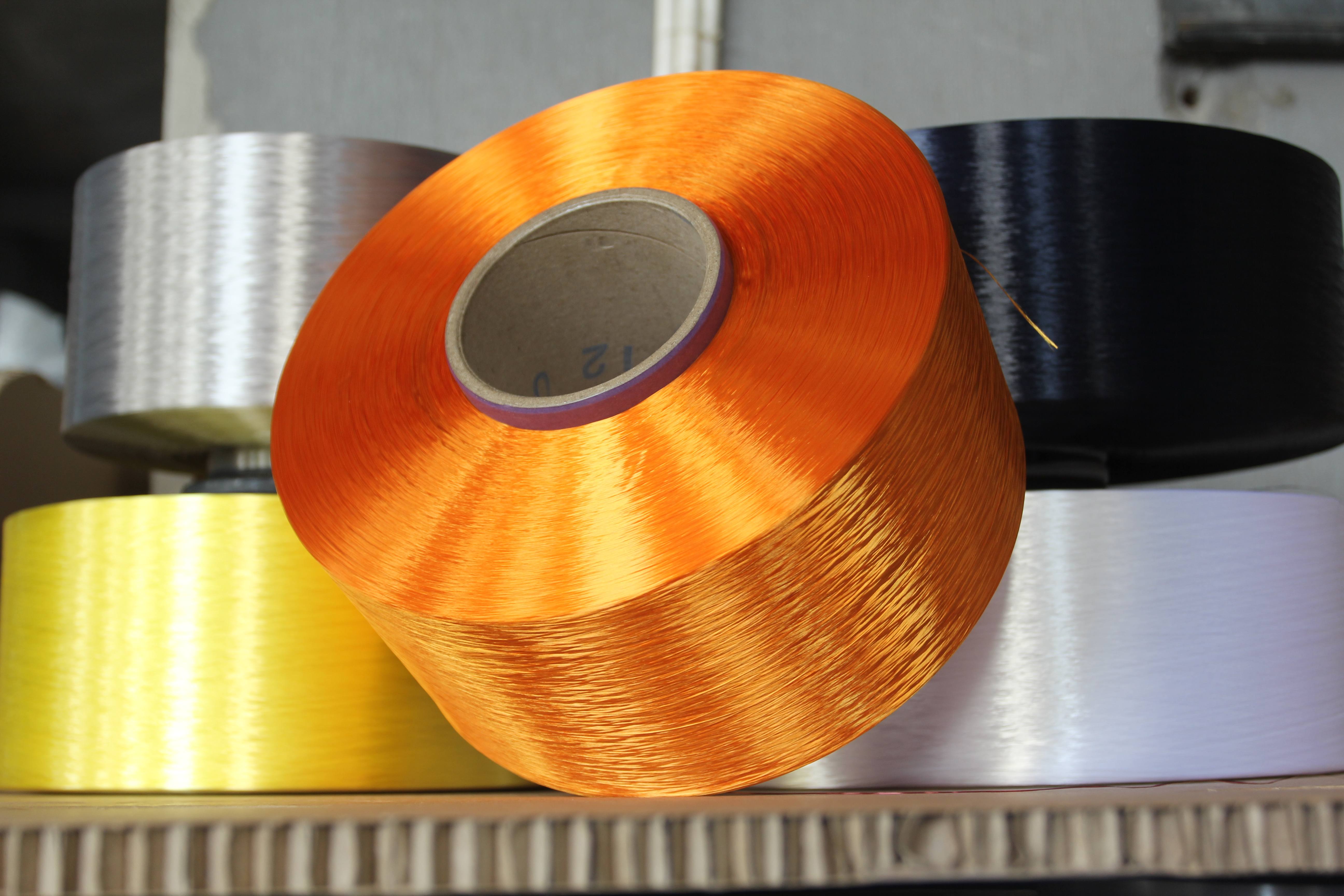
Outdoor textiles face an unrelenting assault from sunlight, with ultraviolet rays slowly breaking down fibers at a molecular level. This photodegradation weakens yarn, causing fading, brittleness, and eventual failure. Anti-UV technology works by incorporating stabilizers directly into the polymer matrix or applying protective coatings that absorb or reflect harmful radiation. These additives act as sacrificial shields, dissipating UV energy as harmless heat instead of letting it tear apart chemical bonds. The result is a dramatic slowdown in the aging process, preserving the yarn’s structural integrity long after untreated materials would have crumbled.
Beyond mere blocking, advanced anti-UV treatments are engineered to weather a range of environmental challenges simultaneously. Moisture, temperature swings, and abrasive particles can all compound sun damage, but integrated solutions form a resilient barrier that repels water and resists micro-cracking. This multifaceted defense ensures that the yarn’s tensile strength and elasticity remain consistent, even after years of exposure on awnings, marine upholstery, or agricultural covers. Manufacturers often tailor these formulations to specific polymer types—polyester, nylon, or polypropylene—optimizing compatibility and performance without compromising the material’s natural hand or dyeability.
The payoffs extend well beyond durability. By extending the useful life of yarn, anti-UV technology directly curbs replacement costs and reduces waste, making it a quiet champion of sustainability. It also preserves aesthetic qualities: vivid colors hold fast against bleaching, and surface textures avoid the chalky degradation that plagues unprotected fabrics. For industries where material failure can lead to safety hazards or costly downtime—such as in tensile architecture or outdoor gear—this technology is not just an upgrade but a fundamental necessity. In the long run, weaving in UV protection transforms yarn from a disposable commodity into a lasting asset.
Beyond Off-the-Shelf: Crafting Filaments to Your Unique Demands
Mass-produced filaments rarely satisfy every technical requirement. They arrive in standard spools with fixed diameters, predictable material blends, and limited color palettes—fine for basic prints but a compromise for specialized projects. When your work demands a specific flexural modulus, higher heat resistance, or a particular translucency, the one-size-fits-all approach simply falls short.
Custom filament opens a door to material properties that off-the-shelf options can’t touch. You control the base polymer, the additive package—whether it’s carbon fiber for rigidity, metallic powders for weight and finish, or glass beads for dimensional stability. Adjusting diameter tolerances and ovality yourself means tighter extrusion control and fewer surprises during a long print. Even color becomes a precise choice rather than a close-enough match.
The process shifts your workflow from being a consumer to a collaborator in material science. Small-batch extrusion lets you iterate quickly: tweak a blend, evaluate print quality, and refine until the filament aligns perfectly with the end-use environment. It not only solves performance gaps but also eliminates the need to stockpile multiple spools of uncertain origin, giving you exactly what you need for each unique application.
Where Performance Meets Precision: Applications in Demanding Environments
In the thick of a mining operation or the hum of a high-speed assembly line, every component earns its place through a brutal audition. It's not enough to be powerful; if a motor can't hold a fraction of a millimeter under variable loads, the entire workflow stumbles. That's where the marriage of raw performance and surgical precision becomes non-negotiable.
Consider deep-sea robotics. Saltwater corrosion, crushing pressure, and the total absence of maintenance windows demand machinery that doesn't just survive but performs with unwavering accuracy. A manipulator arm that can swing a 200-kilogram payload but also nudge a delicate sensor into alignment—that's the uncelebrated everyday miracle.
And then there's the cold chain. Refrigeration units in remote distribution hubs must scream to life in sub-zero dawns and maintain temperatures within the narrowest bands, because a single degree of drift doesn't mean a spoiled pallet; it means a broken trust with the people who rely on that food or medicine. These are the quiet proving grounds where gear either develops a legend, or doesn't come back.
The Fiber of Innovation: Custom Solutions for Complex Challenges
Innovation rarely follows a straight line, and the materials we rely on shouldn’t either. When standard fibers fall short, custom-engineered solutions step in—shaped not just by performance needs, but by the unique pressures of an industry, a climate, or a singular design vision. From aerospace-grade composites that shed weight while bearing extreme loads, to medical textiles that dissolve predictably inside the body, the real breakthrough isn’t the material itself but the willingness to question every assumption about what a fiber can do.
Complex challenges rarely respect off-the-shelf answers. A single fiber may need to conduct data, resist microbial growth, and remain supple enough for wearable tech—all while surviving countless wash cycles. Meeting those demands means weaving together chemistry, textile engineering, and end-use intuition. It’s a quiet craft: testing dozens of polymeric blends, tweaking extrusion parameters, and listening closely when a client says, “That’s almost perfect, but can it also…?” The answer, more often than not, starts with a prototype that doesn’t yet exist.
The real value lies in the problems that get solved along the way. A braided suture that promotes healing while minimizing scarring. A fire-resistant fabric light enough for racing gear but tough enough for industrial burn zones. These aren’t catalogue picks; they’re deliberate, painstaking collaborations where the fiber becomes a platform for possibility. And for those staring down a challenge that seems material-bound, the next leap forward might just begin with a simple, provocative question: what if we built the fiber from scratch, around the problem, not the other way around?
Built to Last: Real-World Performance of High-Tenacity Yarn
In demanding environments where failure isn't an option, high-tenacity yarn quietly proves its worth day after day. From the mooring lines that secure offshore platforms in heaving seas to the reinforcement fabrics in heavy-duty conveyor belts, these yarns deliver consistent strength that engineers rely on without a second thought. It's the kind of durability that becomes apparent only when you check the logbooks and realize the same set of slings has been hauling multi-ton loads for over a decade with barely a trace of wear.
What sets this performance apart isn't a single lab test but a constellation of real-world trials—abrasion against rough concrete, repeated flexing over sheaves, exposure to harsh chemicals and UV radiation. In textile architecture, for instance, yarns in tensile membrane roofs endure years of flapping wind, snow loads, and intense sunlight while retaining enough residual strength to meet safety factors. Users in the field often remark that the material doesn't just survive; it stays predictable, allowing for confident retirement schedules rather than emergency replacements.
Perhaps the most telling evidence comes from the racing sailcloth industry, where laminates of high-tenacity yarns are pushed to the edge of their mechanical limits in every regatta. After thousands of miles of violent flogging and saltwater saturation, the best yarns show only minor property degradation—a testament to molecular alignment and filament bonding done right. This isn't about marketing claims; it's about gear that sailors and riggers learn to trust implicitly because they've seen it outlast everything else on the boat.
FAQ
It combines the inherent strength and abrasion resistance of nylon 66 with specialized UV stabilizers that are integrated during fiber spinning. This means the yarn maintains its mechanical integrity and color even after prolonged sun exposure, far outperforming standard polyamide yarns in outdoor or high-stress environments.
Demanding sectors like outdoor gear (tents, backpacks, ropes), automotive (seat belts, airbag fabrics, upholstery), military (tactical webbing, parachute cords), and industrial textiles (conveyor belts, safety harnesses) see huge gains, as the yarn can be tailored to exact strength, elongation, and UV resistance requirements without compromise.
You define the performance parameters—think denier, filament count, tenacity, UV resistance rating, color, and finish. Our engineering team then adjusts the polymer recipe and spinning parameters accordingly, runs pilot batches for approval, and scales up only when the specs are perfectly matched.
Unlike surface coatings that wear off, the UV stabilizers in our nylon 66 are embedded within the polymer matrix. This means repeated exposure, washing, and abrasion do not strip away the protection—the yarn retains its anti-UV properties throughout its service life, even under aggressive conditions.
Our high tenacity nylon 66 filament yarn typically delivers 20–30% higher breaking strength than regular nylon 6 or commodity nylon 66, depending on the formulation. Plus, the integrated anti-UV package prevents premature photodegradation, so the durability advantage grows over time, especially in outdoor use.
Absolutely. We encourage prototyping with small batch runs. You can test the yarn in your own manufacturing process—knitting, weaving, braiding, whatever—to validate performance. Once you’re satisfied, we seamlessly transition to commercial-scale production with the same exact specs.
Conclusion
In the world of high-performance textiles, the demand for materials that can withstand extreme conditions without compromising on longevity has never been greater. High-tenacity anti-UV nylon 66 filament yarn emerges as a definitive answer, combining inherent mechanical strength with advanced protection against sunlight degradation. Unlike conventional yarns that falter under stress or prolonged exposure, this engineered fiber is built from the molecular level up—its tightly bonded polymer chains deliver remarkable tensile power, tear resistance, and dimensional stability. When infused with specialized UV inhibitors during extrusion, the yarn gains an extra shield, effectively slowing down the photo-oxidation process that normally causes brittleness and color fading. This dual capacity to endure heavy loads and resist environmental wear makes it a cornerstone for applications where failure is simply not an option, from outdoor gear and automotive components to industrial strappings and safety harnesses.
Yet what truly sets these filaments apart is the ability to move beyond standard specifications and embrace tailored engineering. Manufacturers can adjust denier, tenacity, elongation, and even the level of UV resistance to align precisely with a client's unique operational demands. Whether it's a need for enhanced abrasion resistance in military webbing, a specific shade retention for marine upholstery, or a precise shrinkage profile for composite reinforcement, customization is the rule, not the exception. Real-world deployments consistently prove the yarn's mettle—retaining over 90% of its original strength after thousands of hours of accelerated weathering tests, and outlasting generic alternatives in abrasive mining conveyance belts or alpine climbing ropes. This fusion of bespoke design and proven durability not only reduces replacement cycles and material waste but also empowers innovators to push the limits of what textiles can achieve in the harshest corners of the planet.
Contact Us
Contact Person: CONNIE
Email: [email protected]
Tel/WhatsApp: 86-0512-53671634
Website: https://www.lida-yarn.com/