

Industrial SLA 3D Printer Company in China Leads Advanced Manufacturing Innovation
2026-06-08
In the heart of China's manufacturing revolution, one name is silently reshaping how industries think about precision and speed. ProtoMat, an industrial SLA 3D printer company, is not just riding the wave of advanced manufacturing—it's creating it. But what truly sets them apart in a crowded global market? As demand for micron-level accuracy soars, the answer lies in a perfect storm of innovation, scalability, and a fiercely pragmatic approach to engineering. This isn't just about printing parts; it's about rewriting the rules of production.
Redefining Production Lines with SLA Precision
Bringing stereolithography into production environments shifts the focus from prototyping to direct manufacturing of end-use components. The layer-by-layer curing of photopolymer resin delivers surface finishes and dimensional accuracy that rival CNC machining, without the need for extensive post-processing. This precision allows production lines to skip traditional tooling steps, directly outputting parts that meet tight tolerances for automotive, medical, and consumer electronics sectors.
On the factory floor, SLA printers now operate continuously, producing custom jigs, fixtures, and even small batches of functional parts overnight. The consistency of the process means that the hundredth part mirrors the first one exactly, removing variability that often plagues manual or subtractive methods. Engineers can iterate on tooling designs in hours instead of weeks, keeping assembly lines adaptive without holding up production schedules.
The precision also unlocks new opportunities for lightweighting and complex geometries, such as internal channels or lattice structures, that traditional methods cannot easily replicate. This redefines how components are designed, with material placed only where needed. By merging prototyping and production into a single workflow, SLA bridges the gap between design intent and manufactured reality, reducing both material waste and inventory overhead.
China’s Next Manufacturing Leap: Resin-Based 3D Printing
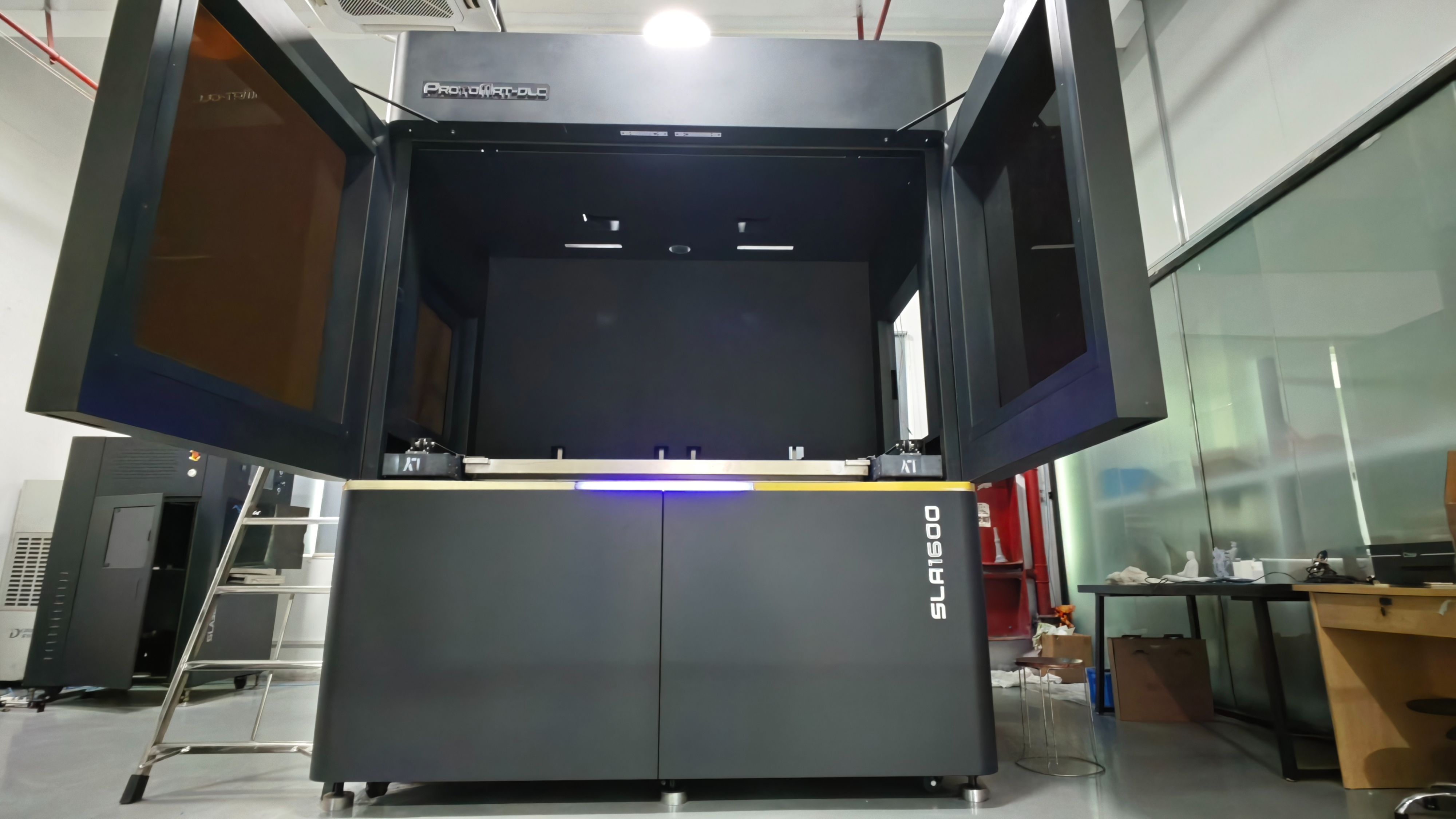
Resin-based 3D printing is quietly reshaping how Chinese factories approach prototyping and short-run production. Unlike traditional methods that rely on melting filament, these machines use light to cure liquid resin layer by layer, resulting in parts with exceptionally smooth surfaces and fine details. The shift isn't just about better aesthetics—it's about compressing design cycles from weeks to hours, allowing engineers to iterate at a pace that was once unimaginable.
A growing number of domestic manufacturers are now producing high-resolution resin printers that rival or exceed the capabilities of established foreign brands. These devices are not only more affordable but are also tailored for the unique demands of local industries, from consumer electronics enclosures to dental aligners and intricate jewelry molds. The ecosystem of materials has expanded as well, with specialty resins offering properties like heat resistance, flexibility, and even biocompatibility, widening the scope of end-use applications.
What sets this apart is the integration of these printers into automated production lines. Instead of standing alone as prototyping tools, resin printers are increasingly linked to post-processing stations that wash, cure, and finish parts with minimal human intervention. This seamless workflow hints at a future where mass customization becomes economically feasible, and China's manufacturing sector is positioning itself at the forefront of that transition.
Industrial-Grade Materials Driving Innovation
The relentless pursuit of performance has always hinged on the materials we engineer. Today, industrial-grade composites and advanced alloys are redefining what's possible, from lighter aerospace frames that slash fuel consumption to medical implants that bond seamlessly with human tissue. These aren't just incremental upgrades—they're foundational shifts allowing engineers to push past old thresholds of strength, heat resistance, and durability.
Take high-entropy alloys, for example. By blending multiple principal elements in near-equal ratios, we unlock combinations of hardness and toughness that traditional metallurgy could never achieve. This opens doors for extreme-environment applications like hypersonic vehicles or deep-sea robotics, where materials must withstand simultaneous thermal and mechanical stress without compromise. It's a playground of physics that turns theoretical possibilities into tangible prototypes.
Beyond sheer performance, smart materials are weaving intelligence into the very fabric of infrastructure. Self-healing concrete, embedded with bacteria that produce limestone when cracks appear, extends the life of bridges and tunnels while slashing maintenance costs. Meanwhile, shape-memory polymers can morph in response to temperature shifts, enabling adaptive components in automotive and aerospace design. Such innovations aren't distant dreams—they're already being road-tested, quietly reshaping industries from the ground up.
Custom Solutions for Complex Engineering Challenges
When off-the-shelf answers fall short, we dig into the physics, materials, and manufacturing processes that define your unique problem. Our team merges deep domain knowledge with hands-on prototyping to craft systems that perform reliably under extreme conditions—whether it’s withstanding corrosive chemicals, delivering micron-level precision, or maintaining stability across temperature swings. We don’t just adapt existing designs; we build from the ground up around your operational constraints, turning perplexing constraints into tailored, production-ready solutions.
Every project begins by mapping the real-world forces at play, from thermal cycling to dynamic loads, and translating them into engineering requirements that rule out guesswork. We then iterate through design, simulation, and physical testing in a tight feedback loop, often using in-house rapid tooling to validate concepts within days. The result is a solution that not only meets your technical specs but also integrates seamlessly with your broader workflow, minimizing downtime and retraining. It’s this blend of analytical rigor and agile execution that lets us tackle challenges others consider too niche or demanding.
What truly sets our approach apart is an obsession with the subtle details that generic providers miss: the way vibration damping shifts with frequency, how thermal expansion cascades through an assembly, or the wear patterns that emerge after millions of cycles. By addressing these early, we circumvent the trial-and-error that plagues complex programs. Clients come to us with vague headaches and leave with elegantly engineered assemblies that simply work, often outperforming their legacy systems by margins they hadn’t thought possible.
From Rapid Prototyping to End-Use Parts
What once started as quick mockups for form and fit testing has quietly evolved into a reliable pathway for producing final components. The line between a prototype and a part destined for the real world has blurred, thanks to advances in materials, precision, and process control. Engineers no longer have to switch gears entirely when moving from testing to production; the same technologies that shaped early concepts can now deliver durable, functional items that withstand daily wear.
This shift isn't just about skipping tooling or slashing lead times—though those are real perks. It opens up a kind of design freedom that traditional manufacturing often stifles. Complex geometries, internal channels, and lightweight lattices become feasible without the usual cost penalties. The result is a workflow where iterating on a design doesn't mean starting over, and where the final article retains all the thoughtful details of its early versions, only now built to last.
Industries are catching on in practical ways. In medical settings, patient-specific surgical guides and implants move from scan to sterile product without intermediate steps. Automotive teams use the same approach for low-volume interior components that need to look and feel production-grade. Even aerospace suppliers lean on these methods for brackets and ducting that meet strict performance standards. The journey from concept to end-use part has become less of a handoff and more of a continuous refinement, keeping original intent intact from first print to final installation.
Global Reach, Local Expertise in Additive Manufacturing
When a client in Stuttgart needs a complex lattice structure printed in titanium and a manufacturer in Ohio requests a rapid prototype in carbon-fiber-reinforced nylon, our facilities in both regions can respond within days, not weeks. That’s because we’ve built a distributed network of additive manufacturing centers that combine global production capabilities with local stocking programs. Engineers on the ground speak the language—literally and technically—ensuring that specifications meet regional standards like DIN, JIS, or ASTM without costly back-and-forth.
Local expertise means more than just proximity. In Singapore, our team works closely with semiconductor equipment makers to develop custom AlSi10Mg parts that withstand aggressive thermal cycling. Meanwhile, in the UK, our application specialists co-design lattice-based orthopedic implants with surgeons, navigating both ISO 13485 and NHS supply chain requisites. These collaborations often start with a napkin sketch and a conversation, not a rigid request-for-quote. That’s how we catch nuance—a surface finish requirement that a CAD file can’t capture, or a legacy alloy that needs to be matched with a modern powder bed fusion parameter set.
Maintaining a global footprint also lets us cross-pollinate ideas. A flame-retardant polymer profile developed for a German rail interior might resolve a heat-distortion issue for a California drone manufacturer. A scanning strategy that reduced warping on a Danish wind-turbine bracket could optimize a patient-specific surgical guide in Brazil. Our process engineers rotate through international hubs intentionally, bringing back not just techniques but a sensitivity to how local supply chains actually work—because additive manufacturing isn’t just about depositing material; it’s about delivering predictable results wherever they’re needed.
FAQ
Their machines are built for continuous, high-throughput manufacturing with large build volumes, laser precision down to 25 microns, and materials that cure into functional engineering-grade parts—not just prototypes.
They bridge the gap between digital design and physical production for industries like automotive and medical devices, enabling rapid tooling, custom jigs, and low-volume end-use parts with geometries impossible through traditional methods.
Aerospace for lightweight ducting and brackets, dental labs for surgical guides and models, consumer electronics for detailed housings, and automotive for complex fluid handling components all see significant gains.
Beyond standard photopolymers, they offer tough, flexible, high-temperature, and biocompatible resins, including ceramic-filled options for investment casting and clear materials for optical prototypes.
By closely collaborating with factory floors to understand real constraints—then engineering printers that reduce post-processing time, improve repeatability, and integrate with existing manufacturing execution systems.
One medical client used their SLA system to print personalized surgical jigs that halved operating time for complex bone procedures, combining CT scan data with orthopedic planning in under 24 hours.
Look at part size requirements, desired surface finish, and whether the chemical resistance of photopolymers meets end-use demands; also evaluate total workflow integration, not just printer speed.
Conclusion
An industrial SLA 3D printer manufacturer based in China is quietly reshaping how global manufacturers approach production. By harnessing the precision of stereolithography, the company turns digital designs into physical parts with surface finishes and dimensional accuracy that rival traditional machining. This capability doesn’t just accelerate prototyping—it fundamentally redefines production lines, allowing firms to iterate faster, reduce tooling costs, and respond to market shifts with greater agility. The firm’s focus on resin-based 3D printing places it at the heart of China’s next manufacturing leap, where photopolymer chemistry meets industrial engineering to produce components that are both functionally robust and visually flawless. Their materials portfolio, developed in-house, spans high-temperature resins, durable engineering-grade formulations, and specialty compounds that push the boundaries of what additive manufacturing can achieve. These industrial-grade materials are not off-the-shelf applications; they are tailored to meet specific performance criteria—whether for automotive brackets that must withstand constant vibration or medical devices requiring biocompatibility.
What sets the company apart is its ability to deliver custom solutions for complex engineering challenges that traditional supply chains struggle to address. Rather than forcing clients into a standard catalog, their team collaborates closely to optimize part geometry, material selection, and build orientation—solving problems like lightweighting aerospace components or consolidating multi-part assemblies into single, 3D-printed structures. This approach enables a smooth transition from rapid prototyping to end-use parts, eliminating the conventional divide between concept and production. A prototype validated on a Friday can become a functioning end-use component by the following week, without retooling delays. With a direct presence in key markets and a network of local experts, the company combines global reach with deep regional insight—offering technical support, material guidance, and application development that respects the nuances of local industries. The result is a manufacturing partnership that feels both internationally capable and intimately familiar with the production floor realities from Detroit to Stuttgart to Shenzhen.
Contact Us
Contact Person: Joe
Email: [email protected]
Tel/WhatsApp: +8613799507208
Website: https://www.3dprotomat.com/