

Large Diameter Fiber Fusion Splicer Rankings: Top Models for Reliable Splicing
2026-08-25
When it comes to splicing large-diameter fibers—think 400 µm and above—standard fusion splicers often fall short. That’s where specialized machines come in, and the market is more crowded than you might expect. In this ranking, we cut through the hype to spotlight the top models that deliver consistent, low-loss splices in demanding field and production environments. Whether you’re vetting established names or exploring brands like DVP, you’ll find practical insights to guide your next investment.
What Actually Changes Beyond Standard Fiber Splicing
Standard fiber splicing focuses on low loss and mechanical reliability, but the real differences emerge when you look at polarization maintenance, high-power handling, and how the splice behaves under thermal cycling. A typical single-mode splice might pass a loss test at room temperature, yet fail in an environment where the fiber sees repeated strain or vibration. That’s because the alignment process, the choice of protective sleeve, and even the cleaning method before fusion all influence long-term stability. If you’re working with specialty fibers—like erbium-doped, photosensitive, or polarization-maintaining types—the splice parameters need to shift significantly. For instance, PM fibers demand rotational alignment to within a fraction of a degree, and the fusion current has to be tuned so the stress rods don’t deform asymmetrically.
Another overlooked factor is the coating strip length and how the bare fiber is handled after splicing. Many field technicians leave too much exposed glass, which creates a weak point right next to the splice protector. That can lead to micro-bends or even breakage when the tray is closed or the cable is routed. Beyond the physical splice itself, the real change comes from the documentation and verification step. A splice that hasn’t been tested bidirectionally with an OTDR, or whose loss was measured only at 1310 nm, might hide a problem at 1550 nm or 1625 nm. The difference between “good enough” and “actually robust” usually shows up months later, when the network is already carrying live traffic.
Core Alignment or Cladding Alignment: Which Holds Up in the Field
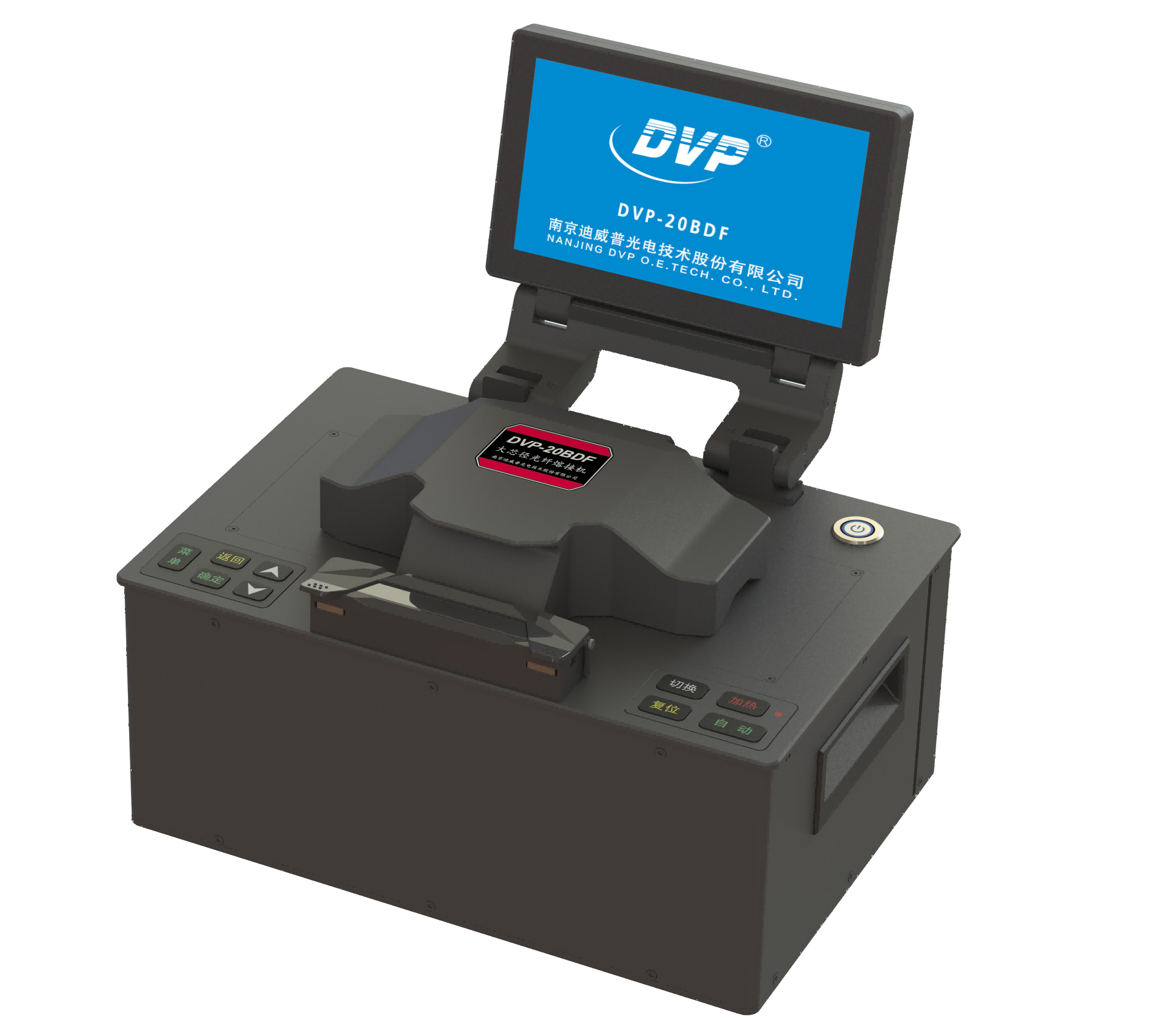
Ask any splice tech who has worked through a cold morning with condensation on the fiber holders and they will tell you the real question is not which alignment method looks better on a spec sheet, but which one keeps losses low when the cleaver blade is a week old and the wind keeps kicking up dust. Core alignment earns its reputation here because it reads the actual glass cores, not just the outside diameter. A fiber with a slightly off-center core or a rough cleave still gets spliced with a tight, low-loss joint because the machine actively corrects for that offset. Cladding alignment, by contrast, trusts the outer geometry to be perfect—and in the field, that assumption quietly falls apart.
That does not mean cladding alignment has no place. On multimode links, where the core is large and the loss budget is forgiving, a cladding-alignment splicer can be faster, lighter, and less expensive to maintain. The trouble starts when crews begin mixing single-mode fibers from different manufacturers or working with older cable that has been stretched, bent, or stored badly. Tiny variations in core concentricity that never show up in a lab become measurable splice losses on a live network. Technicians who rely only on cladding alignment often end up re-splicing the same joint two or three times to get an acceptable reading, burning time that a core-alignment unit would have saved in one pass.
Durability is another quiet factor. Core alignment splicers have more moving optics, so there is a lingering worry that dirt, shock, or temperature swings will knock them out of calibration. In practice, modern core-alignment rigs are sealed well enough that they survive truck beds and tower climbs without drifting. Meanwhile, a cladding-alignment machine may be simpler to fix in the middle of nowhere, but that simplicity buys you fewer corrections when the fiber itself is imperfect. After a few thousand splices in real outdoor conditions, most crews settle on the same conclusion: if the network is single-mode and the numbers matter, core alignment is what holds up when the conditions do not.
Oven Design and Why It Quietly Controls Your Splice Loss
Most field techs blame splice loss on alignment or cleave angle, but the oven in a fusion splicer plays a quieter role. The way heat is delivered to the splice protection sleeve determines whether the fiber sees asymmetric shrinkage, which can introduce microbends right at the splice point. A poorly designed oven creates hot spots near the sleeve ends while the center lags, so the adhesive and heat-shrink tubing contract unevenly. That uneven pull translates into a small but measurable dB penalty, especially on bend-insensitive fibers that are already near their loss floor.
Good oven design keeps the temperature ramp controlled and the heating zone uniform across the full sleeve length. Some ovens rely on a single heating element and a reflective cavity, but these often struggle with repeatability as ambient temperature shifts. Better designs use dual-zone heating or active temperature feedback to hold the sleeve at a steady cure temperature without overshooting. When the oven overshoots, the outer tube shrinks before the inner adhesive has fully flowed, leaving voids or uneven coating thickness around the bare fiber. That irregular layer acts like a series of tiny lenses and scatter points that raise splice loss weeks after installation, even if the initial OTDR trace looked clean.
The oven’s effect is most visible when splicing different fiber types or using older splice sleeves with less forgiving adhesives. A thermal design that pulls heat away from the electrodes too quickly can also stress the stripped fiber ends before they ever enter the sleeve. Field crews often ignore oven maintenance, but a slightly warped heating plate or oxidized reflector changes the heat distribution enough to shift average splice loss by several hundredths of a decibel. That may sound small, but in long-haul or high-count cables it quietly adds up across hundreds of splices.
The Models That Keep Showing Up on Service Trucks
Walk through any municipal parking lot or utility staging area and the same silhouettes dominate. Ford F-150 and Super Duty trucks outnumber everything else, not because of marketing but because fleets have decades of maintenance data showing lower total cost of ownership. The aluminum bodies resist rust in northern states, and the cab configurations fit everything from a two-man inspection crew to a full welding rig.
Ram 2500 and 3500 models keep appearing when the work gets heavy. Service managers often point to the Cummins diesel option, but the real reason is simpler: the rear suspension tuning handles constant bed loads without bouncing the driver into fatigue. You'll see them with custom utility beds from Knapheide or Reading, and those beds bolt on with fewer frame modifications than on competing half-tons.
For lighter tasks or tight city routes, the Toyota Tacoma and Ford Ranger fill in. Their narrower track width lets techs squeeze into alleyways and parking garages where a full-size truck can't go. The Tacoma's reputation for surviving 200,000 miles of pothole abuse means many service companies buy them used and run them until the doors rust off.
Drift, Dust, and Recalibration: Notes from Long-Term Owners
After the first thousand miles, the newness fades into something quieter. The steering wheel remembers every shortcut you've taken, the seat cushion has molded to your posture, and that faint rattle from the rear hatch no longer registers as a flaw—just a familiar tick. Long-term ownership isn't about spec sheets or launch-day hype. It's about noticing how the paint holds up after three winters of road salt, how the infotainment screen still responds on the hottest July afternoon, and whether the cabin still feels like a place you want to be when the odometer rolls past 80,000.
Dust accumulates in the same corners no vacuum can fully reach. The center console's piano-black trim scratches exactly where your keys land every evening. These are the honest details you never learn from a weekend test drive. Owners who've kept their cars for five, six, seven years start to talk less about horsepower and more about the small recalibrations: swapping wiper blades before the rainy season, finding a trusted mechanic for that one stubborn sensor, or finally dialing in the perfect seat position after months of micro-adjustments. The relationship between driver and machine becomes less about performance and more about predictability—the knowledge that it will start on the first cold morning, that the brakes will bite before the intersection, that the suspension still soaks up the same potholes without drama.
Recalibration isn't just mechanical; it's emotional. You learn which warning lights are urgent and which ones can wait until the next oil change. You stop babying the exterior and start using the car as it was meant to be used—throwing muddy gear in the trunk, letting the dog claim the back seat, parking it under a tree despite the sap. The drift from excitement to routine, and from routine to loyalty, is gradual. One day you realize the car isn't just a tool. It's a witness to every commute, every road trip, every late-night drive to clear your head. That kind of trust can't be measured in a review, only earned through time and dust.
Matching the Splicer to the Cable Run, Not the Other Way Around
Field crews often treat the fusion splicer as a one-size-fits-all tool, dragging the same unit from a tight underground vault to a rooftop tray without a second thought. That habit quietly erodes splice quality and slows the whole job. The cable run dictates the real conditions—bend radius, tension, access clearance, dust levels, and even the angle you can hold the splicer. Matching the machine to those conditions means picking a model with the right clamp spacing, sheath clearance, and heater time for the specific cable construction.
A splicer that fights the cable ends up costing more than it saves. For example, a ribbon splicer set up for 12-fiber ribbons will struggle with a loose tube run full of 250-micron coated fibers unless you swap in the correct holders and wind protectors. Likewise, a compact active-clad alignment splicer might be perfect for a 144-fiber distribution cable in a cramped handhole, but it'll be a liability on a long-haul trunk where you need loss estimates below 0.02 dB and a ruggedized frame that can sit on uneven ground.
The practical fix is to spec the splicer from the cable database before the crew rolls out. Note the fiber count, coating diameter, ribbon versus loose, and the smallest enclosure where a splice will happen. Then pick the machine whose chucks, v-grooves, and sheath clamps actually line up with that reality. It takes ten extra minutes during planning and saves hours of rework, failed loss tests, and frustration at the bottom of a manhole.
FAQ
Typically it refers to fibers with cladding diameters above 250 microns—often 400, 600, or even 1000 microns—used in medical devices, high-power lasers, and sensing. Standard splicers can't align or heat these properly, so dedicated machines with wider v-grooves and stronger arc controls are needed.
The Fujikura FSM-100P series, Thorlabs Vytran GPX-3000/3400, and INNO View 12 are frequently mentioned. The FSM-100P excels with cladding up to 1200 microns, the Vytran systems offer excellent filament control for glass processing, and the View 12 balances cost with solid performance on LDF assemblies.
It comes down to clamping range, heat delivery, and alignment flexibility. Large diameter machines have adjustable v-grooves for 250–1200+ micron fibers, a wider arc or filament heat zone, and sometimes motorized rotation for polarization-maintaining or non-circular fibers. A telecom splicer usually maxes out around 125–250 microns and can crack or melt larger glass unevenly.
Look for user-defined arc or filament power profiles, motorized core alignment or active cladding alignment, the ability to store multiple parameter sets, and stable clamping for both fiber and capillary/ferrule. A high-resolution observation system also makes a practical difference when you're checking end-face quality before every splice.
Yes, some labs and production lines start with the INNO View 12 or a refurbished Fujikura FSM-100P. They won't have every premium feature of a new Vytran GPX-3400, but they can handle common 400–800 micron fibers if you invest time in optimizing splice parameters. Used equipment from reputable resellers often gives the best price-to-performance ratio.
Fujikura, Thorlabs (through the Vytran line), and INNO are the most recognizable names. Fujikura is praised for its robust arc-based systems; Vytran is known for filament-based glass processing and high-precision applications; INNO competes with simpler, more affordable machines that still deliver dependable results for many production tasks.
Generally no. Even if the fiber physically fits after changing clamps, the heat distribution and alignment software are tuned for 125-micron cladding, so you'll often get weak, asymmetric splices or cracked glass. It's better to use a dedicated LDF splicer with proper thermal control and wide-diameter handling capabilities.
High-power fiber lasers, medical laser delivery systems, optical sensors, and specialty photonic devices frequently use fibers with cladding diameters from 400 microns up to over 1 mm. These applications demand low-loss, high-strength splices that can handle significant optical power or harsh environments.
Conclusion
Large-diameter fiber splicing pushes well past the routine single-mode jobs most techs learn on. The glass itself behaves differently under heat—thicker cladding and often softer coatings mean the arc parameters that work for 125 µm fiber simply fail once you move to 250 µm, 400 µm, or beyond. In the field, the decision between core alignment and cladding alignment often decides whether a splice survives the first pull test. Core alignment systems, while pricier, consistently deliver lower loss on large-core multimode and polarization-maintaining fibers because they actively hunt for the optical center rather than assuming geometric concentricity. Meanwhile, oven design gets overlooked until a tech burns an afternoon fighting a stubborn splice tray. A poorly engineered oven with uneven heating or weak clamping introduces microbends during the shrink-down, quietly adding 0.05 dB to every joint. The top-ranked models in this category all share one trait: their heating elements wrap the splice protector uniformly, and the clamping mechanism doesn't let the fiber shift during the critical cool-down phase.
When you look at which fusion splicers actually show up on service trucks week after week, a pattern emerges—not the flashiest units, but the ones that can take a beating. Long-term owners report that drift is the silent killer; a splicer that reads perfect on the bench can wander by 0.1 dB after a few hundred splices in dusty vaults. Regular recalibration against a known reference fiber becomes non-negotiable, and the best models make that process quick with on-board diagnostics rather than requiring a trip back to the manufacturer. Dust ingress into the imaging system causes most of the field failures, so sealed optical paths and user-replaceable mirror assemblies separate the reliable ranks from the rest. Finally, the smartest approach is to match the splicer to the actual cable run. A heavy, bench-oriented splicer is useless in a handhole; a lightweight portable unit struggles with 400 µm armored cable if its motor torque can't handle the stiffness. The top performers earn their rank by fitting the job, not by collecting unused features. This practical mindset—choosing based on cable type, splice environment, and maintenance reality—keeps downtime low and splices clean.
Contact Us
Contact Person: Mr XU
Email: [email protected]
Tel/WhatsApp: 86-25-85582828
Website: https://www.dvp.cn/en/