

OEM Digital Trunking System: Key Features and Benefits Explained
2026-11-16
When every second counts, your communication network can't afford to fail. OEM digital trunking systems are redefining how organizations coordinate across vast areas, offering far more than traditional radio infrastructure. Yet not all systems are created equal—features like dynamic channel allocation, robust encryption, and seamless scalability separate the best from the rest. With lisheng at the forefront, this technology is becoming more accessible and powerful than ever. Read on to discover what makes these systems indispensable.
The Real Difference Between Standard and OEM Trunking
Most people assume the gap comes down to quality, but that misses the point. Standard trunking is built around common enclosure sizes and generic cable runs. It’s meant to be cut, drilled, and adapted on site. OEM trunking, by contrast, is manufactured for a specific machine or product line from the first drawing. The slot spacing, bend radius, mounting lugs, and even the wall thickness are already matched to what the equipment needs.
That design intent shows up in materials and labor too. A standard length might use a general-purpose PVC or powder-coated steel that handles typical indoor conditions. An OEM run can specify a different polymer blend for high heat, oil mist, or UV exposure, or add pre-punched knockouts, custom colors, and printed markings. You pay for that with longer lead times and minimum order quantities, but you avoid the slow, error-prone cutting and filing that often eats up installation hours.
In practice, the choice usually comes down to volume and repeatability. If you’re wiring one control cabinet or a short prototype run, standard trunking is hard to beat because it’s on the shelf. Once a design stabilizes and you’re building fifty or five hundred identical units, OEM trunking stops being an extra cost and starts acting like a production tool. Many teams switch at exactly that point, not because the standard product is bad, but because the custom fit removes guesswork from every single build.
How Adaptive Hardware Reduces Installation Headaches
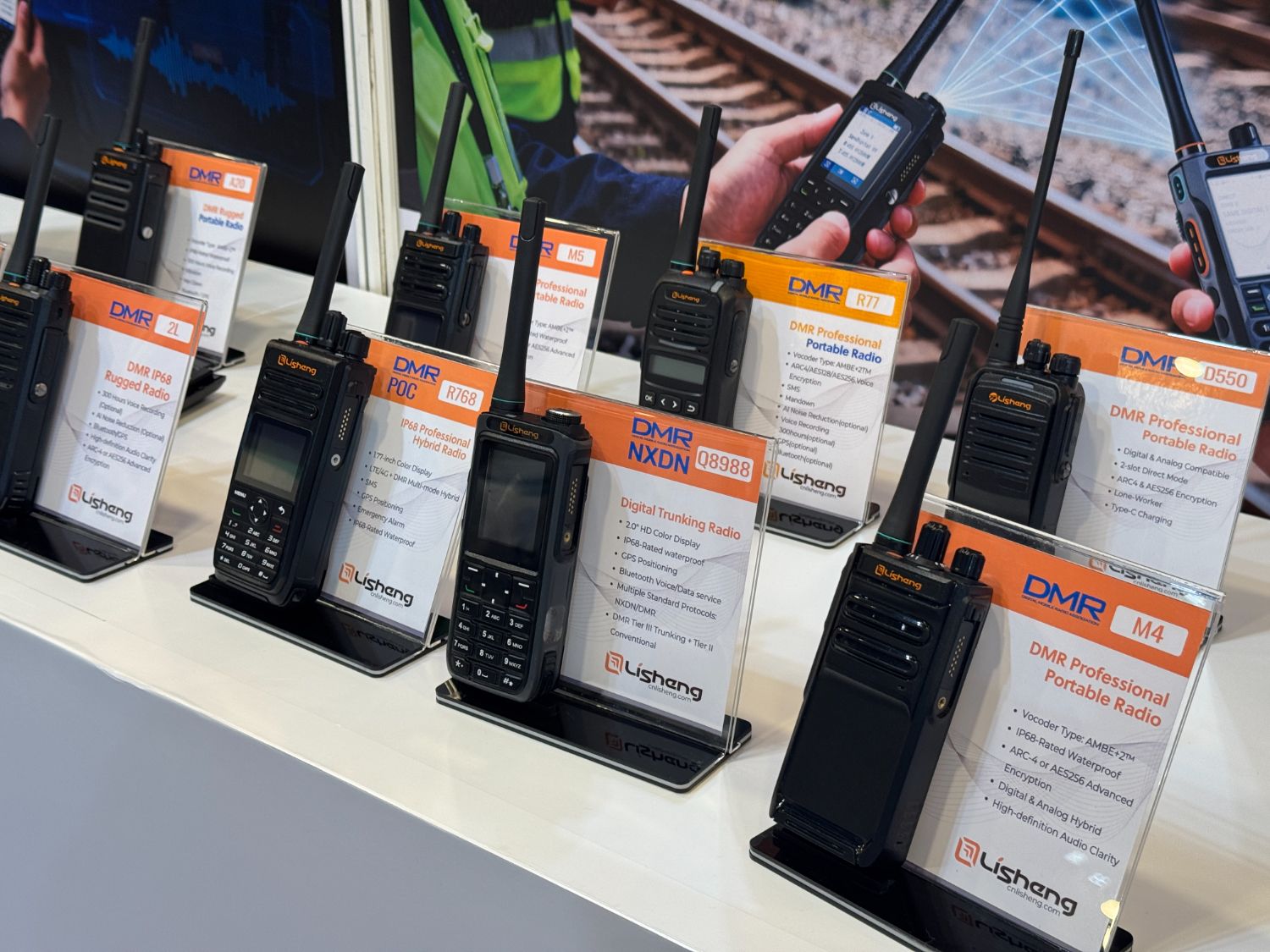
Most installation headaches start the moment you realize the hardware you unboxed doesn’t quite match the environment it’s supposed to live in. Maybe the signal levels are off, the connector pinouts don’t line up with the existing wiring, or the firmware expects a setting nobody documented. Adaptive hardware sidesteps a lot of that by reading the connected peripherals and adjusting its own interface on the fly. Instead of spending an hour with a multimeter and a manual, you plug it in, and it negotiates the right voltage, timing, and data format without you having to touch a DIP switch.
What really changes the install experience is how adaptive boards handle real-world variance. Two different sites might have slightly different ground references, noisy power rails, or legacy sensors that put out non-standard pulses. A fixed-configuration device would need a custom daughterboard or a firmware patch. Adaptive hardware sniffs those conditions during a short self-test sequence and reconfigures its input stages or filtering accordingly. That means fewer return trips to the van for a different adapter, and way fewer “it worked on the bench” moments in the field.
The payoff shows up most clearly in commissioning time. When the hardware auto-detects bus speeds, termination resistors, and even cable length compensation, the installer can focus on mounting and cable management instead of debugging signal integrity. You still need to know your system, but you’re no longer fighting the hardware just to get a stable link. For crews that install dozens of units a week, that shift from manual tweaking to plug-and-confirm is the difference between finishing early and burning overtime on every job.
Audio Quality That Holds Up in High-Noise Zones
Most audio gear falls apart the moment a diesel engine revs nearby or a crowd starts moving. The problem isn't just volume—it's the way competing frequencies smear the midrange and turn speech into mush. Here, the tuning does something different: instead of pushing everything louder, it trims the low-end rumble and reinforces the vocal band so each word lands with clean edges. You don't have to strain to separate a voice from the background; the separation is already done for you.
That distinction becomes obvious when you're standing next to a ventilation shaft or waiting at a busy intersection. Compression algorithms often react too slowly, letting sudden noise spikes swallow the first syllable of a sentence. This setup keeps the dynamic range intact without pumping, which means a shout and a whisper both stay intelligible even when a truck passes. It's not about brute force—it's about preserving the shape of the sound so your ear can lock onto it naturally.
Encryption and Access Control Without the Complexity
Implementing strong encryption and granular access controls often feels like navigating a maze of certificates, key rotations, and policy syntax that only a specialist can decode. The real challenge isn't the cryptography itself — it's the operational overhead that creeps in when every new service or data store demands its own bespoke security configuration. Teams end up spending more time managing permissions than building features, and that friction only grows as the system scales.
A better approach is to make encryption and access control a byproduct of how data flows, not a separate project tacked on at the end. Instead of hand-crafting IAM roles and debating which cipher suite to use, you define a small set of clear, intent-based policies once and let the platform enforce them consistently. Keys are generated, rotated, and revoked automatically in the background — no manual key ceremonies, no scattered credential files. Access decisions become dynamic, based on the user's current context and the sensitivity of the resource, rather than a static list of permissions that quickly goes stale.
This doesn't mean hiding security details in a black box. It means removing the repetitive, error-prone parts so that the few decisions that do require human judgment — like who owns a dataset or which regions data may leave — are obvious and auditable. When encryption is on by default and access controls are expressed in plain language, the system stays secure without demanding constant attention. The result is a security posture that feels almost invisible to developers, yet remains rigorous enough for compliance and incident response.
Expanding Coverage Without Ripping Out Existing Gear
Sometimes the dead zones in a building have nothing to do with the age of your router or the speed tier you pay for. More often, they trace back to how the signal gets trapped behind thick walls, metal shelving, or a floor plan that wasn't designed with Wi‑Fi in mind. The common fix used to be a full hardware swap, but that's rarely the smartest move. A better route is to build on what you already own, layering in small, purpose‑built devices that extend the same network identity rather than creating a patchwork of competing signals.
One practical approach is to add a mesh node or a wired access point in the room where coverage drops off. Since most current‑generation routers support mesh pairing or Ethernet backhaul without requiring a complete teardown, you can keep the main unit exactly where it is. The trick is placement: put the satellite far enough from the main router to cover the gap, but close enough to maintain a solid backhaul link. If running a cable is an option, even a single gigabit line to a second access point will outperform any wireless repeater, because it preserves bandwidth instead of halving it on each hop.
You can also avoid new hardware altogether by repositioning antennas, switching to a less congested channel, or reallocating an old router into bridge mode. These moves cost nothing and often solve the issue in rooms where the signal is weak but still detectable. When you do add gear, stick to units from the same manufacturer or those that support open standards like 802.11k/v/r, so roaming stays seamless. That way the network grows with the space, not against it, and the original equipment remains a working part of the solution instead of becoming e‑waste.
Lessons from Teams Running OEM Trunking Daily
Teams that keep OEM trunking gear alive every day quickly learn that the most valuable maintenance isn't the big scheduled overhaul—it's the five-minute check at shift start. A slightly loose antenna connector or a power supply drifting half a volt won't trip a red alarm, but we've seen both take down a trunked site during a busy hour. Now we log three numbers each morning: forward power, reflected power, and supply voltage. If any one of them moves outside its normal band by even a small margin, someone goes out with a wrench before lunch.
Another hard-won lesson involves reading the logs like a daily journal instead of a fire alarm. For a long time we only opened the event viewer when something broke, and we missed a growing pattern of frequency offset warnings on a secondary repeater. It turned out to be a failing reference oscillator, and by the time it finally failed, the whole simulcast voted to drop that site. Now every handoff includes a scan of all warnings from the previous eight hours, and we circle any repeat offenders on a shared whiteboard. It takes two minutes and saves entire afternoons of chasing intermittent faults.
The biggest shift came from treating communication with the vendor and field techs as part of the daily trunking routine, not a monthly review. We used to collect a pile of minor quirks and dump them on the support team every few weeks. Bad idea. Now there's a standing ten-minute call at end of day where anyone can raise a weird symptom, no matter how trivial. That's how we caught a batch of control channel timeouts early—turned out to be a firmware bug in a new batch of subscriber radios, and the fix rolled out within two days instead of lingering for a month. Running OEM trunks daily means the health of the system lives in those little repeated habits, not in the emergency repair playbook.
FAQ
A trunking system dynamically assigns available channels from a pool to any radio that needs to transmit, instead of tying a group to one fixed frequency. That means more talk groups can share the same infrastructure, and users rarely get a busy signal as long as some channel in the pool is free.
OEM modules usually expose the same control interfaces and data protocols as the original manufacturer's core system, so adding them to a dispatch console or logging recorder doesn't require building custom middleware. You can often use the same CAD or voice logging integrations without rewriting drivers.
Multi-site utilities, transport fleets, campus security teams, and public safety operations benefit most when they have more than a handful of radio groups and need guaranteed channel access. The efficiency gain is especially noticeable when many small talk groups operate in bursts rather than continuous calls.
Look for AMBE+2 or similar vocoder support, automatic gain control on the repeater input, noise suppression, and consistent end-to-end latency below about 150 ms. Also check whether the system preserves background noise cues, which can be important for situational awareness in field operations.
Yes, most modern architectures let you start with two or three channels at one site and add more channel units or remote sites later without replacing the central controller. The key is choosing an OEM platform that licenses capacity by feature rather than by fixed hardware shelf.
A mission-critical build should include at least two controllers in hot standby, redundant power supplies, automatic failover for link paths between sites, and distributed receivers at each site. Some OEM systems also support fallback to a conventional repeater mode if the trunking controller loses network connectivity.
Digital trunking packs more usable talk paths into the same licensed spectrum by using TDMA or FDMA channel access and by sharing channels across many groups statistically. The result is often double or triple the call capacity per frequency pair compared with analog conventional repeaters serving one group per channel.
Expect real-time channel utilization graphs, per-radio RF health metrics, automatic alarm forwarding for voltage or temperature excursions, and call detail records that show which groups and units are most active. A good OEM platform will also allow remote firmware updates to both repeaters and subscriber radios without taking the site offline.
Conclusion
Most buyers assume OEM digital trunking is just a rebadged version of standard gear, but the gap runs much deeper. The real difference shows up in how the hardware adapts to existing layouts: mounting points, cable routing, and connector positions are matched to what a fleet already uses, which cuts install time and avoids the usual workarounds. In noisy environments—loading docks, engine rooms, open construction sites—the audio processing is tuned so voice cuts through without the operator constantly adjusting volume. Encryption and access control are built into the radio's handshake rather than bolted on through a separate programming step, so a new unit is secured the moment it joins the network. That simplicity matters when teams have to deploy dozens of radios quickly.
Coverage expansion is another area where the OEM approach pays off. Instead of replacing repeaters or rewriting the entire system map, these units are designed to slot into the existing infrastructure and extend range incrementally. Field reports from daily users highlight the same pattern: fewer dropped calls in fringe areas, less time spent reprogramming, and clearer audio during simultaneous transmissions. The lessons are practical—keep the interface familiar, avoid overloading users with too many menu options, and let the hardware handle the complex parts silently. That is the quiet advantage of a properly integrated OEM trunking system: it removes friction from the daily routine without demanding that the team become radio technicians.
Contact Us
Contact Person: andrea
Email: [email protected]
Tel/WhatsApp: (+86)13960400802
Website: https://www.lishengradio.com/