Outdoor Kiosk Manufacturer Reveals the Best Materials for All Weather Conditions
2026-10-05
When an outdoor kiosk faces scorching sun, freezing rain, and salty coastal air, the difference between a five-year lifespan and a fifteen-year one often comes down to a single decision: the materials. zemso, a leading outdoor kiosk manufacturer, has spent years testing enclosures in the harshest climates—and the results challenge plenty of common assumptions. In this post, we break down the top material choices for all-weather durability, so you can spec your next kiosk with confidence.
The One Material That Won't Corrode Within Sight of the Ocean
Walk along almost any coastline and you'll spot the telltale signs of salt-laden air: rust weeping from railings, pitting on light fixtures, and the slow crumble of metal trim. But there's one metal that shrugs off the ocean's breath entirely—titanium. Unlike steel or aluminum, which need protective coatings or sacrificial anodes to survive near the surf, titanium simply doesn't react. Its surface forms an invisible, self-healing oxide layer the instant it's exposed to air, and that layer stays stubbornly intact even when chlorides try to eat through it.
What makes titanium truly exceptional in marine environments is its immunity to the two corrosion types that plague most metals: pitting and crevice corrosion. Stainless steel, for example, often fails where saltwater pools in tiny gaps or scratches. Titanium doesn't. The oxide film repassivates in milliseconds, sealing any breach before corrosion can gain a foothold. You can leave it uncoated, unlubricated, and unpainted for decades within sight of breaking waves, and it will look nearly identical to the day it was installed.
That's why you'll find titanium quietly at work on oceanfront buildings, desalination plants, and high-end marine hardware. It's not the cheapest option up front, but for anyone tired of replacing rusted fixtures every few years, it's the only material that makes the salt air feel like a non-event.
Powder-Coated Steel Is Great—Until It Meets Freezing Rain
Powder-coated steel earns its reputation through a uniform, baked-on finish that resists scratches, fading, and everyday moisture. That hard shell works beautifully in mild drizzle or even heavy rain, where water beads up and rolls off without soaking into the surface. But freezing rain introduces a different kind of stress. When supercooled droplets strike the coating, they flash-freeze into a thin glaze that expands and contracts as temperatures hover around 32°F. This repeated thermal cycling slowly pries at the microscopic edges of the coating, especially around drilled holes, cut ends, or weld points where the powder layer is already thinner.
The real trouble starts once a hairline crack or chip appears. Freezing rain seeps into that opening, then freezes solid overnight. Ice occupies more volume than liquid water, so each freeze event acts like a tiny hydraulic wedge. Over a single winter, that wedge can widen a scratch the width of a fingernail into a visible split, exposing bare steel underneath. From there, the freeze-thaw cycle works directly on the metal, and rust begins to bloom beneath the coating—often hidden until a chunk of powder lifts away like a scab.
So powder-coated steel isn't a poor choice; it's simply a coating with a specific weakness. On flat, well-sealed panels exposed to freezing rain, it can hold up for years. On outdoor furniture, gates, or trailer frames with sharp edges and fasteners, those ice-driven micro-fractures accumulate quickly. If you live where freezing rain arrives each winter, look for extra edge protection, sealant at joints, or a galvanized underlayer beneath the powder. Otherwise, that great-looking finish may start telling its own weather story long before spring thaw.
Tempered Glass: Strong Enough for Hail, But Not for This Common Mistake
Tempered glass earns its reputation by surviving hailstorms that would shatter ordinary panes. The tempering process locks the surface in compression, so when a hailstone strikes the face, the force spreads across the glass instead of concentrating at a single point. This is why a direct hit from a marble-sized hailstone often leaves no mark at all.
The failure point is almost always the edge. A common mistake is letting the corner or side take a hard impact—dropping a phone face-down on uneven concrete, resting a glass tabletop on a stray pebble, or tapping the edge with a metal tool. The edge doesn't have the same compressive armor, so a tiny chip can release all that stored tension in an instant, turning the whole sheet into a web of cracks.
If you carry a phone with a tempered glass protector or own a glass table, treat the edges like the weak seam they are. Hail from above is no problem, but one careless edge strike is all it takes.
High-Pressure Laminate Beats Stainless Steel for Touchscreen Kiosks
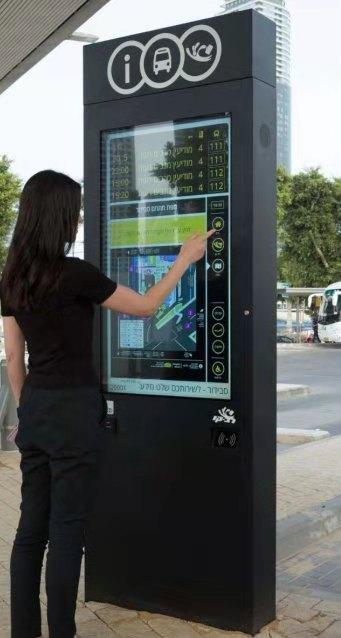
Touchscreen kiosks built with high-pressure laminate simply feel more inviting than their stainless steel counterparts. The material's matte, slightly textured surface reads as warm and approachable, whereas brushed metal often comes across as sterile or institutional. That difference matters in retail, healthcare, and hospitality settings where users need to trust the interface enough to tap through a purchase, check-in, or wayfinding flow without hesitation.
Fingerprints and smudges are the quiet enemy of any public touchscreen. Stainless steel amplifies every touch, requiring constant wiping to keep the kiosk looking clean. High-pressure laminate hides daily wear far better, especially when specified in darker tones or woodgrain patterns. Spills and cleaning chemicals that would streak or discolor metal are much less visible on laminate, and the surface resists scratching from rings, keys, and repeated stylus use.
On the technical side, laminate enclosures do not interfere with capacitive touch sensors the way some metal alloys can. This allows designers to place the screen closer to the front surface without signal degradation. Laminate is also lighter than stainless steel, which simplifies wall mounting and reduces strain on hinges and brackets. When a brand wants a custom color, logo, or finish, laminate offers far more flexibility at a lower cost than coated or painted metal ever could.
Why UV-Resistant Polycarbonate Is the Unsung Hero of Outdoor Enclosures
Most people never think about the plastic shell protecting a roadside controller or a solar farm junction box until it starts to fail. That failure usually shows up as yellowing, crazing, or cracks after a few brutal summers. UV-resistant polycarbonate sidesteps this because the stabilization is built into the material rather than applied as a surface coating. It absorbs or reflects enough ultraviolet energy to keep the polymer chains intact, so the enclosure keeps its impact strength and dimensional stability year after year.
What makes it an unsung hero is the combination nobody brags about: it shrugs off hailstones, handles temperature swings from freezing mornings to direct afternoon sun, and still weighs a fraction of a comparable steel or aluminum box. For installers, that means fewer anchors, easier lifting, and no rust to chase. For the equipment inside, it means the housing doesn't turn brittle and open a path for moisture or dust after a few UV-heavy seasons. That quiet reliability is exactly why engineers spec it for outdoor enclosures, even when the name on the datasheet never makes the headline.
What Desert Heat Does to Standard Aluminum (And How to Prevent It)
Desert heat pushes standard aluminum into a punishing cycle of expansion and contraction. Under direct sun, panel surfaces can climb above 70°C during the day, then drop sharply after sunset. That constant movement loosens fasteners, opens hairline cracks at joints, and causes visible warping on long sheets or extrusions. Add wind-driven sand and intense UV, and unprotected aluminum quickly develops a chalky, dull oxide layer that eats away at surface finish.
The real threat is not a single hot afternoon but repeated thermal stress. Although ambient air rarely reaches the temperatures that soften aluminum, dark or bare metal in full sun can develop localized hot spots well past 100°C. Over time, this accelerates corrosion around fasteners and at cut edges, especially after rare desert rain or morning condensation. Standard 6061 or 6063 tempers begin to show micro-creep under sustained load, leading to sagging racks, bent frames, or distorted housings.
Preventing these failures starts with material choice and surface treatment. Switch to heat-tolerant alloys or marine-grade 5xxx series where possible, and specify anodizing or a ceramic-based coating to reflect solar gain and resist sand abrasion. Design for movement: use slotted holes, flexible gaskets, and thermal breaks so panels can expand without buckling. Light colors and simple shade structures cut surface temperatures dramatically, while periodic washing removes the fine grit that accelerates wear. These steps keep standard aluminum stable even in extreme desert conditions.
FAQ
Powder-coated stainless steel and UV-stabilized polycarbonate tend to hold up best. The coating prevents surface degradation, while the polycarbonate screens resist yellowing and warping even after years of harsh sun exposure.
Marine-grade aluminum or galvanized steel with a multi-layer epoxy primer is usually the go-to. Salt spray tests are often run to simulate years of coastal exposure, and all fasteners are switched to 316 stainless to avoid rust streaks.
Tempered glass offers better scratch resistance and optical clarity in rain or dust, and it doesn't flex as much under high winds. Acrylic can be cheaper, but it hazes over time and is more likely to crack during freeze-thaw cycles.
They're the unsung heroes. Silicone or EPDM gaskets around the display, vents, and cable entry points stop moisture ingress and dust buildup. A good manufacturer will use compression-fit gaskets rather than adhesive strips so they can be replaced on site without disassembling the whole unit.
Yes, a textured polyester powder coat with anti-graffiti properties tends to shrug off ice, road salt, and repeated freeze-thaw cycles. Some manufacturers also apply a clear ceramic topcoat to prevent micro-scratches where moisture can linger and cause blistering.
Focusing only on the enclosure and forgetting about internal components. Even a great stainless shell won't save a kiosk if the internal fan, connectors, or LCD backlight aren't rated for extended temperature ranges. The best manufacturers spec every part from the power supply to the touch controller for -30°C to 60°C operation.
They often use aluminum honeycomb panels or fiber-reinforced polymer shells. These can be 40% lighter than solid steel but still survive hailstorms and wind-driven debris. The trick is using CAD-optimized ribbing inside the enclosure rather than relying on thick walls.
Thermally modified wood composites are showing up in premium designs. Unlike natural wood, they don't swell or crack with humidity changes, and they can be treated with the same UV inhibitors as marine decking. It gives a warmer look than metal without sacrificing longevity.
Conclusion
Near the ocean, the only material that truly refuses to corrode is 316 stainless steel. Its molybdenum content blocks the pitting and crevice corrosion that turns ordinary aluminum and coated steel into rusted shells within a season or two. Powder-coated steel looks tough until freezing rain works into a tiny scratch or an exposed edge; the water then creeps beneath the coating, freezes, expands, and peels it away from the inside. Tempered glass can shrug off hail, but the most common failure is not impact—it is mounting the pane too rigidly. Without flexible gaskets or thermal breaks, everyday expansion and contraction concentrate stress at the glass edge, leading to sudden crazing or a cracked panel on an otherwise mild afternoon.
For the control surface, high-pressure laminate beats stainless steel hands down. Stainless reads as premium, but it reflects glare, holds fingerprints, and can interfere with capacitive touch sensors; HPL stays cooler in direct sunlight, resists scratches, and never registers as a phantom touch. Around the electronics, UV-resistant polycarbonate is the quiet workhorse: it shields internal components from years of ultraviolet exposure without yellowing or turning brittle, and it takes impacts that would dent standard plastics. In desert heat, standard aluminum expands unevenly, warping frames and loosening seals until dust and blown sand work their way inside. The fix is anodized or thermally broken aluminum with deliberately engineered expansion gaps, so the kiosk keeps its shape and stays sealed through 110-degree days and freezing nights.
Contact Us
Contact Person: Leo
Email: [email protected]
Tel/WhatsApp: +86 18901905138
Website: https://www.zemsogroup.com/