

Pharmaceutical Intermediates Manufacturer: The Backbone of Efficient Drug Manufacturing
2026-07-26
Behind every life-saving drug lies a chain of precisely engineered building blocks—pharmaceutical intermediates. These unsung heroes determine the speed, cost, and quality of bringing therapies to patients worldwide. As drug developers face mounting pressure to accelerate timelines without compromising purity, the choice of an intermediates partner becomes a strategic pivot. Enter DSL Chemicals: a manufacturer that doesn’t just supply molecules, but redefines what efficiency in drug manufacturing truly means.
Mastering the Art of Custom Intermediate Synthesis
Creating tailor-made intermediates is as much a creative pursuit as it is a technical one. The real craft lies in designing routes that are not only efficient but also give you the flexibility to tweak reactivity and selectivity when unexpected challenges pop up. It's about building a deep intuition for which transformations will tolerate your functional groups, and which will spectacularly fail.
What separates a good synthesis from a truly elegant one often comes down to the choice of protecting group strategies and the order of operations. Get these wrong, and you'll find yourself staring at a mess of side products. But when you nail it—when each step flows into the next with a kind of chemical choreography—you know you've moved beyond catalog reactions into genuine problem-solving.
Mastery means embracing the iterative nature of the work. Your first idea will rarely be your best one. The real breakthroughs come from questioning every default approach, experimenting with offbeat catalysts, and learning to read the subtle hints your reaction mixtures give you. Over time, you develop a feel for the invisible roadmap that leads to a clean, scalable route no database can just hand you.
Purity at Scale: Engineering Flawless Batches
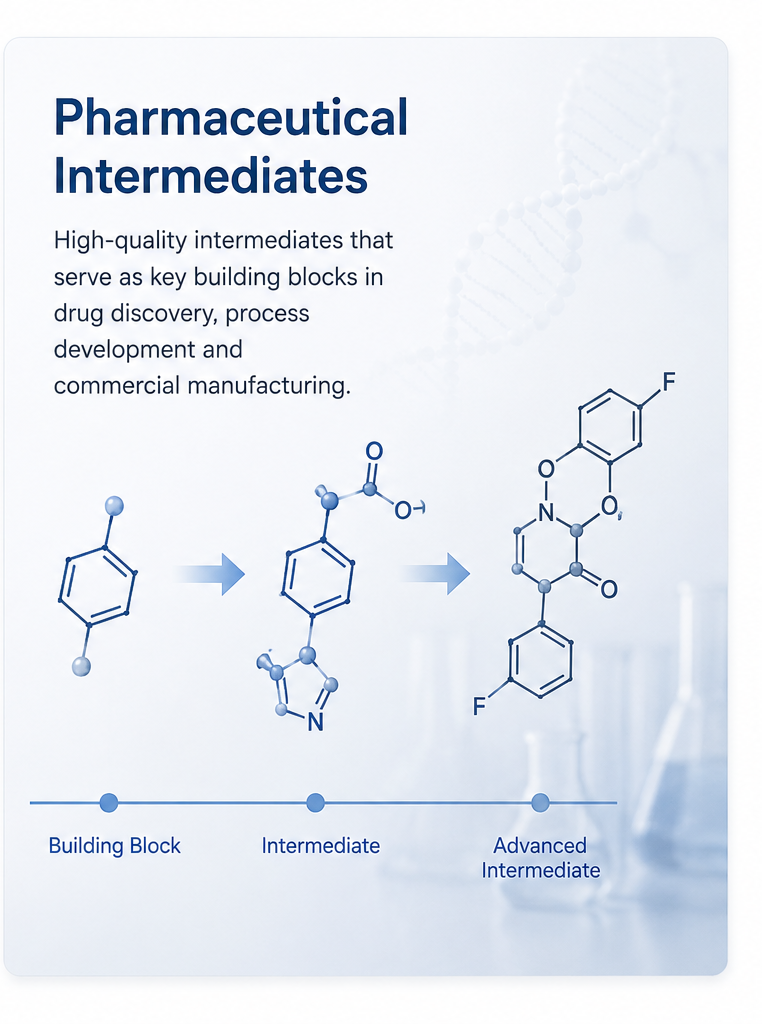
Achieving high purity in small-scale laboratory settings is one thing; replicating that consistency across massive production runs is a fundamentally different challenge. It demands not just precise chemistry, but a deep integration of process engineering, real-time analytics, and rigorous quality systems. Every variable—from raw material variability to equipment tolerances—must be understood and controlled far beyond conventional limits.
We approach purity not as a final checkpoint, but as a design parameter built into every step of the manufacturing workflow. Advanced process simulation tools allow us to model how impurities behave under scaled conditions, revealing hidden failure modes before they ever reach the plant floor. Simultaneously, in-line spectroscopic monitoring gives operators instant feedback, enabling dynamic adjustments that keep each batch locked on target rather than relying on post-production testing.
The result is a manufacturing ecosystem where zero-defect batches are the rule, not the exception. By treating purification as a continuous, engineered process rather than a discrete step, we eliminate the trade-offs that usually plague scale-up. This philosophy ensures that the same exceptional purity seen in the lab is not diluted—literally or figuratively—when it matters most: in the real world, at volumes that make a difference.
Behind Faster Drug Timelines: A Chemistry-Driven Approach
The race to bring new medicines to patients has long been hampered by the slow, iterative nature of traditional drug discovery. Today, a chemistry-driven approach is transforming this timeline by prioritizing molecular design and synthetic feasibility from the very start. Instead of blindly screening thousands of compounds, teams now use advanced computational chemistry to model how drug candidates interact with biological targets at an atomic level, drastically reducing the time spent on failed experiments. This shift allows researchers to focus on synthesizing only the most promising molecules, accelerating the transition from hit identification to lead optimization.
Key to this acceleration is the tight integration of automation and data-rich experimentation. High-throughput parallel synthesis platforms, equipped with real-time analytics, generate hundreds of analogs in a single run while capturing critical reaction parameters. Coupled with machine learning algorithms trained on historical assay data, chemists can quickly predict structure-activity relationships and guide the next round of synthesis. This iterative loop—design, make, test, analyze—now operates at a pace unimaginable a decade ago, turning synthetic chemistry into an engine for rapid hypothesis testing rather than a bottleneck.
Beyond the lab, a chemistry-first mindset also streamlines scale-up and manufacturing. By assessing the scalability of synthetic routes early in development, teams avoid costly late-stage reformulation. The focus on robust, efficient chemical processes minimizes the need for extensive process re-development, further compressing the overall timeline from discovery to clinical trials. In essence, putting chemistry at the center doesn’t just speed up individual steps—it removes the traditional barriers between discovery, development, and production, creating a seamless continuum of drug creation.
Navigating Regulatory Hurdles with Proactive Compliance
Staying ahead of regulatory changes requires more than just reacting to new rules; it demands a culture where compliance is woven into everyday operations. Many organizations treat compliance as a checklist exercise, but proactive compliance means anticipating shifts in the legal landscape and embedding flexible safeguards into processes before mandates take effect. This approach transforms potential roadblocks into opportunities for operational refinement, ensuring that adherence to regulations becomes a seamless part of business growth rather than a disruptive afterthought.
One effective strategy involves continuous monitoring of legislative trends and engaging with industry bodies to gain early insights. By interpreting signals from regulatory drafts and enforcement patterns, companies can model potential impacts on their workflows and adjust internal policies accordingly. This forward-thinking stance not only mitigates risk but also fosters trust with stakeholders who increasingly expect transparency and accountability. Practical steps include scenario planning, cross-departmental compliance committees, and investment in adaptive technology that flags anomalies before they escalate into violations.
Ultimately, proactive compliance is about building resilience. When organizations shift from a reactive posture to one that embraces regulatory change as a constant, they develop the agility to pivot without compromising their core objectives. This mindset reduces the scramble during audits and minimizes the likelihood of penalties, while also enhancing reputation in the marketplace. It's a strategic investment that pays dividends by turning regulatory complexity into a competitive advantage, proving that compliance, when done proactively, is far more than a box to tick—it's a driver of sustainable success.
The Hidden Economics of High-Performance Intermediates
Most people see high-performance intermediates as expensive line items on a procurement sheet—necessary evils that drive up cost without immediate visible returns. But that perspective misses the entire economic engine underneath. These chemical building blocks often eliminate multiple downstream processing steps, reduce energy consumption by operating at milder conditions, and dramatically cut waste streams that would otherwise require expensive treatment. When you factor in the full lifecycle cost—including shorter reaction times, higher yields, and less purification—the premium price tag starts to look like a bargain in disguise.
The real hidden value, however, emerges from the flexibility they unlock. A single versatile intermediate can replace an entire inventory of specialized reagents, simplifying supply chains and reducing storage costs. This isn't just about swapping one molecule for another; it's about redesigning synthetic routes to bypass bottlenecks. In pharmaceutical manufacturing, for instance, using a high-purity intermediate with precise functionality can shave weeks off a multi-step synthesis, accelerating time-to-market for a drug candidate. These time savings translate directly into patent life preservation and competitive advantage—hard to quantify on a spreadsheet, but devastating if ignored.
Then there's the risk mitigation angle that rarely makes it to a standard cost-benefit analysis. Low-grade intermediates often introduce impurities that carry through to final products, leading to batch failures, regulatory headaches, or even recalls. The economics of quality assurance are brutal: testing, rework, and rejected lots eat into margins in ways that aren't obvious during initial sourcing decisions. High-performance intermediates act as an insurance policy, reducing variability so dramatically that downstream quality control becomes almost routine. When you account for the avoided costs of non-conformance, the true unit economics shift significantly in favor of the higher upfront investment.
Strengthening Supply Links from Bench to Market
Turning a laboratory breakthrough into a product that people can actually use demands more than just brilliant science. It hinges on a smart, resilient supply chain that moves from concept to commercialization without snapping under pressure. Too often, the path from bench to market is riddled with bottlenecks—scarce raw materials, untested logistics partners, or manufacturing methods that don’t scale. Strengthening these links means proactively mapping every node, from sourcing specialized reagents to securing reliable cold-chain transport for sensitive prototypes. It’s about anticipating where the friction points will emerge and building in flexible alternatives long before they become crises.
One practical shift is to treat supply chain design as a strategic function rather than an afterthought. Instead of retrofitting a supply chain around a finished innovation, smart teams embed logistics thinking directly into R&D timelines. For instance, collaborating early with suppliers who understand the quirks of high-compliance industries can prevent costly redesigns later. Likewise, developing modular production processes—where components are interchangeable and processes aren’t tied to a single vendor—can insulate a project from sudden shortages. These moves aren’t just about efficiency; they’re about protecting the years of work that go into turning an idea into a viable product.
Ultimately, strengthening the bench-to-market chain means fostering a culture that values operational creativity as highly as scientific rigor. It requires cross-disciplinary teams that speak both the language of researchers and of logistics planners, and a willingness to invest in relationships that extend beyond the lab walls. Whether it’s negotiating priority access with specialty manufacturers or co-designing packaging that extends a product’s shelf life without driving up costs, these quiet, often unglamorous efforts are what separate a promising discovery from a market-ready reality.
FAQ
Pharmaceutical intermediates are chemical compounds that serve as building blocks in the synthesis of active pharmaceutical ingredients (APIs). Unlike APIs, which are the final biologically active components in a drug, intermediates undergo further chemical transformations before becoming APIs. They often represent intermediate stages in multi-step organic syntheses, and their purity and structure directly influence the efficiency and safety of downstream processing.
They convert complex chemical blueprints into scalable, high-purity compounds, ensuring that API synthesis proceeds without bottlenecks. By optimizing reaction pathways, reducing waste, and delivering consistent quality, intermediates manufacturers enable pharmaceutical companies to accelerate timelines and manage costs. Their deep expertise in process chemistry often determines whether a drug candidate moves from lab to market successfully.
Stringent in-process checks, reference standard verification, and stability testing under various conditions form the core. Advanced analytical techniques like HPLC, GC-MS, and NMR ensure chemical identity and purity. Additionally, a robust batch record system and adherence to ICH guidelines help trace any deviation immediately, preventing downstream contamination or yield loss.
Continuous flow reactors, for instance, improve heat and mass transfer, enabling reactions that are unsafe or inefficient in batch mode. Biocatalysis and directed enzyme evolution allow stereospecific transformations under mild conditions, cutting by-products. In-line analytics and automation further tighten process control, reducing human error and raising throughput while maintaining consistent quality.
Customization ranges from tailoring protecting group chemistry to developing salt forms or polymorphs that enhance stability. Manufacturers may also design scaffolds that simplify later-stage API modifications or optimize for particular solubility profiles. Close collaboration with clients during route scouting often yields non-obvious solutions that prevent costly scale-up failures.
Regulatory expectations drive facility design, documentation, and material traceability. Following frameworks like 21 CFR Part 11 for electronic records and meeting residual solvent limits per USP <467> are non-negotiable. Audits by clients or agencies push continuous improvement, ensuring that intermediates meet pharmacopoeial monographs and impurity thresholds that safeguard patient safety down the line.
Conclusion
Behind every successful drug launch lies a network of specialists who transform complex chemical blueprints into reality. Pharmaceutical intermediates manufacturers do more than simply supply ingredients; they engineer the critical juncture where early-stage chemistry meets industrial scale. Mastering custom synthesis means tailoring molecular pathways to specific needs, whether optimizing yields, managing stereochemistry, or integrating unique building blocks. This flexibility accelerates project timelines, sidestepping bottlenecks that slow traditional routes.
Yet speed is hollow without consistency. Flawless batch-to-batch purity at commercial scale demands rigorous process control and deep analytical insight—a combination that turns erratic lab results into predictable factory outputs. Proactive regulatory compliance embeds quality into every step, anticipating pharmacopeial shifts long before audits. Economically, high-performance intermediates cut downstream waste, reduce purification costs, and ultimately shrink time-to-market. From lab bench to final dosage, the supply chain backbone bends but never breaks when built on collaborative, chemistry-first partnerships.
Contact Us
Contact Person: Wei Zhang
Email: [email protected]
Tel/WhatsApp: 862163529955
Website: https://www.dslchem.com