
Polyethylene Glycol Company: Unleashing Advanced Polymer Solutions
2026-06-30
In the fast-evolving field of polymer science, POLYKEM stands out as a dedicated polyethylene glycol company that pushes boundaries with advanced, tailored solutions. Whether you need ultra-pure PEGs for drug delivery or high-performance grades for industrial formulations, our expertise unlocks new possibilities. Step into the next generation of polymer innovation—where precision meets performance.
Redefining Polymer Science with Next-Gen PEG Innovations
The landscape of polyethylene glycol has shifted dramatically from its early days as a simple, linear polymer. Today's next‑generation PEGs are built with precision architectures—multi‑arm stars, dendronized brushes, and sequence‑defined oligomers—that allow for exquisite control over molecular weight distribution, branching density, and end‑group placement. These structural nuances are not mere academic curiosities; they directly dictate how a PEGylated drug escapes the immune system, how a hydrogel swells at a surgical site, or how a coating resists protein fouling. By moving beyond the one‑size‑fits‑all monodisperse chains of the past, researchers are crafting bespoke macromolecules that feel more like engineered devices than passive excipients.
A quiet revolution is unfolding around the very bonds that hold PEGs together. Instead of the traditional ether backbone that can linger for years in the body, new polyethers incorporate cleavable linkages—ketals, acetals, or enzymatically labile esters—that break apart on demand. This transforms PEG from a permanent scaffold into a transient partner, vanishing once its shielding job is done. Combined with stimuli‑responsive ends that sense pH or redox gradients, these smart polymers are dissolving the historical trade‑off between long circulation and safe elimination, a development that reimagines what a stealth material can be.
Perhaps the most striking shift is how PEG innovation is erasing the boundary between synthetic polymers and biological systems. Click‑ready PEGs can now stitch together proteins, nucleic acids, and even live cells with the reliability of a molecular sewing machine. Meanwhile, hybrid constructs that fuse PEG with peptide sequences or lipid anchors are spawning entirely new classes of adaptive materials—think injectable gels that firm up upon contact with tissue, or coatings that recruit specific proteins to a medical implant. It’s a move from passive bystander to active participant, placing PEG at the center of a future where materials don’t just coexist with biology but read and respond to its signals.
From Lab Bench to Market: Custom PEG Solutions in Action
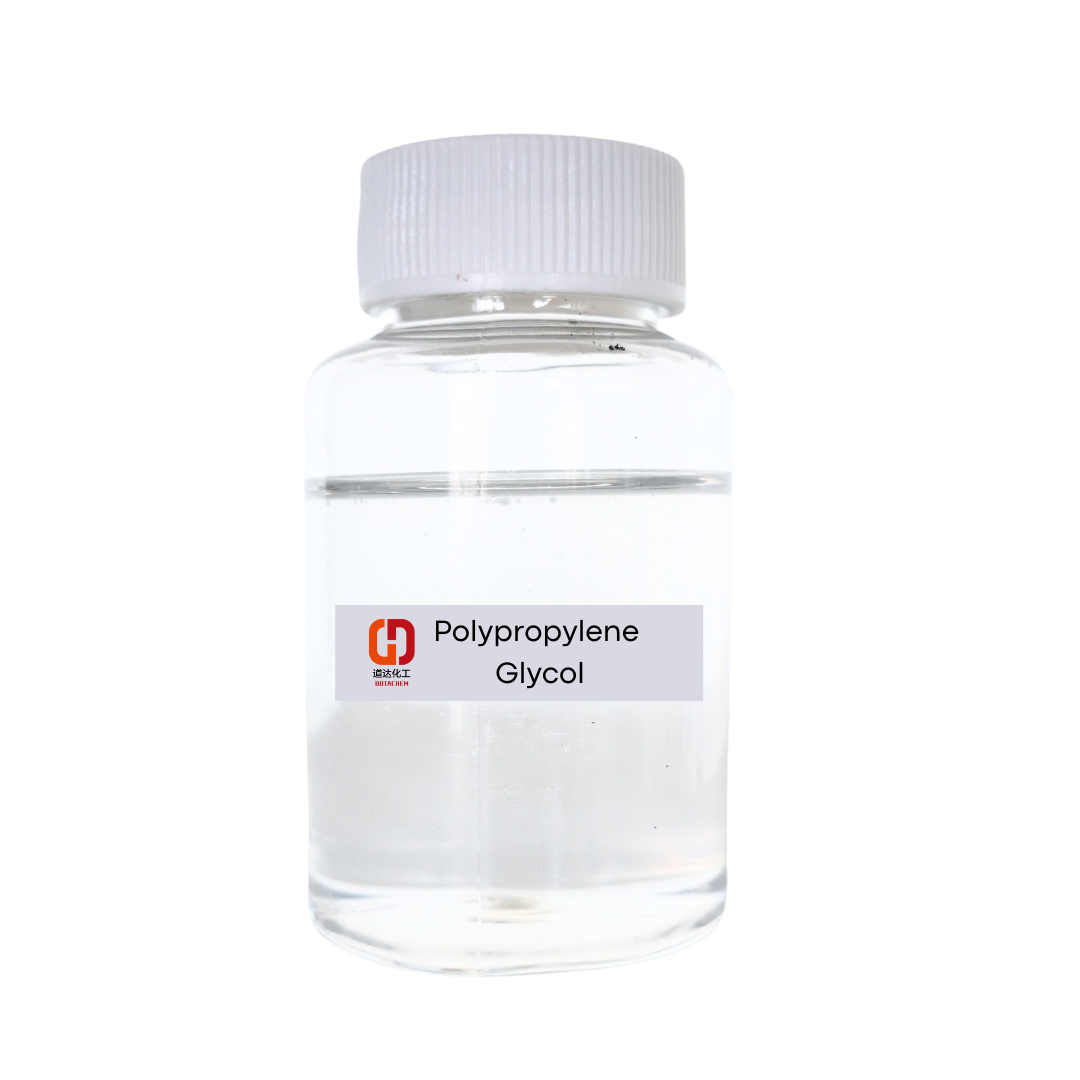
Turning a promising PEG-based formulation into a commercial product is rarely a straight line—it demands more than just lab-scale optimization. Our team works side-by-side with researchers to translate early-stage concepts into scalable, reproducible processes, tackling everything from solubility bottlenecks to stability under real-world storage conditions. By adjusting chain length, branching architecture, and functional end-groups on the fly, we help clients pivot fast when initial prototypes hit unexpected hurdles, keeping project timelines intact without sacrificing the core chemistry that made the molecule attractive in the first place.
What really sets a custom PEG solution apart is how it performs outside the controlled lab environment. We’ve seen cases where a slight tweak in polydispersity or a switch from linear to multi-arm geometry transformed a struggling drug conjugate into a candidate with consistent batch-to-batch bioactivity. Instead of handing off a spec sheet and wishing the team luck, we embed process chemists into the scale-up phase, fine-tuning reaction parameters so the transition from milligram synthesis to kilogram production doesn’t introduce new impurities or cost spikes. That hands-on collaboration often catches issues—like unexpected viscosity changes during filtration—before they derail tech transfer.
The end game isn’t just a well-characterized polymer; it’s a reliable supply chain that regulators and manufacturers can trust. We map out critical quality attributes early, aligning analytical methods with pharmacopoeia expectations so dossiers are cleaner from day one. When a recent biologic hit a solubility wall during formulation, shifting to a carefully tailored PEG linker didn’t just rescue the program—it shortened the path to IND filing by months. That’s the kind of mile-marker that reminds us custom PEG solutions are never just about the molecule; they’re about carrying a decade of preclinical work across the finish line without losing momentum.
Why Our Polyethylene Glycol Outperforms Standard Alternatives
Our polyethylene glycol sets a new benchmark in purity and consistency—most standard options leave trace impurities that can interfere with sensitive applications, but we refine ours through a proprietary multi-stage filtration that virtually eliminates contaminants. This means fewer unexpected side reactions in your formulations and a more predictable end product, whether you're working in pharmaceutical delivery systems or advanced material synthesis.
Another reason labs and manufacturers switch to us is the exceptionally narrow molecular weight distribution. Typical PEGs have a broader range, which translates to inconsistent viscosity, melting behavior, and solubility from batch to batch. Ours is engineered for tight control, so you get repeatable results without having to tweak your process every time a new shipment arrives. That reliability saves time and reduces waste in high-stakes production environments.
Beyond technical specs, we've focused on something rarely addressed: long-term stability under demanding conditions. Many PEGs degrade or form peroxides when exposed to heat, light, or oxygen over time. Our formulation includes advanced stabilizers that keep the polymer chain intact far longer, even without special storage. You can count on full performance integrity months after opening, which isn't something you'll find with generic alternatives.
Driving Biomedicine Forward with Ultra-Pure PEG Derivatives
Polyethylene glycol (PEG) derivatives have become indispensable in modern biomedicine, serving as the backbone for countless therapeutic and diagnostic innovations. Their unique ability to shield biomolecules from immune detection while improving solubility and stability makes them a cornerstone of drug development. Ultra-pure PEG variants take this utility further by eliminating batch-to-batch variability and residual contaminants that can trigger adverse reactions or compromise conjugate performance.
In protein and peptide engineering, ultra-pure PEG derivatives enable precise site-specific modifications without sacrificing bioactivity. This level of control is critical for creating long-acting cytokines, enzyme replacement therapies, and antibody-drug conjugates where even minor impurities can lead to aggregation or loss of function. Researchers now routinely rely on these high-grade reagents to streamline regulatory pathways and accelerate translational timelines.
Beyond traditional bioconjugation, ultra-pure PEGs are pushing boundaries in emerging fields like cell therapy and nanomedicine. Surface engineering of nanoparticles with rigorously purified PEG chains enhances colloid stability and reduces nonspecific protein binding, directly improving drug encapsulation efficiency and circulation half-life. As the demand for more sophisticated biologics grows, the purity of PEG starting materials remains a quiet but decisive factor in turning promising concepts into clinical realities.
The Hidden Chemistry Behind Our Advanced Polymer Synthesis
When we talk about advanced polymer synthesis, the real magic usually stays out of sight—buried in reaction vessels, dormant until the right conditions unlock it. It’s not just stringing monomers together; it’s about orchestrating a sequence where every step leans on carefully chosen catalysts and kinetic traps. The hidden chemistry here relies on controlling propagation rates so tightly that chain lengths don’t just average where you want them—they actually stay there, batch after batch. That precision comes from understanding solvent polarity shifts, steric hindrance, and how a ligand’s bite angle can nudge a metal center toward a single pathway. Without this layer, you’d end up with a distribution curve that looks fine on paper but falls apart under real stress.
A lot of the breakthroughs don’t happen in plain view. Take the switch from traditional Ziegler–Natta systems to single-site catalysts that let us build copolymers with block sequence precision that used to feel theoretical. These catalysts don’t just speed things up—they act as gatekeepers, inserting a new monomer only when the previous one has settled into the growing chain. The subtle part is how we exploit reversible termination events or dormant state equilibria to stretch the window where active chains remain alive, almost like hitting pause on a reaction to perfect the next move. It’s less about brute force and more about reading the system’s own tempo.
What pulls it all together is how these hidden mechanisms translate into actual material performance. When you can dictate tacticity or incorporate a functional comonomer without derailing the backbone, the resulting polymer doesn’t just have better heat resistance or flexibility—it behaves predictably during processing. No surprises later on. That’s the quiet payoff of the chemistry nobody sees: a polyolefin that bonds where traditional adhesion fails, or an elastomer that recovers its shape cycle after cycle, because the architecture was drawn up with atomic-level intent. The complexity is real, but so is the control.
Scaling Sustainability: PEG Manufacturing for a Greener Future
Expanding the production of polyethylene glycol (PEG) without compromising our planet's health has become a central challenge for the chemical industry. Traditional manufacturing routes often lean heavily on petrochemical feedstocks and energy-intensive steps, leaving a significant carbon trail. To truly scale sustainability, forward-thinking producers are re-engineering processes from the ground up—opting for bio-based ethylene oxide, deploying catalytic systems that function at lower temperatures and pressures, and integrating renewable energy sources directly into plant operations. This shift isn't just about swapping ingredients; it's about redesigning the entire production logic around closed-loop principles, where waste heat becomes a resource and byproducts feed back into the cycle.
A greener PEG supply chain also demands a look beyond the reactor. Smart logistics and regional manufacturing hubs are cutting transportation emissions by placing production closer to end-users. Meanwhile, advancements in solvent recovery and water reclamation are slashing resource consumption per kilogram of output. The real differentiator, however, lies in material innovation—specialized PEG grades designed for longer lifecycles or easier biodegradation are emerging, reducing the environmental burden after use. These steps, accumulated across multiple production scales, transform incremental improvements into a tangible reduction in ecological footprint.
Collaboration across the value chain is proving essential to drive these changes at pace. Ingredient suppliers, machinery builders, and even customers are co-developing circular models that turn used PEG into reclaimed feedstock, effectively closing the loop. Regulatory carrots and industry-wide sustainability pledges are further accelerating investment in cleaner technologies. As demand for PEG continues to grow—from pharmaceuticals to cosmetics to industrial lubricants—the race is on to prove that high-volume manufacturing can coexist with genuine environmental stewardship. Those who manage to scale sustainability won't just gain a competitive edge; they'll help redefine what responsible chemical production looks like in the decades to come.
FAQ
Polyethylene glycol, or PEG, is a versatile synthetic polymer derived from ethylene oxide. Its unique properties—like high water solubility, biocompatibility, and tunable molecular weights—make it a critical ingredient across drug delivery, cosmetics, and industrial applications. It can act as a lubricant, binder, or dispersant depending on formulation needs.
Our polyethylene glycol products are used in pharmaceuticals for tablet coatings and ointments, in personal care for moisturizers and shampoos, in textiles as anti-static agents, and in construction as concrete additives. We also serve the food industry where PEG is used as an indirect additive in packaging.
We maintain strict quality control through multi-stage purification and rigorous analytical testing using techniques like HPLC and mass spectrometry. Each batch is certified for molecular weight distribution, residual solvent levels, and heavy metal content to meet pharmacopeia standards where needed.
Yes, we work closely with clients to develop custom PEG derivatives with precise chain lengths, end-group functionalization, and crosslinking densities. Whether it's a low-viscosity grade for inkjet printing or a high-molecular-weight option for hydrogel scaffolds, we can adapt the chemistry to the task.
We've launched a line of high-purity, low-polydispersity PEGs for sensitive biomedical uses, along with PEG-based copolymers that respond to temperature or pH changes. Our team also developed a solvent-free synthesis route that reduces waste while maintaining performance.
Our bio-based ethylene oxide feedstocks for certain PEG grades lower the carbon footprint. Additionally, our polymers enable water-based formulations that reduce reliance on volatile organic solvents, and we offer bulk delivery systems that cut packaging waste.
Beyond supplying materials, we provide formulation guidance, stability studies, and scale-up assistance. Our team includes application specialists who can join client R&D discussions early in the development cycle to recommend optimal polymer architectures.
Conclusion
Polyethylene Glycol Company has redefined what is possible with advanced polymer solutions, moving rapidly from conceptual lab work to robust commercial applications. The company’s next-generation PEGs are not simply tweaks on existing formulas; they represent a fundamental leap in purity, consistency, and functional design. By tailoring polyethylene glycol to each client’s exact specifications, the team ensures that performance markedly exceeds that of conventional alternatives, offering unmatched solubility profiles and reactive handles for conjugation. This fusion of science and application is evident across biomedical, pharmaceutical, and industrial sectors, where custom PEGs are solving problems that standard grades simply cannot address.
Behind the scenes, the true differentiator is a proprietary synthesis platform—hidden chemistry that combines precise monomer control with innovative purification steps, yielding derivatives free from polydispersity and toxic residues. Such purity is crucial for driving biomedicine forward, enabling breakthroughs in drug delivery, diagnostics, and regenerative therapies. The company’s ultra-pure PEGs have become a trusted foundation for innovators in mRNA delivery and protein engineering. At the same time, the company is embedding sustainability into its manufacturing DNA: scaling up PEG production using bio-based feedstocks and solvent recycling systems that drastically cut waste. This dual focus on ultra-performance and eco-responsibility sets a new industry benchmark, proving that advanced polymer science can be both powerful and planet-conscious.
Contact Us
Contact Person: Levi
Email: [email protected]
Tel/WhatsApp: +86 532 84688720
Website: https://www.polykem-intl.com