
Port Dredging Manufacturer: Leading Solutions for Maritime Infrastructure
2026-05-21
Maritime infrastructure forms the backbone of global trade, yet keeping ports navigable demands robust and reliable dredging solutions. As waterways evolve, so does the need for cutting-edge technology that can handle everything from routine maintenance to ambitious expansion projects. Enter YaKai Dredger, a port dredging manufacturer that combines decades of engineering expertise with innovative design to deliver equipment that stands up to the toughest marine environments. In this post, we'll explore the critical role of modern dredging fleets, the challenges of sediment management, and how YaKai Dredger is shaping the future of maritime infrastructure with tailored, high-performance solutions.
Engineering Precision in Every Dredge Design
Every component in a dredge system plays a critical role, which is why our designs are informed by rigorous computational modeling and field data. From the curvature of the suction head to the metallurgy of the wear plates, each element is optimized for specific sediment types and operational depths. This approach minimizes energy waste and extends maintenance intervals, resulting in equipment that performs consistently even under variable conditions.
Precision isn’t just about tight tolerances—it’s about understanding how hydraulic forces, abrasive materials, and structural dynamics interact over thousands of hours. We simulate real-world scenarios to refine pump hydraulics and structural load paths, ensuring that every weld, bearing, and impeller is sized for its actual duty cycle. This attention to detail prevents common failure modes and gives operators confidence that their dredge will meet productivity targets without unplanned downtime.
However, engineering precision also extends to the human interface. Control systems are calibrated to provide intuitive feedback, so an operator can sense subtleties in slurry density or cutter torque without sifting through noisy data. By making the machinery responsive in a natural way, we close the gap between technical capability and practical usability, letting crews work with the dredge rather than against it.
Sustainable Dredging: Balancing Depth and Ecology
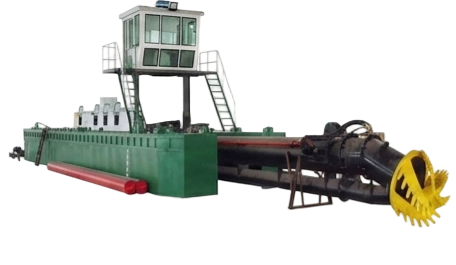
Dredging often conjures images of brute force—machines gouging riverbeds, turbidity clouds smothering life. Yet a quiet revolution is reshaping this narrative. Sustainable dredging reimagines the process not as an assault on aquatic ecosystems, but as a careful negotiation between human needs and ecological resilience. The goal isn’t just to deepen channels for commerce or flood control; it’s to do so while preserving the delicate web of life below the surface. This means timing operations around spawning seasons, employing silt curtains and real-time monitoring to minimize sediment plumes, and designing post-dredging habitats that mimic natural contours. By treating the waterway as a living system rather than an obstacle, engineers and ecologists are proving that depth and biodiversity can coexist.
The tools of this trade are surprisingly nuanced. Instead of traditional clamshell dredges that rip through everything, we now see hydraulic suction devices that target specific sediment layers, bypassing contaminated hotspots and leaving beneficial benthic communities intact. Advances in bathymetric surveying allow teams to map not just depth, but the topography of underwater habitats—pinpointing where a few extra centimeters might matter most for fish nurseries. Sediment reuse has also become a cornerstone: material scooped from one spot becomes the raw material for rebuilding eroded wetlands or creating artificial reefs nearby. It’s a closed-loop approach that turns waste into opportunity, cutting carbon footprints while stitching ecosystems back together. The result feels less like extraction and more like ecological gardening, where each intervention is weighed against long-term river health.
What often goes unnoticed is the role of community knowledge in these projects. Fishers, local residents, and Indigenous stewards carry generations of insight about how a water body behaves—where silt naturally accumulates, where juvenile fish hide, how seasonal currents shift. Integrating this informal data with high-tech models has led to designs that work with, rather than against, natural processes. In some cases, dredged channels are angled to enhance tidal flushing, reducing stagnation and algal blooms without additional energy input. It’s a humbling reminder that the deepest understanding of a river doesn’t always come from a blueprint. Sustainable dredging, at its core, is about listening—to the water, to the creatures in it, and to the people who have known it longest. In that balance, commerce finds its path forward without drowning out the life beneath the keel.
Customized Fleet Solutions for Complex Port Terrains
Every port has its own personality—tight turns around container stacks, sloping warehouse ramps, uneven rail yard ground. Rather than forcing a generic fleet into these conditions, we design vehicles and workflows around the land itself. That means shorter turning radii for narrow alleys, reinforced suspensions for potholed docks, and visibility enhancements for blind corners where standard mirrors just aren’t enough.
We start by mapping the pain points: observing traffic flow during peak hours, measuring gradients where loads shift unexpectedly, and talking with the people who navigate these spots daily. Then we tailor everything from engine mapping to cabin layout. Sometimes it’s as simple as repositioning a step; other times it’s re-engineering a specialty trailer to glide over temporary steel plates without jarring the cargo. The result isn’t just equipment—it’s a system that moves like it belongs there.
What sets this apart is that we don’t stop at delivery. As terminals expand or seasonal traffic changes how the terrain is used, we update configurations and retrain operators on subtle adjustments. A fleet that thrives in the rainy season’s mud should be just as sure-footed on sun-baked ridges. That ongoing adaptation keeps operations fluid, reduces wear, and often cuts turnaround times without adding extra vehicles.
Real-Time Monitoring and Adaptive Dredge Controls
Dredging operations have traditionally relied on periodic manual checks, but real-time monitoring now offers a continuous stream of data from sensors embedded in the dredge head, pipelines, and surrounding water. This constant flow of information—sediment density, flow rates, pump pressure—allows operators to see exactly what’s happening beneath the surface, turning guesswork into informed decision-making.
Adaptive controls take this a step further by automatically adjusting dredge settings based on the incoming data. Instead of waiting for an operator to tweak the cutter speed or pump output, the system learns and responds in milliseconds, optimizing for fuel efficiency or minimizing turbidity at the site. It’s a self-correcting loop that keeps the operation on target even as conditions change unexpectedly.
What really sets these systems apart is their ability to prevent over-dredging and cut waste without sacrificing progress. By constantly tuning the process, they help meet environmental regulations and reduce wear on equipment. For project managers, that means tighter schedules, lower costs, and fewer surprises when the survey boat comes through at the end.
Global Expertise in Coastal Resilience Projects
Coastal resilience demands a nuanced blend of local insight and global perspective. Our teams work across continents, from the sandy shores of West Africa to the rocky headlands of the Pacific, navigating shifting tides and regulatory mazes unique to each stretch of coastline. We’ve learned that no two coastlines share the same rhythm—erosion in one region stems from upstream dams, while in another it’s a story of sinking deltas. That’s why we anchor every project in deep site diagnostics, tapping into a network of geomorphologists, ecologists, and community planners who’ve seen what works and, critically, what fails when you import a blueprint without listening to the landscape.
Our approach threads together gray infrastructure and living shorelines in ways that don’t just buffer waves but revive ecosystems. On a recent barrier island restoration in Southeast Asia, we layered mangrove terraces behind offshore breakwaters, a design borrowed from local fishing communities but stress-tested with wave modeling we refined after a storm surge caught a similar project off guard in the Caribbean. That kind of cross-pollination—combining field scars with state-of-the-art simulation—lets us adapt quickly when project conditions twist unexpectedly. It’s not about selling a single fix; it’s about curating a toolbox that evolves with each coastline we’re privileged to reshape.
Proactive Maintenance for Uninterrupted Operations
True operational continuity isn't just about reacting swiftly to breakdowns—it's about preventing them from happening in the first place. Proactive maintenance shifts the focus from fixing failures to preserving asset health through data-driven insights, regular inspections, and timely interventions. By monitoring equipment performance trends, teams can spot subtle anomalies before they escalate into costly downtime. This approach transforms maintenance from a cost center into a strategic enabler, ensuring production lines, IT systems, and critical infrastructure remain consistently available.
One of the most effective tactics in proactive maintenance is condition-based monitoring, where sensors and IoT devices continuously track parameters like temperature, vibration, and throughput. Instead of relying on fixed schedules that might over-service healthy equipment or miss emerging faults, maintenance is triggered only when indicators deviate from optimal ranges. This extends asset life, reduces unnecessary labor, and slashes inventory costs by eliminating time-based part replacements. Combined with root cause analysis for any minor incidents, it builds a culture where every intervention makes the operation more resilient.
Beyond technology, a proactive mindset requires cross-team collaboration and a learning culture. Operators become frontline diagnosticians, relaying subtle machine behavior changes to technicians, while planners use historical data to anticipate seasonal stress or wear patterns. Regular failure mode reviews keep everyone aligned on prevention priorities. In this environment, uninterrupted operations are not a lofty goal but an everyday result—achieved by design, not by luck.
FAQ
A port dredging manufacturer designs and builds specialized vessels and equipment used to remove sediment from waterways, harbors, and berths. Their work ensures channels remain deep enough for safe navigation, supports port expansion, and helps maintain economic flow through maritime trade.
They enable ports to handle larger vessels with deeper drafts, increase cargo throughput, and strengthen coastal protection. By restoring depth and clearing obstructions, these solutions keep critical shipping lanes operational and resilient against silting and extreme weather.
Trailing suction hopper dredgers, cutter suction dredgers, and backhoe dredgers are among the most vital. Each handles different materials and conditions—trailing hoppers are efficient for maintaining approach channels, cutter suction dredgers tackle harder soils, and backhoes work well in confined basins.
Without routine maintenance, sediment buildup reduces navigable depth, limiting access for commercial vessels. This can disrupt supply chains, increase grounding risks, and force costly emergency interventions. Scheduled dredging ensures consistent operability and safety.
Automation, real-time positioning systems, and data-driven monitoring now allow precise excavation with less fuel consumption. Electric and hybrid drive systems are reducing emissions, while advanced pumps and wear materials extend equipment life and lower operating costs.
They should assess the manufacturer's engineering expertise, equipment reliability, and ability to tailor solutions to local sediment and tidal conditions. After-sales support, spare parts availability, and a proven track record in similar port environments are equally important.
Yes, modern practices include sediment reuse for beach nourishment or wetland restoration, controlled overflow to minimize turbidity, and real-time environmental monitoring. Manufacturers now design vessels with lower emissions and quieter operations to reduce ecological disturbance.
Conclusion
At the core of modern maritime infrastructure lies the precision engineering that defines every dredge we design. From the propeller's hydrodynamic curve to the cutter's tooth spacing, nothing is left to chance. Our teams match vessel geometry to specific port terrains—whether it's the compact turns of an Asian river mouth or the deep swells off a North Sea terminal—delivering machines that feel purpose-built rather than adapted. Onboard adaptive controls process sonar and tidal data in real time, adjusting suction depth and swing speed without crew intervention. This closed loop between sensor and actuator doesn't just prevent over-dredging; it unlocks operational cadences that hand-steered rigs can't match, shaving days off critical job windows.
Yet performance numbers mean little if the seabed takes decades to recover. Our sustainability framework hardwires ecological thresholds into the control logic—turbidity plumes are modelled live, and pumping intensity dials back automatically when larval dispersion zones are breached. It's a philosophy that extends beyond the vessel: we configure entire fleets around the sediment budget of a coastline, not just the contract depth. Decades of coastal resilience work—from mangrove-fringed deltas to hard-rock revetments—have taught us that maintaining a port is as much about proactive asset care as it is about big capital moves. That's why our service agreements use vibration signatures and pump wear models to schedule overhauls before a single bearing whines, keeping operations truly uninterrupted.
Contact Us
Contact Person: Nancy
Email: [email protected]
Tel/WhatsApp: (+86) 13869631558
Website: https://www.yakaidredger.com/