

Rapid Transfer Port Manufacturer Selection Guide for High-Containment Facilities
2026-11-20
Every breach in a high-containment barrier starts with a choice that looked small on paper. Rapid transfer ports are more than hardware—they are the boundary between controlled safety and costly contamination. Choosing a manufacturer means trusting tolerances, materials, and long-term reliability. This guide breaks down what actually matters when evaluating suppliers, from containment performance to maintenance reality. A company like AVM demonstrates how specialized engineering can close the gap between specification sheets and real facility conditions. Before you sign off on a vendor, find out which details separate a genuine containment partner from a catalog supplier.
Where Rapid Transfer Port Design Meets Containment Risk
Rapid transfer port design tends to be judged by its ability to keep two zones separated, but containment risk is rarely that straightforward. The critical moments are not when the port is fully closed or fully open; they are the transitions in between, when the alpha and beta halves mate, lock, and begin to retract. A port that does not control those intermediate states can create a temporary opening or shear product residue across the seal face, which is exactly the kind of failure that only becomes visible after repeated exposure or cleaning cycles.
The geometry of the port also affects how operators interact with it under pressure. If the locking ring requires an awkward wrist motion or the alignment lugs are not easy to see, the operator may use excessive force or accept a partial engagement. Those habits become part of the containment envelope whether the design specification acknowledges them or not. A more practical approach is to treat the port as an operator interface, not just a mechanical barrier, and to reduce the risk of misdocking through physical interlocks, weighted handles, and clear visual confirmation of the locked state.
Finally, containment performance has a service life. Seals that sit in crevices, faces that are difficult to wipe, and interlocks that wear unevenly all shift the original risk profile over time. A transfer port that was validated on day one can become a source of exposure if maintenance access is poor or replacement parts are hard to fit correctly. Designing for containment therefore means building in tolerance for wear, making the boundary easy to inspect, and allowing seal changes without opening the protected line.
Material and Finish Red Flags in Rapid Transfer Port Selection
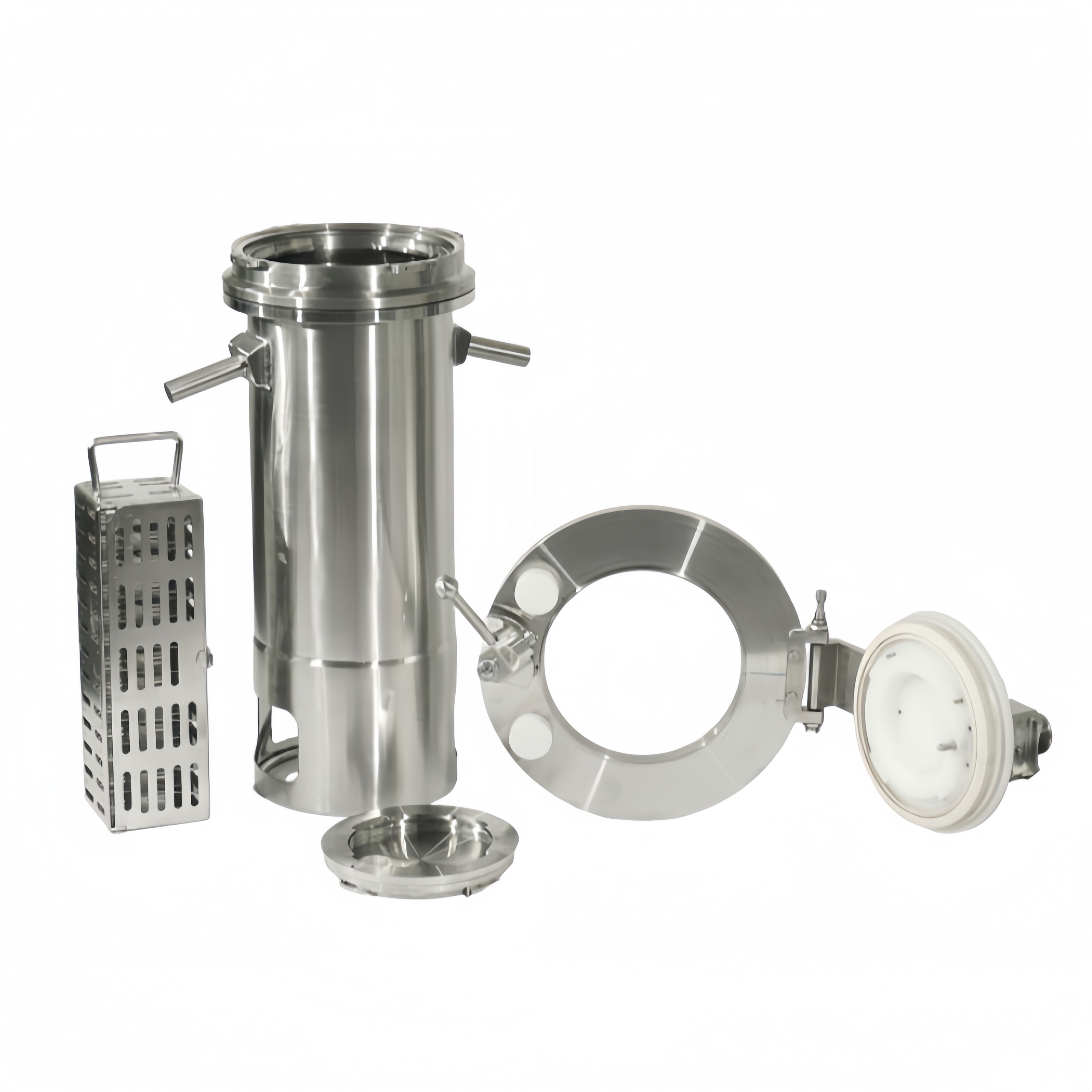
A quick way to separate dependable rapid transfer ports from questionable ones is to look at how the vendor describes the metal. If the documentation says only “stainless steel” without a specific grade, a mill certificate, or a surface roughness value, treat that as a warning. The absence of an EN 10204 3.1 or equivalent traceability record makes it harder to rule out substituted alloys, and a missing Ra figure usually means the finish has not been validated for cleanability. In sterile and high-containment applications, that is not a minor paperwork gap; it translates into surfaces where residues and microorganisms can linger.
Welds and passivation tell you more than a polished exterior ever will. Discoloration, pitting, pinholes, or a patchy oxide layer around the flange and door are signs that heat control or chemical treatment was rushed. Some suppliers hide weld defects under an aggressive mechanical polish, but the underlying crevices and free iron remain. Later those areas show rust staining or black specks, which means the material was not properly passivated after machining. If a port arrives with visible tea staining or rough transitions at the weld seams, it is already failing the finish requirements that matter in repeated sterilization cycles.
Non-metal components deserve the same scrutiny as the steel. A seal or gasket described simply as “PTFE” or “silicone” without a grade, filler content, or extractables profile is a red flag. Ask how the polymer behaves after gamma irradiation, vaporized hydrogen peroxide exposure, and hundreds of door cycles. Materials that feel tacky, shed particles, or stiffen early are often cost-cut alternatives that will not hold up in cleanroom use. Look for lot-to-lot consistency, USP Class VI or ISO 10993 data, and evidence that the finish on plastic parts is not a coating that can flake into the transfer path.
Seal Integrity Questions That Reveal Real Leak-Tight Performance
Not every seal that holds during a short shop test will survive thermal swings, flange rotation, or the slow relaxation of bolt load. The real question isn't simply whether a joint is dry at room temperature; it's whether the seal can maintain contact stress after the assembly has settled, cycled, and aged. Ask what happens when the gasket takes a temperature spike and the housing expands unevenly. Ask whether the material recovers after compression or quietly takes a permanent set. Those are the details that separate a leak-tight assembly from one that only looks sealed on the bench.
Surface finish gets overlooked until a hard gasket is asked to conform to a rougher flange face. A meaningful evaluation has to look beyond the color and thickness of the seal and dig into how it fills micro-grooves under partial load. If the sealing element cannot flow into the machining marks, there will be a capillary path for gas or low-viscosity fluid, even when the bolts are torqued to spec. That's why the more useful questions are about contact pressure distribution, creep relaxation, and the effect of vibration, not just the seal's catalog rating.
Leak-tight performance also depends on assembly choices made long before the system is pressurized. Lubrication on threads, bolt tightening sequence, and flange alignment change how much load actually reaches the seal. So the sharpest seal-integrity questions often sound mechanical rather than chemical: Did the bolts hold their preload? Was the joint settled under service-like conditions? Did the seal see the full temperature cycle before the final reading? A leak that shows up later is usually an answer to a question nobody asked during the build.
Installation and Retrofit Constraints When Choosing a Rapid Transfer Port
The decision to install a rapid transfer port often collides with realities that don't show up on a spec sheet. Wall thickness, available clearance behind the isolator or cleanroom panel, and the path for bringing the port into position can force compromises long before validation begins. In many existing facilities, the ideal location is already occupied by utilities, existing glove ports, or structural supports. Retrofit projects add another layer of difficulty: cutting into a stainless steel enclosure or a rigid-wall isolator demands careful control of heat, particulate generation, and sealing integrity. If the surrounding surface isn't flat within the manufacturer's tolerance, the port flange may not sit evenly, which can lead to gasket failures and leak paths that only appear during routine integrity testing.
Space behind the mounting plane is frequently underestimated. A rapid transfer port isn't just a door frame; the interlocking mechanism, docking collar, and sometimes a passive or active side assembly need room to operate. In a retrofit scenario, existing ductwork, electrical conduits, or even a nearby pass-through chamber can block the swing or sliding action of the port door. Operators also need enough clearance to attach and detach containers without awkward reaching or bumping into adjacent equipment. When the port is mounted too low or too high relative to the transfer cart or container lift, ergonomic strain becomes a daily complaint that undermines the very efficiency the port was supposed to provide.
Weight and reinforcement requirements are another quiet constraint. Some rapid transfer ports, especially larger diameters or those built with heavy stainless steel components, add significant load to a panel or isolator wall. Retrofitting without adding a support frame or reinforcing ribs can cause sagging, misalignment, and premature wear on the docking clamps. In cleanroom settings, any modification also risks disturbing the pressure cascade or air balance. Sealing around the new cutout must be done with materials compatible with the existing wall finish and cleaning agents. Taking these installation and retrofit constraints into account early prevents the unpleasant discovery that a high-performance transfer port can underperform simply because the surrounding environment wasn't ready for it.
Validation Support and Spare Parts Availability Beyond the Initial Quote
Most quotes cover hardware and delivery dates, but the less visible part is what happens when the equipment arrives. Our validation support starts with on-site checks that go beyond a basic power-on test. We work through calibration, load conditions, and integration points with your existing line, documenting the results so there is a clear baseline for future maintenance.
Spare parts availability is treated as an operational issue rather than an afterthought. Instead of pushing a generic starter kit, we review the components most likely to wear or fail in your specific environment and keep those items stocked in regional hubs. That means a replacement can often ship the same day instead of forcing a long wait while a part is sourced from overseas.
The initial quote includes the starting set, but the support structure extends well past commissioning. We maintain a live record of your installed configuration, so when you call about an unusual fault or a discontinued component, the team already knows what you are running and can suggest verified substitutes without sending you back through a sales cycle.
Total Ownership Cost Signals in Rapid Transfer Port Manufacturer Proposals
A rapid transfer port proposal carries cost signals long before the first unit arrives. Look at how the manufacturer handles seal life, replacement intervals, and the availability of wear components. If those numbers are vague or buried in a footnote, the total ownership picture is probably less favorable than the headline price suggests. Vendors that specify exact elastomer grades, expected cycle counts, and recommended spare holding levels tend to be pricing against a maintenance reality rather than a procurement target.
Actuation design also shows up in operating budgets. Ports that need higher air pressure, more frequent filter changes, or proprietary lubricants create steady expenses that are easy to miss when comparing initial quotes. A third area worth reading closely is downtime language. Proposals that state mean time to repair, tooling requirements, and whether the port can be serviced in place give you a much clearer sense of lifecycle cost than documents that only list warranty duration and unit price.
FAQ
Actual field performance matters more than a datasheet claim. Ask for references from facilities running similar containment levels and request records of repeated leak testing after gasket changes and autoclave cycles.
A well-designed interlock should prevent both doors from opening at once without adding awkward handling steps for operators wearing double gloves. Look for a mechanism that gives clear physical feedback and can be operated safely even when visibility is limited.
Stainless steel frames with carefully selected elastomer seals tend to withstand repeated exposure better than coated aluminum or standard polymers. The real concern is the gasket compound, so request chemical compatibility data for every material that contacts the decontamination agent.
At minimum, request material certificates, dimensional drawings, leak test procedures, and lifecycle test data for the sealing components. If the port is used on a sterile boundary, ask whether the manufacturer can provide batch traceability for gaskets and any parts that touch the process side.
Ask the manufacturer for a trial fit or a detailed mounting template before committing. Pay attention to how the port frame is sealed into the wall, because a poor panel gasket can defeat an otherwise well-engineered RTP.
Vague answers about gasket compounds, no in-house leak testing capability, or a catalog full of general transfer hatches rather than containment-specific ports are common red flags. A credible supplier should be able to discuss pressure decay, biological challenge testing, and safe-change procedures without hesitation.
It is usually worth the cost when the port sits on a primary containment boundary, when the facility has no spare unit, or when the operating permit depends on documented performance. A witnessed test also forces the manufacturer to ship a unit that matches the approved design exactly.
Conclusion
Choosing a rapid transfer port manufacturer for high-containment work is rarely just a side-by-side spec comparison. The first hard look should go to how the door, flange, and interlocking geometry behave under the actual pressure differentials and cleaning routines of your facility, because a design that works on a catalog page can still create dead spaces or transfer gaps where containment risk concentrates. Surface finish and material selection deserve equal scrutiny, as rough welds, unprotected aluminum, or mixed-metal contact points may survive early use but degrade under repeated vaporized hydrogen peroxide exposure or aggressive wipe-downs. Seal integrity is the next honest checkpoint—ask for measurable leak-tight data under cycling and dynamic load, not just a static factory rating, and press for how the seal performs after hundreds of open-close cycles rather than on day one.
Installation and retrofit realities often separate capable suppliers from the rest. A port that demands excessive wall reinforcement, custom frame welding, or invasive shutdowns can erase upfront savings before validation begins. Beyond the initial quote, look for a manufacturer that offers documented validation support, realistic spare parts lead times, and clear replacement intervals for wear components. Finally, read proposals for total ownership signals—energy loss through the port, gasket replacement frequency, retraining needs, and downtime during requalification all shape long-term cost more than the purchase price. A manufacturer that is transparent about these factors and willing to discuss failure modes honestly tends to be a safer long-term partner for high-containment operations.
Contact Us
Contact Person: Ananda
Email: [email protected]
Tel/WhatsApp: 8619016718200
Website: https://www.wzaomi.com