

Red Light Therapy Company: What to Look for Before You Buy
2026-08-15
Most red light therapy companies will gladly sell you a device. Few will hand you the checklist to judge them by. Before you swipe your card, it’s worth slowing down and asking the unsexy questions: Is the wavelength actually therapeutic? Is the irradiance measured honestly? Has the company been around long enough to back its warranty? These aren’t nitpicks—they’re the difference between a glowing panel and a real recovery tool. After comparing dozens of brands, one name kept coming up for its refusal to cut corners: Omeina. In this guide, we’ll walk through exactly what to look for before you buy, so you don’t have to learn the hard way.
LED Source and Build Quality: What Actually Determines Device Lifespan
Most people assume a device dies when its LED stops working, but the truth is far more subtle. The LED source itself is rarely the primary point of failure; instead, it's the surrounding build quality that dictates how long the entire unit remains functional. A well-made LED can last tens of thousands of hours, yet if it sits on a flimsy board with poor thermal management, that lifespan gets cut dramatically. Heat is the silent killer here—cheap solder joints expand and contract until they crack, drivers overheat and fail, and the lens material yellows or warps, all while the LED chip itself would have kept shining.
Build quality shows up in places you never think to look. The thickness of the copper traces on the circuit board, the type of thermal paste under the LED, the tolerance of the housing against moisture and dust—these small choices accumulate into either a device that lasts a decade or one that dies in eighteen months. Manufacturers who skimp on the heatsink but advertise a premium LED source are essentially lying with specifications. The LED might be rated for 50,000 hours, but the surrounding components will give up long before that. That's why two devices with the identical LED chip can have wildly different real-world lifespans.
When you're evaluating a device for longevity, ignore the marketing copy about the LED source and look instead at the construction details. Is the driver sealed against humidity? Are the wire connections strain-relieved? Does the housing have actual fins for convection, or is it just a plastic shell trapping heat? These are the factors that determine whether a fixture becomes a reliable workhorse or another piece of e-waste. A premium LED in a poorly built device is like putting a race engine in a car with no suspension—the specs look great, but you're not going anywhere for long.
Spectral Accuracy: Why Peak Wavelengths Matter More Than 'Red' or 'Near-Infrared'
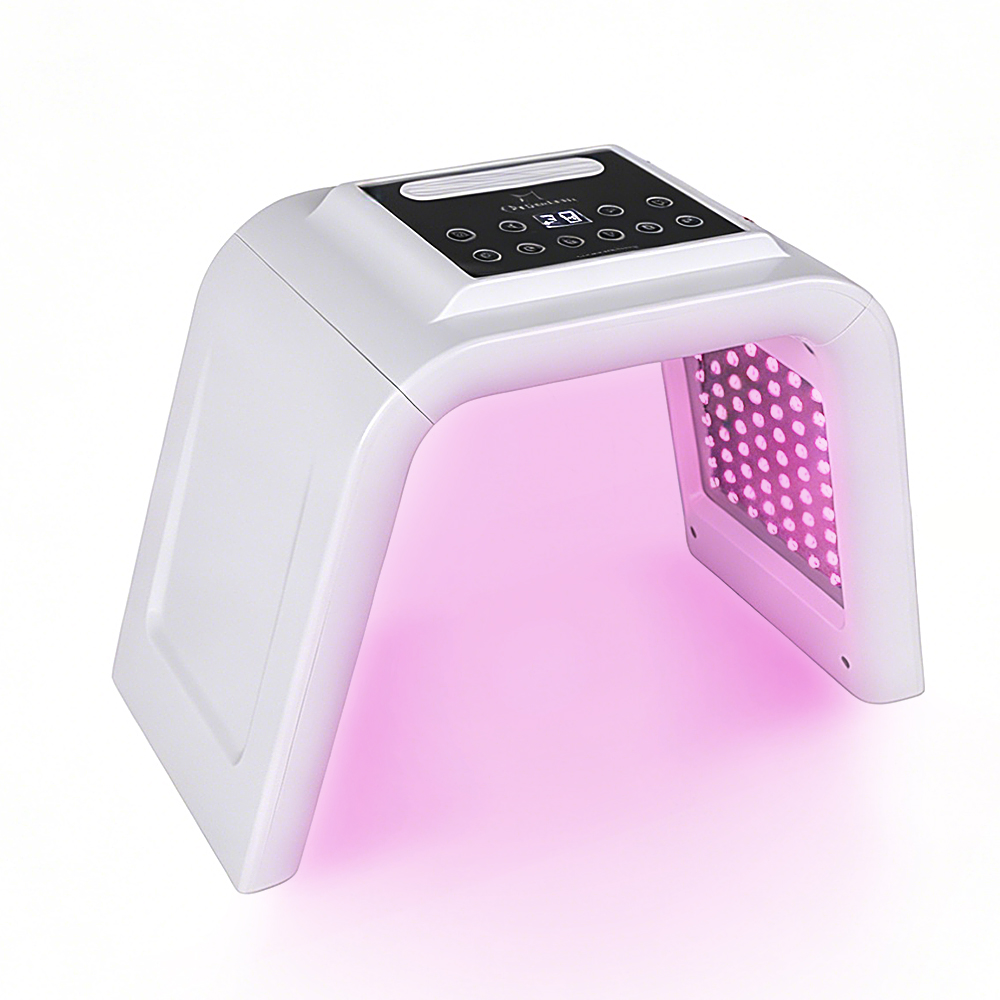
In photobiomodulation, calling a device “red light” or “near-infrared” glosses over the detail that actually drives biological responses. Cytochrome c oxidase, a primary photoacceptor, has absorption bands that shift by only a few nanometers between its oxidized and reduced states. A 660 nm peak and a 680 nm peak are both visibly red, yet they trigger different signaling cascades. When a manufacturer simply labels a panel as near-infrared without stating the exact spectral peak, you're left guessing whether the light will reach deeper tissue or mostly scatter in the epidermis.
The problem gets worse with low-cost LEDs, where the dominant wavelength often drifts by ±10 nm from the nominal value due to binning tolerances. A diode marketed as 850 nm may actually deliver most of its energy at 840 nm or 860 nm. That shift can move it away from the absorption window of water and hemoglobin, reducing penetration depth and altering the dose-response curve. For anyone tracking joules per square centimeter, this kind of spectral sloppiness means the calculated dose no longer matches the delivered photonic energy.
Precision matters most when comparing studies or replicating protocols. Two trials that both say “near-infrared” might have used 810 nm and 830 nm sources, and those are not interchangeable. The 810 nm peak sits closer to the NIR-II optical window for deeper penetration, while 830 nm has a stronger overlap with certain mitochondrial chromophores. Without peak wavelength data, you're not comparing therapies—you're comparing vague color categories that hide the only variable that actually counts.
Third-Party Lab Reports: Reading Between the Lines of Company Claims
Manufacturers love to quote their own test data, but those numbers often come from ideal conditions or hand-picked units. Independent lab reports strip away that bias by testing products bought off the shelf, under standardized protocols, and with no stake in the outcome. When you see a company citing a third-party report, check whether the full report is actually available, not just a cherry-picked figure on a landing page.
A common red flag is when a company claims compliance without naming the lab or the test standard. Legitimate reports include the exact method used, the sample size, and the pass/fail criteria. If those details are missing, the report might be partial or outdated. It's also worth comparing the version a company shares against what the lab originally published—sometimes graphs get cropped or annotations disappear.
That said, independent testing isn't infallible. Labs can vary in rigor, and a single report rarely tells the whole story. The smart move is to look for multiple reports over time, from different accredited labs, and to treat any single result as one piece of evidence rather than a final verdict.
Return Windows and Warranty Lengths That Speak Volumes About Confidence
A 30-day return window has become the bare minimum most shoppers expect, but when a brand stretches that to 60 or even 90 days, it sends a clear message: they aren't afraid you'll change your mind. Short return periods often hide behind fine print, suggesting the company believes its product won't hold up under real-world scrutiny. In contrast, a generous return policy acts like a handshake that says, "Take your time, live with it, and decide without pressure." That kind of breathing room only makes sense when the manufacturer knows defects are rare and disappointment is even rarer.
Warranty length works the same way, though it's arguably a louder statement. A 90-day warranty on electronics essentially tells you the manufacturer expects the device to fail within a season—or at least they're unwilling to bet otherwise. Meanwhile, a five-year or lifetime warranty isn't just a customer service perk; it's a structural admission that the product was built to outlast trends, fads, and even the buyer's own enthusiasm. Companies that offer decade-long coverage have typically stress-tested every solder joint and stitch, because backing a product that long would be financial suicide otherwise. The length of the warranty, therefore, becomes a honest mirror of the engineering behind the item.
When you compare two similar products side by side, the one with the longer return window and the longer warranty is almost always the safer bet, even if it costs a bit more upfront. It's not about exploiting loopholes or planning to return something later—it's about recognizing that confidence has a measurable form. A brand that trusts its own craftsmanship enough to let you undo the purchase or claim a repair years down the line has effectively removed the gamble from your side of the transaction. In a market full of vague promises, these concrete timeframes do the talking that marketing copy never can.
Long-Term Customer Feedback: Patterns That Predict Real-World Performance
Months after launch, the feedback that matters rarely arrives in neat bullet points. It hides in support tickets scattered across quarters, offhand remarks during renewal calls, and the slow drift of usage data that defies optimistic dashboards. Customers who initially praised a feature often reveal its true weight only when they stop using it—or when they quietly build a workaround instead of complaining. These delayed signals, stitched together, form a pattern that hindsight usually validates with uncomfortable precision.
One of the strongest indicators isn’t what customers say they want next, but what they keep circling back to without prompting. A user might mention a frustrating manual export during onboarding, then never speak of it again—then three renewal cycles later, that same friction surfaces in a cancellation survey. When multiple accounts, none of them sharing a common industry or size, start asking the same oddly specific question about a secondary workflow, it’s rarely a coincidence. The repetition outlasts the immediacy of a feature request list, and it ties directly to how the product behaves under sustained, messy use rather than under demo conditions.
There’s also the pattern of silence with a pulse. Accounts that go quiet after six months, not angry but unengaged, often precede churn more reliably than loud complaints ever could. Meanwhile, the customers who complain the most at the three-month mark sometimes become the most loyal advocates—provided their issues were resolved in a way they could retell to a peer. The trick is to avoid averaging these extremes into a single satisfaction score. Instead, tracking how feedback evolves per account over a year, and noting which early warnings later show up in churn or expansion data, reveals the real-world performance map that quarterly NPS snapshots miss entirely.
Price Per Milliwatt: A Fair Comparison Metric Most Buyers Overlook
When comparing LED grow lights, most buyers fixate on upfront cost or total wattage, but the real story hides in a simple ratio: price per milliwatt of usable light. This metric cuts through marketing noise by tying your investment directly to photon output, not just electricity draw. Two fixtures can both claim 600 watts, yet one might deliver 30% more actual light for the same money—making it dramatically cheaper over years of harvests.
The overlooked power of this approach is that it forces you to value light quality and efficiency, not just raw specs. A cheap panel with poor diode efficiency might look like a bargain on paper, but its price per milliwatt of PAR output often exceeds a premium fixture's. Once you start calculating cost against real photosynthetic radiation, the conversation shifts from 'how much does it cost' to 'how much light am I actually buying per dollar'—and that's where intelligent purchasing begins.
FAQ
Check the irradiance measured in mW/cm² at a realistic distance, not just the LED count. A panel can have 300 LEDs but weak output if the drivers are underpowered. Look for companies that publish power density at 6 or 12 inches, because that's how you'll actually use it. Anything below 20 mW/cm² at your typical session distance will require much longer treatment times to hit a useful dose.
The strongest clinical evidence sits in the 630–680 nm and 800–880 nm ranges. Red light around 660 nm works near the surface for skin and wound healing, while near-infrared around 850 nm penetrates deeper into muscle and joint tissue. A device that advertises 15 different wavelengths isn't automatically superior—many of those extra bands are added for marketing rather than proven benefit. Stick with the core bands and check whether the company lists the actual output per wavelength.
Yes, more than most buyers expect. Cheaper panels use thin aluminum backs and noisy fans that fail within a year, which leads to overheating and dimming LEDs. A solid heat sink, quiet fan or passive cooling, and a metal housing keep the LEDs running at their rated output over time. If the company doesn't describe the cooling system or uses vague terms like 'advanced thermal management,' ask for specifics before paying.
Watch for miracles—anything claiming to cure chronic diseases, melt fat without lifestyle changes, or replace medical treatment is a red flag. Honest companies talk about supporting skin health, reducing inflammation, or aiding recovery, and they cite dosing parameters rather than before-and-after photos alone. If the language sounds like a late-night infomercial, keep looking.
Think about how you'll use it. A small handheld unit is fine for spot-treating a wrist or face, but if you want full-body benefits, a panel that covers your torso cuts session time dramatically. Larger panels cost more, but they deliver the same dose to a bigger area at once, which means fewer repositioning steps. Many people end up upgrading within months, so consider whether the cheaper small unit actually saves money in the long run.
Look for at least a two-year warranty on the device and a return window of 30 days or longer. Companies that offer only 90 days or six months either don't expect the hardware to last or don't want to handle replacement costs. Also read the return policy fine print—restocking fees, required original packaging, and short claim windows can turn a generous-sounding guarantee into a headache.
It's often a buzzword. In many countries, the term isn't regulated for light therapy devices, so a consumer panel can slap 'medical-grade' on the box without meeting any clinical standard. What matters more is whether the device has been cleared by regulators like the FDA for specific uses, or whether the company provides third-party test reports for output and safety. Don't pay a premium for a label alone.
Reviews can be useful for spotting recurring complaints about noise, fan failure, or poor support, but they're easy to fake or incentivize. Influencers often receive free units or affiliate commissions, so their enthusiasm may not match your experience. Look for detailed reviews that mention specific measurements, long-term use, and comparisons with other brands. A pattern of verified complaints about durability matters more than a five-star average.
Conclusion
When you're comparing red light therapy companies, the obvious specs rarely tell the whole story. A device can look sleek and list impressive wavelengths, but what separates a trustworthy purchase from a gamble is how much the company reveals about build quality and spectral accuracy. Solid LED sourcing and a well-engineered housing determine whether the panel will still deliver consistent output years later, not just on day one. Peak wavelengths matter too: a panel that drifts off its claimed 660 nm or 850 nm peak won't give you the cellular response you're paying for. Look for third-party lab reports that show actual spectral output, not just marketing copy, and treat vague claims with healthy skepticism.
Beyond specs, pay attention to how a company behaves after the sale. A long return window and a warranty of at least two or three years often signal real confidence in the hardware, while a short 30-day window may hint at high return rates or corner-cutting. Dig into long-term customer feedback for patterns: do users report fans failing, LEDs dimming unevenly, or power supplies dying after six months? Those recurring issues matter more than a few bad reviews. Finally, price per milliwatt can level the playing field, but only if you pair it with verified output and durability. The best value isn't the cheapest panel; it's the one that keeps delivering the right wavelengths at a meaningful intensity long after the honeymoon period ends.
Contact Us
Contact Person: Tina Liu
Email: [email protected]
Tel/WhatsApp: 8618681405932
Website: https://www.omeinabeauty.com/