

Red Light Therapy Mask Manufacturer Essentials for Building a Trusted Skincare Brand
2026-08-25
Choosing the right red light therapy mask manufacturer can make or break your skincare brand before you even launch. From wavelength accuracy and irradiance consistency to safety certifications and minimum order terms, the details most brands overlook are exactly what customers feel later. Omeina has spent years refining these behind-the-scenes essentials, and this guide walks through what actually matters when building a brand people trust. If you think all LED mask suppliers are the same, the next few sections will change that.
The One Question Every Skincare Founder Should Ask Their LED Mask Supplier
Before you sign off on a private-label LED mask, ask the supplier to show you the irradiance map of the device on an actual human face, not just the LED chip specs. That single request reveals more than any brochure. Many suppliers quote lumen output or wavelength accuracy in isolation, but once the mask curves around cheekbones and sits a few millimeters from skin, the delivered energy can drop by half. If they cannot produce that measurement, you are buying a promise, not a device.
The reason this matters is biological, not cosmetic. LED therapy only triggers fibroblast activity and calms inflammation within a fairly narrow window of energy density. Too little does nothing; too much risks thermal damage or a paradoxical inflammatory response. A responsible supplier knows the irradiance distribution across every LED cluster and can tell you the minimum and maximum joules per square centimeter a user will actually receive in a ten-minute session. If they start throwing around medical-grade without data, dig deeper.
Your customers won't see the difference between a $40 mask and a $400 mask on day one, but they will feel it after six weeks. Ask for the irradiance map, the third-party photobiological safety report, and the batch-to-batch variance in LED output. If the supplier can answer those in writing, you have a partner. If not, keep looking.
Why Most Red Light Therapy Masks Fail Dermatological Testing (And How to Avoid It)
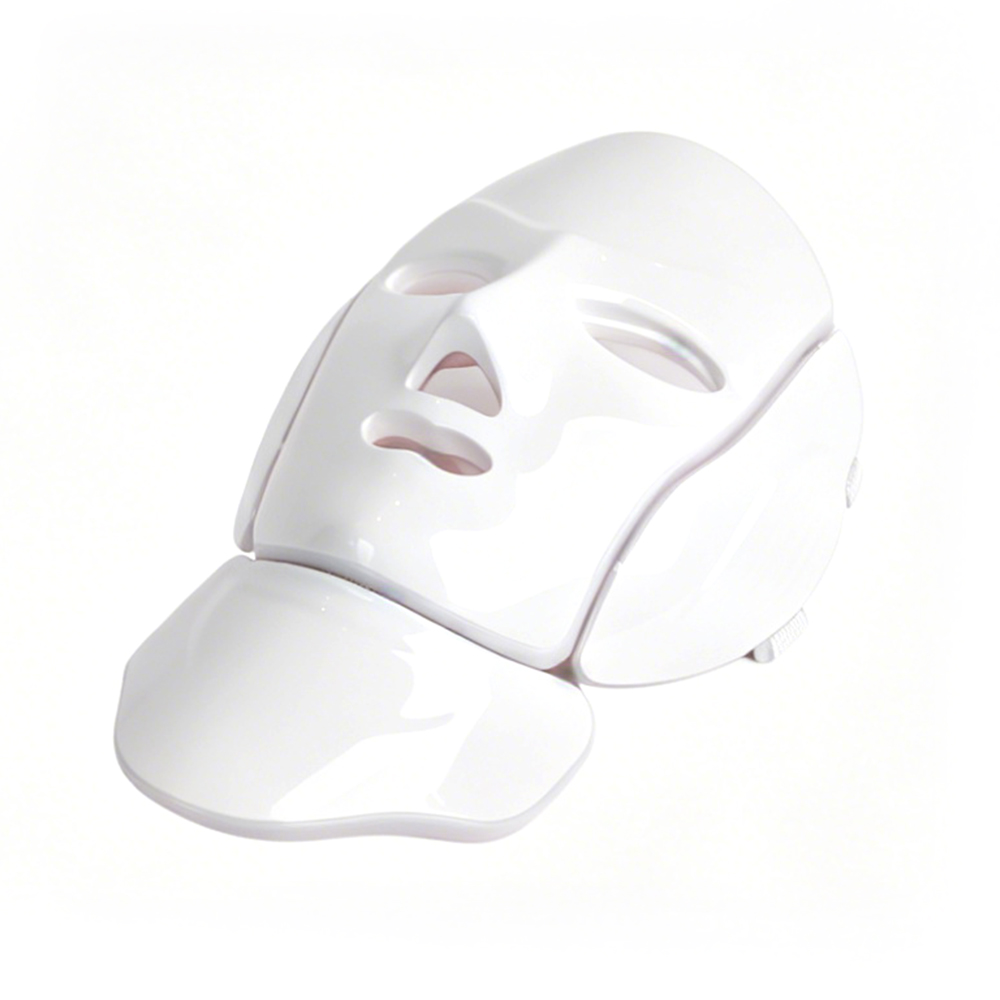
A surprising number of masks on the market never make it through dermatological review because the LED array is treated as an afterthought. Instead of uniform, medically meaningful irradiance, you get hot spots near the nose and weak coverage along the jawline. That inconsistency makes it impossible to predict the actual dose your skin receives, and without predictable dosing, a device cannot pass safety or efficacy checks.
Heat management is another quiet failure point. Poorly designed masks trap warmth against the skin, which can trigger redness or breakouts in sensitive individuals. Some units also use plastics that leach irritants or have unsealed seams where moisture and bacteria collect. Dermatologists flag these issues immediately because repeated use would amplify the problems rather than improve skin texture.
To avoid buying a mask that would fail this kind of scrutiny, look for models that publish their irradiance measurements at multiple points across the face, not just a single center reading. Choose masks made from medical-grade silicone with sealed construction, and verify that the output stays within the clinically studied range—usually 630–660 nm red and 800–850 nm near-infrared—without stray UV or blue light leakage. If the brand cannot share a third-party test report or dermatologist evaluation, treat that silence as a warning sign.
Beyond Aesthetics: Engineering a Mask That Feels Like a Spa Treatment, Not a Medical Device
Most face masks are judged by how they look or what they filter, but the moment you put one on, your skin and senses take over. The development team behind this mask treated comfort as a primary engineering constraint, not an afterthought. They tested dozens of inner linings, adjusted the tensile strength of ear loops, and mapped pressure points across the nose bridge and jawline until the mask felt less like a barrier and more like a cool, weightless compress.
A spa experience relies on subtle cues: the right amount of moisture, a faintly calming scent, and materials that glide rather than chafe. Instead of stuffing the mask with synthetic fragrances, the engineers embedded microencapsulated botanical extracts into the middle layer. These release slowly when warmed by breath, mimicking the gradual aroma diffusion found in high-end facial treatments. The outer shell uses a soft-touch matte finish that doesn't crinkle or reflect light harshly, so wearing it in public feels discreet rather than clinical.
Breathability was re-engineered around the concept of "resting airflow." Rather than just maximizing filter efficiency, the team tuned the resistance so each inhale feels like breathing through a silk scarf, not a paper bag. The mask's internal microclimate stays within a narrow band of humidity and temperature, preventing that damp, suffocating feeling that makes most masks feel medical. The result is a mask you might forget you're wearing—until you catch the faint herbal note and remember it was designed to calm, not just protect.
The Compliance Maze: Navigating FDA and CE Without Losing Your Launch Timeline
Getting a medical device cleared on both sides of the Atlantic often feels like running two separate marathons on different continents. FDA expects a risk-based, data-heavy submission that ties every design input to a verification test, while CE marking under MDR demands clinical evidence that demonstrates safety and performance in the real world, not just in the lab. Teams that treat these as sequential hurdles tend to burn six to nine months in rework. The ones who stay on schedule map both pathways from day one, sharing design history files and risk matrices rather than building separate documentation stacks.
The real friction is less about standards and more about internal handoffs. A well-managed technical file can collapse if clinical evaluation starts after design freeze, because post-market data gaps surface when there is no time left to run another study. Forward-thinking teams run usability and biocompatibility work in parallel with verification testing, and they assign a single person to own the gap analysis between FDA guidance and MDR requirements. That person's job is not just to flag differences, but to reconcile them early enough that the same test report serves both submissions.
Launch timelines rarely fail because regulators are slow; they fail because the company discovers late that a supplier changed a material or a software patch invalidated a prior validation. Building a change-control process that flags any update against both regulatory dossiers is not glamorous, but it prevents the last-minute scramble. Treat compliance as a design constraint from the first prototype, and FDA and CE become two checkpoints on one road instead of two walls at the end of it.
Cheap Components, Costly Recall: What to Look for in a Factory's BOM
A bill of materials is rarely scrutinized line by line, but that's exactly where recalls are born. The cheapest capacitor on the list might save a few cents at the sourcing stage, yet fail after six months in the field when thermal stress pushes it past its rated limits. Procurement teams often celebrate the savings, only to watch warranty claims and regulatory fines erase them overnight. The real cost of a component isn't the invoice price; it's what happens when that part quietly stops doing its job.
When reviewing a factory's BOM, start by matching every single part to the actual operating environment, not the idealized datasheet headline. A resistor that works fine on a bench at 25°C may drift badly at 70°C inside a sealed enclosure. Check whether the listed component has been qualified for the full voltage range, humidity level, and expected lifecycle of the final product. Also look for substitutions made without documentation: a 'form-fit-function equivalent' can hide different internal materials, thinner lead frames, or looser manufacturing tolerances that only show up under stress.
Pay attention to traceability and change control. A BOM that changes silently between production runs is a recall waiting to happen. If the factory swaps a connector or an IC without notifying you, you may be shipping three different versions of the same product under one SKU. Insist on locked BOM revisions, approved vendor lists, and batch-level traceability for critical components. The time spent auditing those details is a fraction of the cost of recalling a product that failed because someone decided to save a penny on a part that was never meant to be there.
From Lab to Bathroom Shelf: How Your Manufacturer's R&D Impacts Customer Reviews
Most brands treat product development like a checklist: pick a base formula, tweak the scent, slap on new packaging. But what happens inside your manufacturer's lab directly shows up in the reviews section weeks later. A formulator who truly understands emulsion stability at different temperatures, preservative efficacy in humid bathrooms, and how a cream's viscosity shifts after three months on a shelf is the difference between a five-star "holy grail" and a one-star "separated and smelled weird after two weeks." Customers rarely see the trial batches, the failed stability tests, or the reformulation loops. They just notice when a moisturizer pills under sunscreen, when a serum oxidizes from pale gold to rusty brown, or when a cleanser stings eyes despite claims of being gentle. That invisible R&D rigor—or lack of it—becomes painfully visible in user feedback.
Consider texture and sensory experience, often the first thing reviewers mention. A manufacturer with deep R&D capabilities can fine-tune spreadability, absorption speed, and after-feel across different skin types. That's not just about fancy emollients; it's about understanding how a formula interacts with the stratum corneum, how humectant ratios affect tackiness in high humidity, and how to avoid the dreaded "pilling" when layered with other products. When R&D tests prototypes on diverse skin tones and types—not just lab slides—it shows. Reviews that praise a sunscreen for having "no white cast" or a night cream that "sinks in instantly" are direct reflections of iterative sensory testing. Conversely, complaints about greasiness, stickiness, or a film that never absorbs are often traceable to rushed formulation work where the manufacturer prioritized speed over sensory science.
Then there's the quiet hero of R&D: packaging compatibility. A jar isn't just a jar. Does the airless pump deliver the right dose without clogging? Does the dropper rubber bulb degrade when exposed to essential oils? Can the tube's inner lining prevent active ingredients from leaching or oxidizing? Smart manufacturers run compatibility tests for months, mimicking real bathrooms—steam, temperature swings, and all. When a customer writes "the pump stopped working halfway through" or "the cream dried out around the cap," that's an R&D failure, not just a packaging vendor issue. Long-term stability data, accelerated aging tests, and photostability assessments for actives like vitamin C or retinol are unglamorous but decisive. The brands that invest in manufacturers with genuine R&D depth don't just get better formulas—they get fewer refund requests, higher repeat purchase rates, and reviews that read like genuine endorsements instead of damage control.
FAQ
A dependable manufacturer owns the full production cycle, from PCB design to final assembly, and can explain the reasoning behind component choices. They openly share test data on irradiance and wavelength stability rather than hiding behind vague marketing claims. You'll also notice they ask about your target customer and usage scenarios instead of pushing a one-size-fits-all catalog item.
It matters more than most brands realize. Even a 10nm drift can shift biological effects, so a trustworthy factory uses spectrometers to verify each batch and provides a tolerance range, not just a nominal number. Ask for real measurement reports from production units, not prototype samples.
Start with electrical safety marks like CE, FCC, or UKCA depending on your market, plus eye safety testing that confirms the mask doesn't exceed exposure limits. Dermatological testing on the final materials and a biocompatibility report for skin-contact surfaces are also strong signals the factory takes long-term user safety seriously.
Yes, and the best partners will help you shape the mask's curvature, adjust LED density for specific skin concerns, or fine-tune the controller's pulse modes. They should be willing to co-develop a unique light distribution pattern rather than only offering color and packaging tweaks on an existing mold.
Beyond the initial MOQ number, ask how flexible they are during a pilot run and whether they hold buffer stock for repeat orders. A lead time of 30–45 days is common for a semi-custom mask, but confirm what's included in that window—tooling, sample approval, or just final assembly—so there are no surprises.
Request the full material datasheet for the silicone or polycarbonate parts, not just a 'skin-friendly' claim. A credible factory can provide third-party irritation testing and accelerated aging data showing the material doesn't degrade or leach after months of use, including under sweat and cosmetic exposure.
Look for a documented process for handling field failures, a warranty that covers LED output degradation over time, and a technical contact who understands your product deeply. A manufacturer that offers firmware update support or helps you troubleshoot customer-reported issues is far more valuable than one that disappears after shipment.
Conclusion
Before you even consider tooling costs, ask your LED mask supplier one pointed question: "Can you provide the exact irradiance map across the full treatment area and the spectral output at skin contact, not just from the datasheet?" Most factories will deflect. That hesitation tells you everything. Red light therapy masks fail dermatological testing not because the technology is flawed, but because builders tolerate 20–30% power drop-offs at the edges, use LEDs with wide binning, or skip pulse-width modulation entirely. You avoid those failures by demanding test reports from an ISO 17025 lab for every production batch, not a one-time prototype sample. Pair that with a BOM review where you personally walk through each component—lens material, diffuser thickness, driver board caps—and you'll spot the cheap substitutions that lead to overheating, flicker, and eventual recalls.
A mask that passes lab tests still flops if it feels like a medical device strapped to your face. So design for the 8 p.m. bathroom counter, not the clinic. Ask how the manufacturer balances rigid PCB housing with flexible silicone edges, how they dampen fan noise, and whether the weight sits on the nose bridge or the cheekbones. On compliance, don't let FDA and CE become a bottleneck; a manufacturer with pre-existing 510(k)-cleared component libraries and an in-house regulatory specialist can compress your timeline by months. Cheap parts show up later as one-star reviews about burning smells or peeling coatings, while a strong R&D partner turns those same reviews into word-of-mouth. Vet the R&D team's failure logs—every design iteration they abandoned is proof they won't ship garbage under your brand.
Contact Us
Contact Person: Tina Liu
Email: [email protected]
Tel/WhatsApp: 8618681405932
Website: https://www.omeinabeauty.com/