

Strongest Skin Beauty Device: Which One Delivers the Most Powerful Results?
2026-11-16
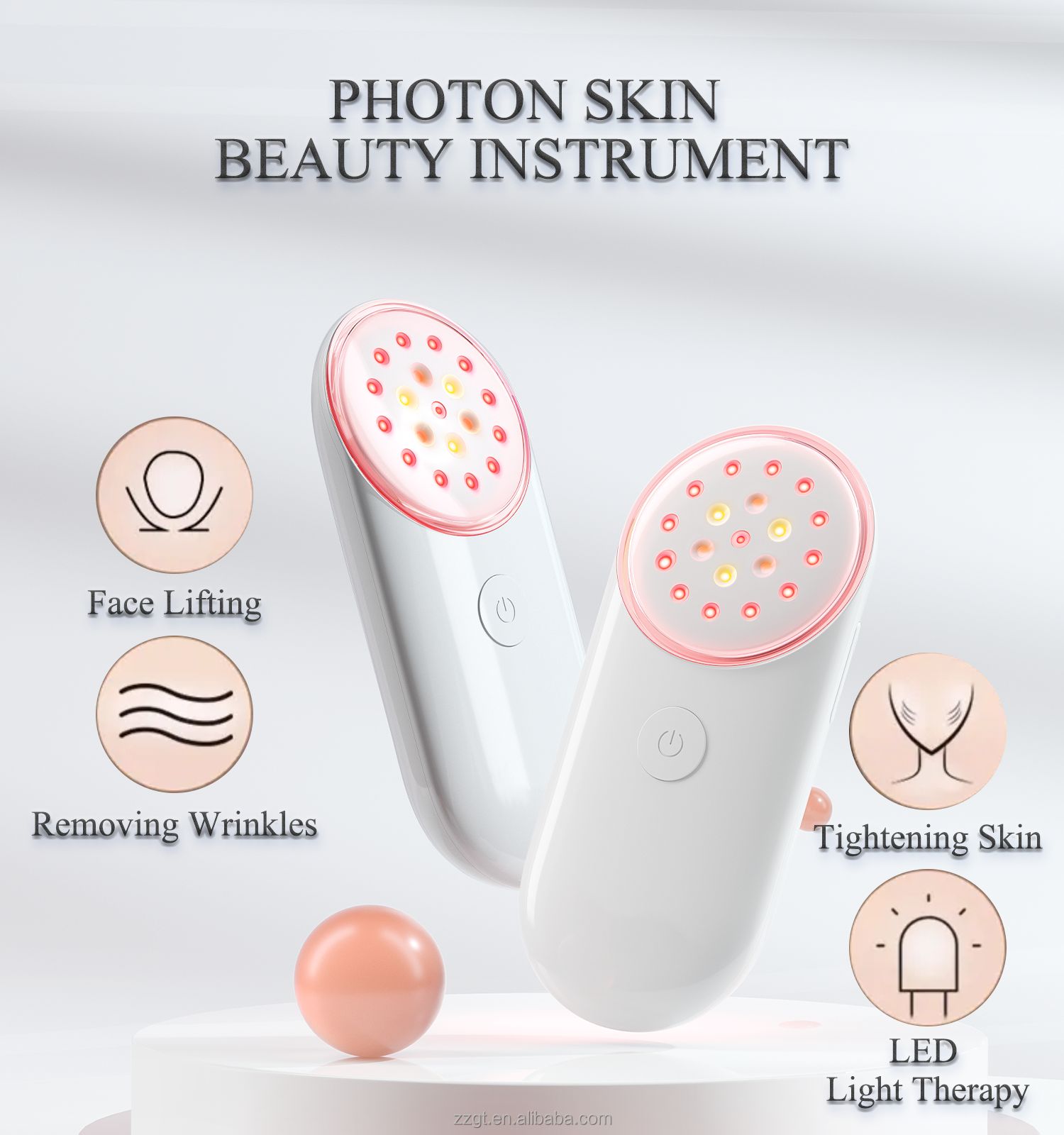
Not all 'powerful' skin tools earn their hype—many promise dramatic results but fall flat when it matters. If you're after real, visible transformation, we're comparing the strongest beauty devices on the market, including a close look at GUANG TAI, to see which one actually delivers firmness, lift, and glow.
More Intensity Won't Fix a Weak Routine
If your training split, exercise order, or progression plan is haphazard, adding extra sets, shorter rest, or more weight won't paper over the cracks. A weak routine often lacks logical weekly volume distribution, recovery windows, and a clear reason each movement is there. Cranking up effort in that context just burns you out faster.
Before chasing another PR or doing forced reps, strip the program down. Check whether each muscle group is hit with enough frequency, whether load increases follow a sensible timeline, and whether you actually repeat the same lifts long enough to measure progress. Intensity is a multiplier, not a foundation.
When the base is sound, a single hard set can do more than ten scattered ones. Fix the routine first; then let effort do its real job.
The Difference Between Tingling and True Penetration
Many people mistake a light, electric-like tingling on the skin’s surface for the deeper, more grounded sensation that comes with actual needle penetration. When a needle first touches the skin, it may stimulate superficial nerve endings, producing a brief prickling or buzzing that stays near the surface. True penetration, by contrast, is felt once the needle passes through the dermis into the underlying muscle or connective tissue—a dull, heavy, or spreading ache that often signals the needle has reached a therapeutically active layer.
This distinction matters in practice. A practitioner who stops at the first sign of tingling may leave the needle too shallow, missing the trigger point or acupuncture point entirely. Skilled needling involves reading the patient’s feedback and the needle’s resistance to know when the tip has moved beyond the skin’s sensory noise into the deeper tissue where real change occurs. That deeper response—often described as a grabbing or anchoring sensation—is what separates a superficial prick from a functionally meaningful insertion.
Learning to tell these apart takes time. Patients new to needling often report only the initial sharpness or tingling and assume that’s the whole experience. With repeated sessions, many start to recognize the subtle shift from skin-level tingling to the deeper, almost magnetic pull of true penetration. This awareness helps both patient and practitioner aim for the depth that actually matters, rather than getting stuck at the surface.
Output Labels Can Be Misleading—Here's What to Look For
Many products come with bold output numbers—watts, lumens, decibels, or data throughput—that suggest impressive performance. Yet these figures frequently come from controlled lab environments where variables are optimized and real-world conditions are ignored. A generator might boast 5000 watts of surge output but only sustain 3500 watts continuously, leaving you short when the refrigerator kicks on.
Some manufacturers cherry-pick the most favorable testing methods to inflate labels. For instance, audio equipment may list peak power rather than RMS, a measure that reflects sustained output. Similarly, solar panels are sometimes rated under ideal sunlight intensity that rarely occurs on your rooftop. These practices aren't outright lies, but they create an expectation gap that can cost you money or performance.
Instead of trusting the front label, look for independent test reports, Energy Star certifications, or user-generated measurements from real installations. Pay attention to continuous output ratings, not just maximum figures. Also check the fine print for test conditions—temperature, input voltage, or elevation—since these can dramatically change results. A label that seems too good compared to similar products usually is.
When High Power Backfires on Sensitive Skin
High-power skincare tools promise dramatic transformations, but for sensitive skin, that same intensity can trigger a cascade of irritation. Think of it like turning up a garden hose to full blast on a delicate flower—the force overwhelms rather than nourishes. Devices that rely on strong currents, aggressive exfoliation, or concentrated actives may strip the skin's barrier, leaving redness, stinging, and flakiness in their wake. What works wonders on resilient, thick skin can quickly become a nightmare for those whose complexion flares at the slightest provocation.
The problem often lies in a mismatch between the tool's output and the skin's threshold. Sensitive skin has a lower tolerance for heat, friction, and electrical stimulation. High-frequency microcurrents or intense LED wavelengths may overstimulate nerve endings, causing a burning sensation that lingers long after the session ends. Similarly, high-speed dermabrasion tips can create micro-tears instead of a smooth glow. The result is a frustrated user staring at a blotchy reflection, wondering why a product meant to improve things made everything worse.
To avoid this backfire, the key is recalibrating your expectations and your settings. Start with the lowest power available, even if it feels underwhelming at first. Patch-test on a small area near the jawline before committing to your whole face. And remember—sometimes the smartest move is to skip high-power features altogether, opting for gentler modes that respect your skin's unique limits. Sensitive skin isn't weak; it simply asks for a more considered approach, one where less truly becomes more.
Devices That Feel Strong but Deliver Little
Heavy doesn't always mean tough. Pick up a gadget with a cold metal shell and a firm, satisfying heft, and it's easy to assume the inside matches the outside. But plenty of devices use that weight as a costume. A thick aluminum frame can hide a tiny battery, a weak motor, or a circuit board that belongs in something half the price. The result is a product that survives first impressions and then quietly disappoints after a week of real use.
The real problem is that this mismatch is rarely visible on the spec sheet. You can't measure the click of a button or the smooth glide of a hinge, but you can feel them. Those small tactile wins are what convince you to buy. Meanwhile, the parts that do the actual work—the motor, the sensor, the battery—are often chosen for cost, not longevity. So the device feels substantial in your hand and featherweight in performance, as if the engineering budget went into the shell instead of the guts.
A better test is repeated strain: long sessions, rough handling, or the simple grind of daily chores. If a device weighs a pound but chokes on a ten-minute task, that weight isn't strength. It's just ballast.
How to Find Your Skin's Upper Limit Without Regret
Finding your skin's upper limit starts with treating irritation as information, not failure. A slight tingle after applying a leave-on acid might be normal, but persistent warmth, visible redness, or tightness that doesn't fade within a few minutes means you've crossed the line. Instead of pushing through, write down the product, the amount, and what your skin felt like within the first hour. Over a week or two, patterns emerge—maybe your cheeks tolerate retinol three nights in a row but your jawline flakes on the second morning. That uneven response is your real limit, not the one printed on the bottle.
Raise intensity slowly and only change one variable at a time. If you want to move from twice to three times a week, wait at least two full weeks before judging the result. Many people mistake a delayed reaction for a product not working and add another active, which only deepens the damage. A better move is to buffer the active with a light moisturizer or apply it over a thin layer of barrier cream, then gradually remove that cushion as your skin adapts. This teaches you the exact amount of exposure your face can handle without forcing you to give up the benefits entirely.
When you've gone too far, stop all actives for two to three days and rely on bland hydration. It's tempting to spot-treat flaky patches with more exfoliant, but that keeps you in a loop. Instead, use the rest period to note what your skin needed before the irritation—maybe more water intake, less foaming cleanser, or an earlier bedtime. Coming back to actives after a short break often reveals a higher tolerance than before, because the skin's barrier has had time to rebuild. The goal isn't to avoid ever feeling a product work; it's to know exactly how much your skin can take and still recover without regret.
FAQ
Power isn't just about intensity settings. It comes down to energy delivery per pulse, whether the technology penetrates deep enough to reach the dermis, and how consistently it triggers collagen remodeling. Devices that combine radiofrequency with electrical muscle stimulation typically produce the most dramatic tightening because they work on both skin surface and underlying muscle tone.
For noticeable lifting, look for microcurrent or radiofrequency-based tools. Microcurrent works on facial muscles to create an immediate lifted appearance, while radiofrequency heats deeper layers to tighten over several weeks. The strongest results usually come from devices that offer both, as they address muscle tone and collagen density at the same time.
It depends on the technology and your skin's threshold. Radiofrequency and LED are generally well tolerated because they don't abrade the surface. But devices with high-intensity electrical currents can trigger redness or irritation if you have rosacea or a compromised barrier. Start on the lowest setting, patch test behind the ear, and never use an active current over broken skin.
Professional machines deliver significantly higher energy in a single session, but at-home devices compensate through cumulative use. A strong at-home device used three to five times per week for eight weeks can match one or two professional radiofrequency sessions for mild to moderate laxity. The trade-off is time and consistency, not necessarily final outcome for early signs of aging.
Chasing the highest number on the dial without checking the treatment window. More intensity doesn't help if the device only works on the epidermis. A device with lower advertised power but deeper tissue penetration will outperform a high-voltage surface-level gadget. Also, ignoring your skin's recovery capacity leads to overuse, which can break down collagen instead of building it.
No. Skin needs recovery time to synthesize new collagen and elastin. Overusing a high-energy device creates micro-inflammation that can lead to hyperpigmentation or laxity reversal. Most devices have a built-in protocol based on tissue repair cycles; following it precisely gives faster visible change than doubling sessions.
Microcurrent delivers the most immediate change, often visible right after a 10-minute session because it trains facial muscles to hold a lifted position. The effect is temporary and requires maintenance, but for a quick lift before an event, nothing beats it. LED and radiofrequency take longer to show because they rely on biological repair processes.
Conclusion
Many shoppers assume the strongest beauty device is the one with the highest intensity dial or the most aggressive tingling sensation, but power alone rarely fixes a weak skincare routine. If you're inconsistent with the basics—cleansing, hydration, sun protection—no amount of electrical current or light energy will compensate. True penetration isn't about how much your skin stings or prickles; it's about whether active ingredients actually reach the dermis where collagen and elastin are produced. A device that feels sharp on the surface might only be stimulating nerve endings, not driving serums deeper. Labels can be just as deceptive: numbers like "ultrasonic frequency" or "LED irradiance" are often marketing shorthand rather than verified clinical output. Instead of chasing the highest printed spec, look for third-party testing or peer-reviewed data that shows measurable changes in skin thickness, elasticity, or wrinkle depth.
High power can backfire dramatically on sensitive or barrier-compromised skin. Overheating, excessive microcurrent, or too-strong LED can trigger redness, dryness, and even post-inflammatory hyperpigmentation—leaving you worse off than before. Some devices feel intensely strong during use—vibrating hard or heating up—yet deliver very little actual benefit because the energy doesn't reach the right layer or the wavelength is off. To find your skin's upper limit without regret, start low and slow. Use a new device once every three days at the gentlest setting for two weeks. If your skin tolerates it without stinging, flaking, or prolonged redness, increase frequency or intensity by one notch. Keep a simple log: how your skin looks the morning after, whether makeup applies smoothly, and if any tightness lasts more than an hour. This way, you learn your personal threshold before investing time and money into the "strongest" option—because a device that respects your barrier will always outperform one that simply feels powerful.
Contact Us
Contact Person: Manager Mei
Email: [email protected]
Tel/WhatsApp: +8618627866609
Website: https://zzgt.en.alibaba.com/