

Top 10 Bidirectional Power Modules for Smarter Energy Conversion and Storage
2026-10-22
As energy systems grow smarter, bidirectional power modules have become the quiet workhorses behind efficient conversion and storage. From solar arrays to grid-tied batteries, these components enable power to flow both ways—turning storage into a dynamic asset rather than a passive backup. In this list, we’ve rounded up the ten most compelling bidirectional modules available today, each selected for its real-world performance, control flexibility, and thermal design. Whether you’re designing a residential inverter or scaling an industrial ESS, this guide will help you spot the right balance of voltage, current, and communication features. Along the way, keep an eye on TPS—a brand that consistently pops up in high-reliability power paths. Let’s explore what makes these modules tick, and why the future of energy conversion is clearly two-way.
Why Bidirectional Power Stages Are Becoming the Default for New Energy Storage Designs
Bidirectional power stages have rapidly moved from a specialty option to the standard architecture in modern energy storage systems. The shift is driven by practical economics: a single power conversion unit that can both charge and discharge eliminates the need for separate rectifier and inverter circuits, reducing component count, board space, and overall system cost. For designers, this integration also simplifies thermal management and control complexity, since one stage handles all power flow directions with a unified control loop.
Beyond cost and simplicity, bidirectional stages unlock new grid-services revenue streams. Energy storage systems are increasingly expected to provide frequency regulation, peak shaving, and reactive power support, all of which require fast, seamless transitions between absorbing and delivering energy. Traditional unidirectional designs would need external contactors or parallel converters to achieve this, introducing switching delays and reliability concerns. A bidirectional stage, by contrast, can reverse power flow within a single switching cycle, enabling the dynamic response that modern grid codes and utility contracts demand.
Furthermore, the growing prevalence of wide-bandgap semiconductors like silicon carbide and gallium nitride has made bidirectional topologies more efficient than ever. These devices reduce switching losses and allow higher frequencies, shrinking magnetics and enabling compact, high-power-density designs. As battery voltages climb and system capacities scale, bidirectional power stages offer a future-proof path: the same hardware can be reconfigured via software for different operating modes, avoiding hardware redesign as application requirements evolve.
Wide-Bandgap Semiconductors in Practice: Gains, Pitfalls, and Real Efficiency Numbers
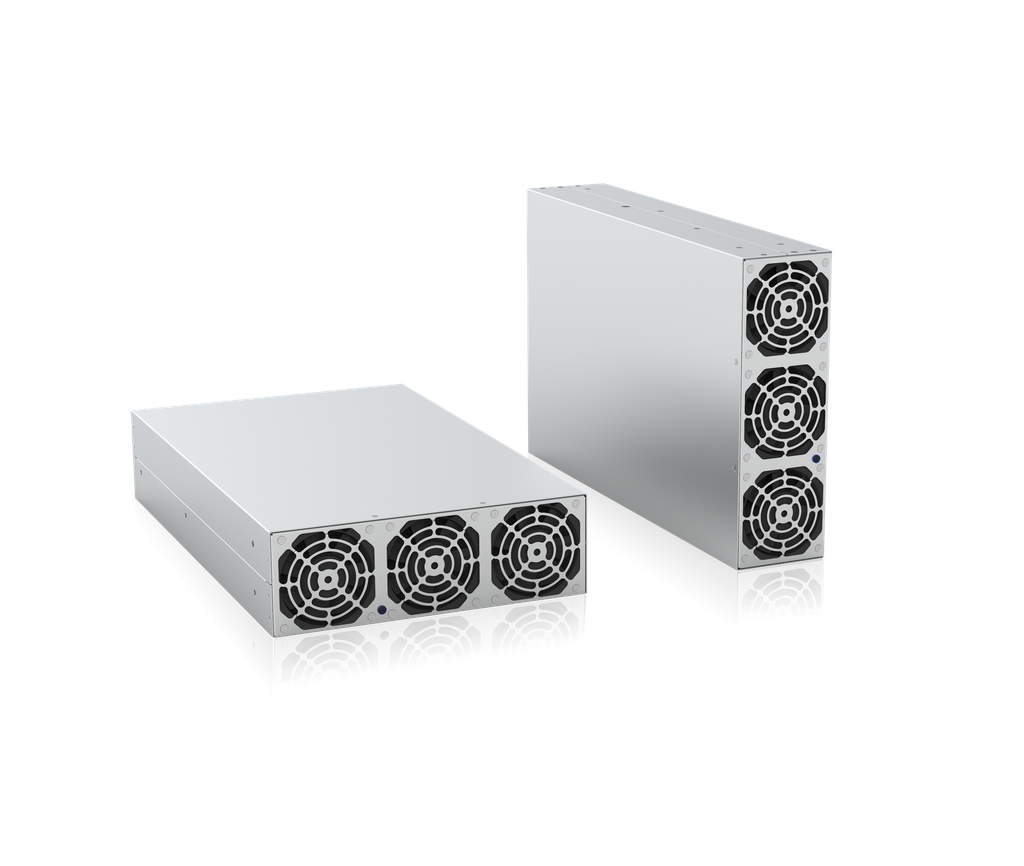
Silicon carbide and gallium nitride chips rarely deliver the headline efficiency figures once they leave the datasheet. In a 30 kW solar inverter, swapping IGBTs for SiC MOSFETs cut switching losses by roughly 40%, but the measured system gain was only 1.7 percentage points—because transformer copper loss and passive filter dissipation stayed fixed. Engineers who ignore this usually end up disappointed when the bench numbers roll in.
The real traps show up in layout and drive circuits. GaN transistors switch fast enough to turn a 10 nH stray inductance into a 40 V overshoot spike, and that overshoot quietly eats the efficiency you thought you gained. We also measured two boards with identical topologies: one used a clean Kelvin source connection and the other didn't. At 100 kHz, the sloppy board ran 12°C hotter on the transistor case and lost an extra 0.8% at full load—not from the semiconductor itself, but from ringing that forced higher dead time.
Field data from a 48 V server power supply tells a similar story. The wide-bandgap prototype hit 98.2% at 50% load in the lab, but after two months in a rack with 45°C intake air and dusty fan filters, it settled at 96.5%. The silicon version held 96.1% under the same conditions. So the honest efficiency number is not the one printed on the marketing slide—it is the one you get after thermal drift, EMI filter losses, and gate drive power are subtracted from the switching-loss win.
Gate Drive Timing and Dead-Time Control: Where Bidirectional Modules Win or Lose Efficiency
Dead-time in a bidirectional module isn't just a fixed pause between high-side and low-side gate signals. As current reverses direction in regenerative braking or battery-to-grid modes, the body diode conduction interval shifts, meaning a timing setting that was efficient in one quadrant can cause noticeable losses in another. The gate driver's propagation delay mismatch and rise/fall time skew create an effective dead-time that varies with temperature and bus voltage, so efficiency gains or losses often trace back to how well that effective window aligns with the actual zero-voltage switching condition.
A well-timed module can reduce body diode conduction to a few tens of nanoseconds, keeping reverse-recovery charge low and preserving soft-switching margins. But push dead-time too tight and the module may enter partial shoot-through, where overlapping gate drive signals allow brief cross-conduction that spikes current without necessarily tripping protection. Bidirectional topologies amplify this because the current path alternates between the two sides of the bridge; if the gate drive timing is calibrated for motoring only, the regenerative half-cycle may run with excess dead-time, wasting efficiency through diode forward drop long after the switch should have taken over.
Some designs use adaptive dead-time control that monitors switch node dv/dt or current zero-crossing to trim the delay on the fly. In bidirectional modules this becomes less of a luxury and more of a requirement, since fixed timing almost guarantees one direction underperforms. Where modules win is when the controller can shorten dead-time during low-current operation and widen it only at high-current peaks to avoid ringing; where they lose is when fixed gate resistor values or slow isolators impose a minimum delay that cannot follow the changing current direction.
Thermal Management Without Derating: Layout Choices That Keep Compact Modules Cool
Every millimeter of copper trace, every via placement, and every component orientation matters when you're pushing current through a compact module. The instinct to derate power components at high ambient temperatures feels logical, but it's often a design shortcut that sacrifices performance unnecessarily. Instead of accepting reduced output, careful layout decisions can redirect heat away from critical junctions and into the board itself, letting the module breathe even in tight enclosures.
One overlooked tactic is using the PCB as a thermal spreader rather than just an electrical interconnect. Thick copper pours on inner layers, especially directly beneath power MOSFETs or diodes, pull heat laterally before it concentrates. Pair this with thermal vias that are filled and capped, not just tented, and you create vertical paths that shunt energy into a ground plane or a dedicated heat-sink region. The key is continuity: a broken copper pour or sparse via array acts like a bottleneck, forcing hot spots that eventually trigger thermal shutdown or premature aging.
Component placement also plays a quiet but decisive role. Grouping high-dissipation parts together might simplify routing, but it creates a local hot zone that overwhelms any single cooling feature. Staggering heat sources across the board, orienting larger packages so their exposed pads align with airflow or board edges, and keeping sensitive control circuitry upwind of power stages all reduce the need for aggressive derating. Small shifts of a few millimeters can drop junction temperatures by ten degrees or more—often enough to keep full rated current flowing without exotic heatsinks.
Vehicle-to-Grid, UPS, and Solar Buffers: Three Applications That Demand True Bidirectional Flow
Instead of treating EV batteries as passive loads, true bidirectional flow lets them return stored energy to the grid during peak demand. This shifts charging from a one-way consumption pattern into a distributed storage asset, but it demands power electronics that can swing between charging and discharging without hesitation. The inverter must manage grid synchronization, harmonic distortion, and state-of-charge limits simultaneously, otherwise the vehicle becomes a liability to distribution stability.
The uninterruptible power supply has always been about instant failover, yet many designs only support one-way conversion until the moment of outage. True bidirectional flow changes that equation: the same converter that charges the battery from the line can also feed the critical load and, where needed, export power back upstream. This reduces component count and wasted heat, but requires control loops that can reverse direction within a few milliseconds without voltage sag or current spikes.
A solar buffer isn't just a battery bank that accepts PV surplus. True bidirectional flow enables the buffer to both absorb excess generation and later discharge to support household loads or feed the grid, all through a single conversion stage. The challenge lies in managing multiple power sources and sinks at once—panel output, battery state, and grid availability—so the system's response never hunts or oscillates. When executed cleanly, the buffer becomes a seamless energy time-shifter rather than a clumsy add-on.
Spec Sheet Traps: Isolation, Inrush Current, and Fault Handling You Must Verify Before Sourcing
Isolation ratings on datasheets rarely tell the full story. A module listed as "2.5kV isolated" might meet that figure only under clean, dry conditions with a specific pollution degree and material group. In a real enclosure with dust, humidity, or tight PCB spacing, the creepage and clearance distances shrink below what the certification assumed. Before sourcing, check whether the isolation is functional, basic, or reinforced, and confirm the exact standard (IEC 62368-1, UL 1577, etc.) plus the working voltage and transient overvoltage category. Otherwise you could pass bench tests and fail safety review later.
Inrush current is another spec that looks simple on paper but behaves differently in the field. A datasheet may specify 10A inrush at 25°C with a nominal input, but that value can double at -20°C or when the upstream capacitance is already charged. If your front-end fuse, relay, or hot-swap controller is sized for the typical value, a cold start in a winter installation could latch it off or weld contacts. Ask for the exact test conditions—input voltage, temperature, soft-start timing, and whether any external NTC or pre-charge circuit is assumed.
Fault handling details are often buried or completely absent. Does the converter hiccup, latch off, or shut down permanently after a short circuit? What happens when the over-temperature threshold is hit—does it recover automatically once cooled, or does it require a power cycle? Some units only restart after removing the input for several seconds, which is unacceptable for remote equipment. Verify the protection response time, restart behavior, and whether any status signal or telemetry pin actually reports the fault condition, because an unprotected or poorly documented fault mode can turn a minor overload into a field replacement.
FAQ
It's a compact power conversion unit that can move energy in both directions—either charging a battery from a source or feeding stored energy back to a load or grid. The recent attention comes from its ability to replace two separate converters with a single device, saving space, cost, and complexity in systems like solar storage, EV charging, and UPS backups.
They let the same hardware handle both charging and discharging, which cuts the component count and boosts overall efficiency. In a home battery setup, for instance, the module pulls power from solar panels to charge the battery during the day, then reverses at night to supply the house—without needing extra inverters or converters.
Look at peak efficiency across both directions, how well it handles partial loads, thermal management, and control flexibility. A top-tier module will maintain high efficiency even when power flows reverse, handle voltage spikes gracefully, and offer digital interfaces for real-time tuning rather than fixed analog behavior.
They work in both. Off-grid setups benefit because the module can manage battery charging from solar or generators and then invert to AC for local loads. Grid-tied systems use them to shift energy between the battery and the grid, enabling peak shaving or backup power. The bidirectional nature is what makes them versatile across both modes.
Electric vehicle charging infrastructure, residential and commercial solar-plus-storage, data center UPS systems, and portable power stations are the main drivers. Each needs high-efficiency, compact power flow in two directions, and the modules reduce the need for bulky, separate charging and discharging circuits.
By integrating digital control and communication, the module can respond to real-time signals—like grid prices, battery state, or load demand—and adjust power flow direction and magnitude continuously. This turns a simple converter into an active energy router, helping users store cheap energy and release it when rates or demand are high.
Yes, because one bidirectional unit often replaces two unidirectional ones, cutting hardware, wiring, cooling, and installation costs. Additionally, higher efficiency means less wasted energy over the system's lifetime, which lowers operating expenses. Some designs also simplify certification by consolidating functions into a single tested module.
Beyond basic specs like voltage and current ratings, check the module's efficiency curve in both directions, its thermal performance under sustained reverse flow, protection features (overcurrent, overvoltage, short-circuit), and the quality of its control interface—whether it supports CAN, Modbus, or other protocols. Also consider reliability data and vendor support for firmware updates.
Conclusion
Bidirectional power stages have quietly become the default choice for new energy storage designs because they eliminate the need for separate charge and discharge paths, reducing component count and enabling smoother interaction with the grid. Wide-bandgap semiconductors such as silicon carbide and gallium nitride are now common in these modules, offering real efficiency gains at higher switching frequencies, but they also bring practical pitfalls—ringing, electromagnetic interference, and layout sensitivity that can erase the theoretical benefits if not handled carefully. Gate drive timing and dead-time control sit at the heart of this trade-off: a few nanoseconds of overlap or excessive dead time can cause shoot-through or unwanted body diode conduction, which is why the best modules integrate adaptive dead-time or tightly matched gate drivers to preserve efficiency across the full operating range.
Thermal management without derating is another make-or-break factor, especially in compact footprints where traditional heatsinks are not an option. Thoughtful PCB layout with thick copper pours, thermal vias, and direct substrate bonding keeps hot spots under control and allows modules to deliver rated power continuously. This matters most in applications like vehicle-to-grid, online UPS, and solar buffers, where true bidirectional flow must switch direction rapidly and handle current in both directions without hiccups. Before sourcing any of the top 10 modules, though, it is essential to look past glossy datasheets and verify isolation voltage ratings, inrush current limiting behavior, and fault handling under short-circuit or overload conditions—many modules only meet their headline specs under ideal lab conditions. The modules that stand out combine honest thermal and electrical specifications with proven behavior in real bidirectional systems, not just simulated benchmarks.
Contact Us
Contact Person: Lily
Email: [email protected]
Tel/WhatsApp: +49 (0) 2161 49526-0
Website: https://tps-elektronik.com/en/