

Top 10 Bread Crumb Production Line Setups for Maximum Output
2026-05-30
Scaling up bread crumb production without sacrificing quality or consistency is a challenge many processors face. Whether you're upgrading an existing line or building from scratch, the right equipment configuration can be the difference between hitting ambitious targets and watching output stall. At MINGDE, we've seen how smart layout choices and machine selection directly multiply throughput. This list breaks down the ten most effective bread crumb production line setups that consistently deliver top-tier capacity—so you can sidestep trial and error and move straight to peak performance.
Rethinking Ingredient Flow for Uninterrupted Production
Smooth ingredient movement is rarely a matter of just speeding up conveyors or adding more storage bins. The real bottlenecks often lurk in how we schedule arrivals and departures, in the invisible pauses where one batch finishes and the next hasn't been signaled. When a line halts because a critical powder arrived two minutes late, the problem isn't the two minutes — it's a supply signal that was sent based on a forecast, not the actual consumption rate. Rebuilding that logic from the ground up means letting real-time demand from blenders, cookers, or packaging stations pull ingredients directly, rather than pushing them into hoppers on a rigid timetable.
A more resilient approach treats ingredient flow as a series of micro-negotiations between equipment. Instead of centralized routing, imagine scale hoppers that request replenishment only when their load cells dip below a reorder threshold, or a liquid sugar line that adjusts valve timing based on the viscosity measured in the pipe. This kind of distributed control prevents small mismatches from cascading into downtimes. It also opens the door to parallel staging — where a single delay in raw-material unloading doesn't freeze the entire system, because alternative pathways and temporary buffering tanks are already part of the design. The result is a plant that doesn't just react to interruptions, but absorbs them without breaking rhythm.
The transition isn't about installing one new app or dashboard. It requires reevaluating how ingredient identities, batch records, and equipment status talk to each other. Simple edge devices on feeders can dampen the oscillations that normally build up when multiple process lines compete for the same material. Rather than relying on a production schedule that's outdated the moment a bag tears or a pump clogs, the system self-corrects within the window of a single cycle. This shift — from planned sequence to adaptive orchestration — is where continuous production stops being an aspiration and becomes a stable, everyday reality.
Precision Baking That Slashes Waste
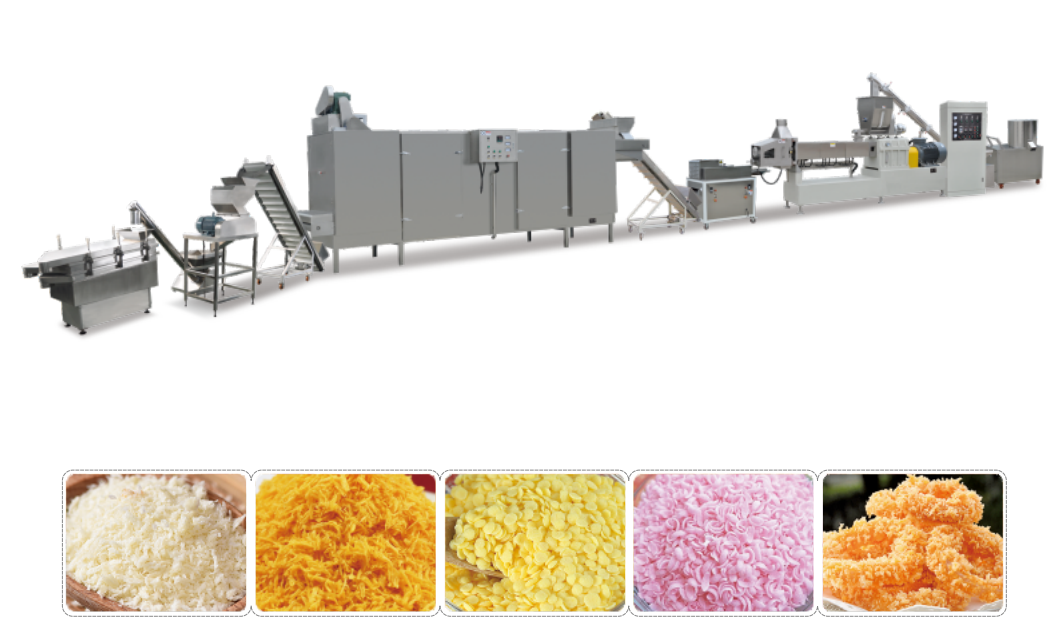
Every gram of dough counts when margins are razor-thin. Our precision baking system uses real-time weight and moisture sensors to adjust mixing, proofing, and baking on the fly. You stop overmixing, overproofing, and the sad sight of scrap bins full of rejected product. Instead, consistent results come from fewer raw inputs.
Operators no longer guess or rely on aging timers. Automated feedback loops trim seconds off cycles and cut energy use without touching quality. The data stream exposes exactly where your yield leaks happen—usually in subtle inconsistencies nobody catches until the end-of-shift tally. Fixing those reclaims months of lost output.
Waste slashes in surprising places. Better control over proofing humidity means dough surfaces don’t dry out, eliminating skin waste. Exact portioning cuts trim by double-digit percentages. And because every batch meets spec the first time, rework drops to near zero. You ship more of what you bake, and stop paying to process what you throw away.
Grinding Techniques That Boost Throughput
If you've ever watched a production line crawl because a grinding step is taking too long, you know the pain of lost throughput. One way to break that bottleneck is to think beyond wheel speed and feed rate. The real gains often come from smarter grit selection and bond matching. Pairing a ceramic grit with a softer bond, for instance, can deliver a near-constant exposure of fresh cutting edges, which means you're removing material consistently instead of glazing over and wasting time with dress cycles.
Another underused tactic is adjusting the grinding path itself. Instead of long, sweeping passes, try dividing the workpiece into shorter segments with rapid retracts in between. This reduces heat buildup and lets the wheel self-sharpen, keeping the cutting zone cool. Often, the difference between standard throughput and a standout number is simply how well you manage thermal stress at the grain level.
Finally, don't overlook the role of fluid dynamics. High-pressure coolant delivered precisely to the arc of cut can evacuate chips before they reload onto the wheel, preventing re-cutting and surface damage. When you combine targeted coolant placement with a dressed, open-structured wheel, you'll often see a 20–30% jump in stock removal rates without any change to the machine's horsepower. That's the kind of quiet optimization that separates efficient shops from the rest.
Smart Automation Without Over-Engineering
Automation should serve as a quiet ally, not a complex beast that demands constant taming. The real art lies in picking the right moments to deploy it—where need and simplicity intersect. Often, we’re tempted to automate every recurring task, but that only builds a fragile house of cards. Instead, pay attention to the repeatable, high-volume steps that genuinely eat up time and are rule-based enough to hand over cleanly.
A light touch works better than a heavy framework. Small scripts, scheduled triggers, or basic conditional logic can handle many jobs without requiring a massive toolchain. When you resist the urge to future-proof every conceivable scenario, you avoid the maintenance nightmares that kill momentum. Think of automation as whittling a plain tool—removing just enough manual friction to smooth the flow, but leaving it recognizable and easy to adjust.
The goal isn’t a perfect, hands-off system; it’s a practical one that bends when circumstances shift. Build in checkpoints where a human can step in, and treat each automated piece as a living draft. This approach keeps you nimble, reduces dependency on brittle logic, and leaves room for the kind of improvisation that rigid setups strangle. Smart automation knows when to get out of the way.
Cooling and Handling: The Hidden Bottleneck
In many production environments, cooling and handling stages are often treated as an afterthought—yet they consistently determine overall throughput. While most attention goes to molding cycles or CNC machining speeds, the real constraint frequently lies in what happens after the part leaves the primary process. Parts that are still warm or not yet fully stabilized can warp, stick to fixturing, or require manual intervention that disrupts downstream automation. This hidden drag on efficiency remains invisible on most dashboards because these steps are rarely instrumented with the same rigor as core manufacturing operations.
A closer look reveals that cooling time isn’t just a simple thermodynamic wait—it’s a complex interplay of material properties, ambient conditions, and part geometry. Inconsistent cooling leads to dimensional variation that later forces extra handling, such as manual straightening or selective assembly. Meanwhile, handling systems that aren’t designed to accommodate thermal contraction or residual heat often jam or move parts out of spec, creating phantom bottlenecks that operators learn to work around rather than address. Over time, these workarounds become ingrained, masking the true capacity loss.
The most successful facilities treat cooling and handling as an integrated subsystem, not as disconnected buffers. By actively managing the thermal journey of each part—through staged cooling, air-flow balancing, and adaptive robotic pick routines—they unlock throughput gains that dwarf those from simply speeding up a press or spindle. It’s in these overlooked transitions that the next level of factory performance quietly waits.
Packaging Line Speed Without Sacrificing Quality
Balancing speed and quality on a packaging line isn’t just about faster machines—it’s about smarter integration. Many facilities chase higher output numbers only to see defect rates spike. The real key lies in engineering the entire system to handle acceleration without introducing stress points that compromise seal integrity or label placement.
Modern sensor arrays and real-time monitoring now allow lines to self-adjust on the fly. Instead of relying on periodic manual checks, these systems detect subtle variations in fill levels, cap torque, or film tension and correct them instantly. This means you can push speeds closer to theoretical limits while actually reducing waste.
It also helps to rethink product handling, not just machinery upgrades. Smoother transitions, buffering zones, and gentle accumulation prevent product damage at higher velocities. When you combine smarter controls with thoughtful layout changes, you often find that quality improves as speeds increase—the opposite of what conventional wisdom suggests.
FAQ
For high-volume production, you need a robust system that starts with a continuous dough mixer, followed by a sheeting and cutting station to shape the bread pieces. An efficient oven—preferably a tunnel or convection type—ensures even baking, while a cooling conveyor brings the bread to the right temperature before crushing. The crushing unit itself often uses a hammer mill or roller mill, and a multi-deck sifting system grades the crumbs. Finally, packaging machines with high-speed weighers seal the product for shipment.
The oven is a major bottleneck. Direct-fired or indirect-fired tunnel ovens offer the highest throughput because they handle continuous baking without interruptions. Their belt width and chamber length determine how much bread can be processed per hour. Convection ovens, while versatile, typically have lower capacity. For maximum output, many setups use a 50-meter-long tunnel oven that can produce over a ton of dried bread per hour.
Yes, but it requires modular equipment. You'd start with the same baking and drying process, then split the line. For panko, bread is passed through a specialty shredder that creates flaky pieces, while fine crumbs go through a series of roller mills with adjustable gaps. Sieving decks then separate the desired sizes. Switching between textures might involve changing sieves and mill settings, which can take a few hours, so it's often more efficient to run dedicated lines if both styles are in constant demand.
Drying is critical because insufficiently dried bread clogs crushers and produces moist crumbs that mold quickly. The goal is to reduce moisture to below 8% quickly. Pre-drying with infrared or microwave assist before the main convection drying stage can cut total drying time by 30–40%, directly boosting throughput. Airflow design in the drying tunnel also matters—impingement nozzles that blast hot air onto the bread surface accelerate moisture removal without burning the crust.
For very high output, continuous mixers are generally superior because they eliminate the downtime between batches. A twin-screw continuous mixer can produce a steady stream of dough, directly feeding the sheeter, whereas batch mixers require cycles of loading, mixing, and discharging that create gaps in production. However, batch mixers offer more flexibility if you frequently change recipes. Some lines use two batch mixers alternating to mimic continuous flow.
They significantly increase net output by reducing waste. Modern lines use optical or weight-based sorters to remove discolored or oversized pieces before packaging. The reject stream is then ground and reintroduced into the system, or sold as a lower-grade product. This can lift effective yield from around 90% to over 98%. In terms of throughput, it means you're not losing production capacity to manual inspection or discarding perfectly good material.
A line capable of processing 2–3 tons of finished crumbs per hour usually requires about 1,500 to 2,000 square meters of floor space. Electrical demand can be around 500–800 kW, with natural gas for ovens adding another 2–3 million BTUs per hour. Water and compressed air are modest, but steam for proofing (if used) might need a dedicated boiler. These figures vary based on automation level and auxiliary equipment like cooling towers.
The key is to schedule maintenance during planned downtime. Advanced systems now use sensor-based monitoring to predict failures—vibration analysis on crushers, for instance—so parts are replaced only when needed, not on a fixed calendar. This maximizes uptime. Many plants run 24/6, reserving one day for thorough cleaning and inspection. Lubrication systems are often automated to run while the line operates, reducing the need for shutdowns.
Conclusion
Achieving peak output in bread crumb production demands a systemic rethink of every stage, starting with raw material handling. Modern high-capacity lines integrate smart ingredient metering and controlled flow to eliminate surges and gaps that choke throughput. Instead of simply cranking up conveyor speeds, processors are adopting gentle, continuous blending methods that preserve crumb structure while maintaining a steady supply to ovens. This upstream stability is critical, as even minor disruptions cascade into significant downtime. At the baking heart, precision heat delivery with multi-zone profiling and real-time moisture sensing keeps scorching and under-drying at bay, directly cutting waste. Advanced grinding systems further capitalize on uniform drying by using staged milling with on-the-fly gap adjustment to reach target particle sizes faster, avoiding the recycle loops that sap capacity.
Yet even the best front-end setup fails if downstream bottlenecks go unaddressed. Smart automation focuses on real-time load balancing and predictive maintenance alerts rather than over-complicating the line with fragile robotics. In cooling and handling, the shift to spiral towers with adaptive ambient controls and low-height conveyors has proven transformative, slashing the footprint and time needed to bring product to safe packaging temperatures without clumping. At the packaging end, multi-head weighers paired with motion-analytics-driven bagging modules now synchronize fill and seal speeds to match the exact output of the oven and grinder, eliminating the stop-start rhythm that destroys line efficiency. When all these elements are orchestrated as one continuous pulse rather than isolated machines, output jumps not by incremental gains but by reclaiming the hidden capacity that standard layouts leave on the table.
Contact Us
Contact Person: LILY SUN
Email: [email protected]
Tel/WhatsApp: 0086-13969103791
Website: https://www.snackfoodmachinery.com/