

Wholesale ADA Sign Material from China for Durable Accessible Signage
2026-08-25
If you’ve ever had an ADA sign fail an inspection because the substrate warped or the tactile lettering peeled, you know that material choice is everything. That’s why more fabricators are looking to China for wholesale ADA sign material—and why LYSHIRE has become a name worth knowing for durably compliant signage.
The Real Cost of Cheap ADA Blanks (And Where to Find Better)
Plenty of shops grab the cheapest ADA blanks they can find, thinking they've saved a few bucks. Then six months later a code inspector flags the braille spacing, or the plastic has warped near a restroom doorway. Replacing a single sign often means paying someone to remove the old one, patch the wall, and install the new blank—easily wiping out whatever was saved on the initial purchase.
Better blanks tend to come from suppliers that actually specialize in accessibility signage rather than general hardware distributors. They usually stock materials that hold braille domes without cracking, and some will send a small sample or spec sheet showing compliance with ADAAG dimensions. Local sign shops occasionally have leftover stock from larger jobs, but you need to check the substrate thickness and dome height yourself before buying.
If money is tight, skip the thinnest injection-molded blanks and look for mid-range photopolymer or routed options, even in small quantities. The difference in price is usually less than the cost of one return visit, and you avoid the slow headache of signs that fade, delaminate, or fail inspection after a year.
Factory-Direct Sign Substrates That Actually Hold Up
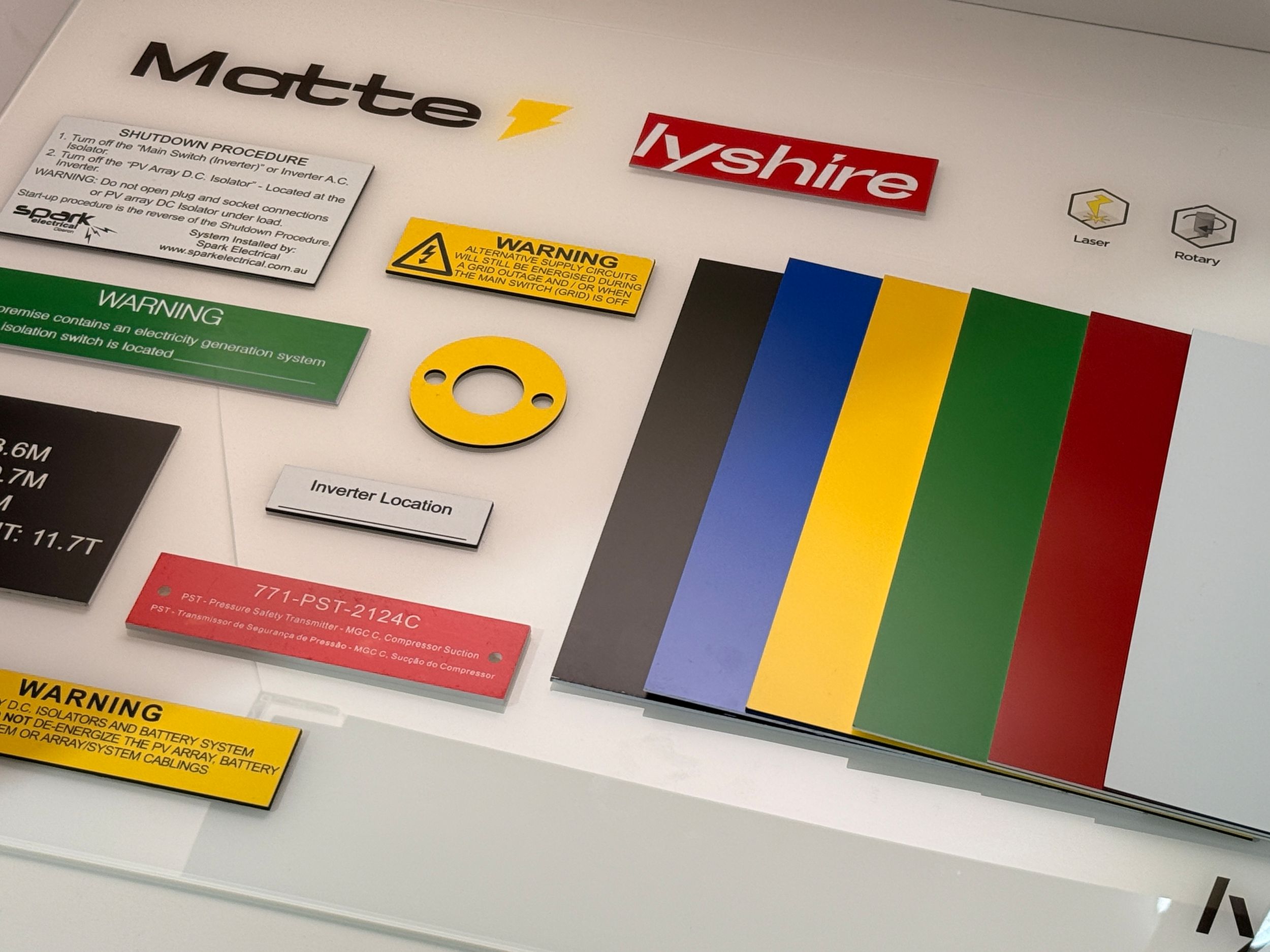
When your signage starts peeling, fading, or warping after a single season, the problem usually isn't the design—it's the board underneath. We buy our substrates straight from the mill, skipping the middlemen who often stock low-grade aluminum composite or recycled PVC that looks fine on day one and fails by month six. That direct line means we control the specs: thickness tolerance, paint adhesion, and core density all match what we promised, not what a warehouse happened to have on a pallet.
The difference shows up in the details. A properly bonded aluminum skin won't delaminate around drilled holes, and a solid PVC core won't swell when morning dew seeps behind the graphics. We've seen cheap panels turn brittle in freezing temperatures or bow under direct sun, but our standard substrates are tested for real-world abuse—not just lab conditions. You get the same sheet a national sign shop would charge twice for, without the inflated freight and repackaging fees.
And because we cut everything in-house from full factory sheets, you're not stuck with off-cuts from someone else's job. Need a 4x8 routed to a weird shape, or a 10-foot fascia panel that has to stay dead flat? We can do that without splicing. It's the kind of reliability that keeps your sign looking sharp three years later, when the bargain boards have already been yanked off the wall.
Why Your Braille Dots Feel Wrong: Material Density Matters
Most people assume all braille dots are created equal, but the moment your fingertip glides across a page, the truth becomes obvious. A dot pressed into thin, flimsy paper collapses under the slightest touch, leaving you with a faint bump that reads more like a smudge than a letter. Meanwhile, dots formed in heavier cardstock stand tall and confident, offering the crisp, distinct edges your fingers expect. The difference isn't just about thickness—it's about how densely the fibers are packed, and that single factor changes everything about the reading experience.
Dense paper holds its shape under pressure. When a braille embosser strikes the surface, the material resists just enough to create a rounded, stable dot that doesn't flatten after repeated passes. Flimsy stock, by contrast, gives way too easily, producing dots that feel mushy or uneven. Think of it like pressing your thumb into wet clay versus dry clay: one leaves a sharp, lasting impression, while the other smears and loses definition. For readers who rely on tactile feedback, that mushy inconsistency forces them to slow down, re-read, or second-guess each character.
The practical takeaway is simple: if your braille feels wrong, don't blame the embosser or your technique right away. Check the paper's weight and fiber density first. A material with a higher grammage—say, 120 gsm or above—usually provides enough backbone for dots that feel clean and legible. Cheap copy paper often fails because it's too porous and light, collapsing under the punch instead of holding the form. The next time you run your fingers over a page and something seems off, remember that the material beneath your hand is doing half the work.
How to Avoid Fading and Warping in Outdoor Accessible Signs
Outdoor accessible signs take a beating from the sun and moisture, so the material choice sets the tone. Solid phenolic panels or exterior-grade high-pressure laminate resist moisture far better than standard plastic or wood, and they won't swell or curl when humidity spikes. For direct sun exposure, ask for UV-stable inks or subsurface printing—this keeps the text and tactile elements from fading within the first two seasons.
Installation has just as much impact as the substrate. Mount signs with stainless steel standoffs or a hidden rail system to leave a small air gap behind the panel. That gap lets water drain and evaporate instead of pooling against the back, which is a common trigger for warping. If the sign must sit flush against a wall, seal the edges with a flexible outdoor caulk and avoid trapping moisture behind the braille or raised lettering.
Finally, think about location and maintenance as part of the design. Placing a sign under an awning or eave can cut UV exposure by half without reducing visibility. A quick rinse with mild soap and water every few months removes grit that can hold moisture against the surface. Watch for small cracks or delamination around mounting holes and touch them up early—replacing a seal is much cheaper than replacing a warped panel.
Bulk Buying ADA Sign Stock Without Getting Stuck with Seconds
The appeal of bulk pricing on ADA sign stock can evaporate quickly if a shipment arrives with color drift, scratched faces, or braille dots that don't meet spacing specs. Rather than relying on a supplier's word, ask for a written grading standard before committing. Many "seconds" are simply cosmetic, but if you're installing in a facility that requires strict R305 compliance, even minor surface flaws can trigger a failed inspection. A quick call to past buyers or a request for batch photos from current inventory often reveals more than a polished catalog shot.
Another safeguard is to negotiate a return or replacement clause tied to measurable defects, not subjective ones. Spell out what "unusable" means: delaminated tactile lettering, incorrect contrast ratios, warped substrates, or mounting holes drilled off-center. If the seller balks at defining these terms, that's your signal to walk. You're buying components for a code-driven environment, not clearance shelf decor.
Finally, consider ordering a small advance lot before committing to a full pallet. This lets you check machining consistency, ink adhesion, and edge finishing under the same lighting and humidity conditions where the signs will live. It costs a little more per unit upfront, but it beats discovering halfway through an install that the "deal" was really just a warehouse clearing out mixed production runs.
From Extrusion to Engraving: What Makes a Chinese Supplier Worth Trusting
A trustworthy Chinese supplier doesn’t just run an extrusion press and hope for the best. The ones worth keeping track how die lines, quenching speed, and aging temperature affect the grain structure before a single engraving pass is made. If the billet alloy isn’t matched to the profile’s wall thickness, the surface can end up too soft or too brittle, which shows up later as fuzzy engraving edges or uneven depth.
Engraving adds another layer of scrutiny. Ask for sample runs on your actual extruded profiles rather than flat test plates. A reliable shop will adjust the cutter angle, feed rate, and vacuum hold-down to compensate for slight bending or twisting that happens during cooling. They’ll also flag when a profile’s shoulder or groove is too deep for clean tool access, instead of forcing it and leaving burrs for you to find in final inspection.
Trust comes down to how openly a supplier talks about failures. The best partners share their scrap rate on your first trial run, explain which parameter caused the defect, and propose a second run without charging you for their learning curve. That kind of transparency is rarer than a shiny catalog page—and far more useful when you’re trying to avoid a container of parts that look fine from a distance but fail the moment someone runs a fingernail across the engraved logo.
FAQ
ADA sign material is engineered to hold precise tactile details—raised letters, pictograms, and Braille dots—while meeting strict dimensional and finish rules. Unlike standard sign stock, it resists warping, has a non-glare face, and keeps its contrast even after years of cleaning or physical contact.
Absolutely. We offer matched color cores, brushed metal faces, woodgrain laminates, and satin or matte overcoats. Large wholesale orders can include custom Pantone-matched substrates so the signage blends with architectural finishes without losing compliance.
Common thicknesses range from 1/32 inch for the raised tactile layer up to 1/8 inch for the main sign face. We also supply 1/16 inch and 3/32 inch tactile stocks for projects that want a more pronounced raised profile or easier Braille bead insertion.
They are built for abuse. Photopolymer and acrylic blends resist UV fading, moisture, and repeated cleaning with hospital-grade disinfectants. Metal-faced laminates add scratch and impact resistance for transit stations, schools, and medical buildings where signs get touched constantly.
Both. We ship precision-trimmed blanks for shops that do their own routing and Braille insertion, or we can supply fully fabricated faces with raised characters and applied Braille spheres already in place. Just tell us the artwork and material spec.
For stock materials, plan on 10 to 15 business days after deposit and artwork approval. Custom color matching or machined faces may add 7 to 10 days. We also offer split shipments for multi-location projects so your installers are not waiting on one container.
Yes, we carry recycled PETG and PVC-free photopolymer options that meet low-VOC emission standards for indoor air quality. They are lighter than metal laminates but still hold fine tactile detail, which makes them popular for education and healthcare projects.
Every batch is checked against a retained master sample for thickness, tactile height, and color consistency. We also run random destructive tests on machined pieces to confirm Braille dome adhesion and raised character integrity before palletizing for export.
Conclusion
Most buyers learn the hard way that the cheapest ADA blanks often aren't cheap at all. The real cost shows up months later, when edges warp under sun or the tactile dots lose their crispness. That's why material density gets overlooked—if the substrate is too soft or porous, even a properly drilled braille cell will feel mushy to the touch, failing inspection and frustrating users. Outdoor accessible signs take an even bigger beating from UV exposure and humidity cycles. Without a dense, UV-stable core and a properly bonded cap layer, you'll see fading, delamination, and warping long before the warranty runs out. Investing a bit more upfront in a factory that controls extrusion and lamination pays off in signage that still reads clean after years of exposure.
Buying bulk from China doesn't have to mean gambling on seconds. The trick is to skip trading companies that source from whoever is cheapest this month and instead work directly with a manufacturer that handles everything from raw resin extrusion to final engraving. When a supplier has that kind of line control, they can keep sheet thickness consistent and reject warped or off-color panels before they ever hit a shipping container. That also means your bulk order won't be padded with rejects that look fine in photos but arrive with uneven surfaces or misaligned color layers. A trustworthy Chinese supplier will tell you which material grade suits interior versus exterior use, and they won't push you into a 'one-size-fits-all' blank that fails your local code. That kind of honesty is worth more than a few cents per sheet.
Contact Us
Contact Person: Tina Hou
Email: [email protected]
Tel/WhatsApp: +86 17816238685
Website: https://www.lyshire.com