

Why the Best Window Glass Protection Film Manufacturer Prioritizes Durability and Optical Clarity
2026-11-16
When window glass is exposed to everything from construction debris to harsh UV rays, the difference between a lasting finish and costly replacement often comes down to one overlooked detail: the protective film. Not all films are created equal, and top manufacturers know that durability and optical clarity are not competing priorities—they’re the same promise. Shire has built its reputation on this principle, refusing to let a haze or a tear compromise the view behind the glass. But why do these two qualities matter so much, and what separates a film that merely covers from one that truly protects? Let’s look closer.
The Slow Failure of Cheap Films Under Daily UV Assault
The damage doesn't announce itself. A cheap film left in a south-facing window can look fine for months, even a year. But ultraviolet light works quietly, breaking polymer chains at the molecular level. The first sign is often a slight yellow cast that nobody notices until they compare a covered edge with the exposed center.
That yellowing is just the surface symptom. With enough daily exposure, the film loses flexibility. It becomes brittle and begins to crack along stress lines, especially near frames or where it was stretched during installation. Adhesive layers degrade too, causing edges to lift and allowing moisture and dust to creep underneath.
By the time the failure is obvious, the film has already stopped doing its job. UV protection drops off long before visible damage appears, meaning whatever was meant to be shielded has been taking the full dose for weeks or months. Replacing cheap film becomes a recurring cost that wipes out any initial savings.
Why Optical Clarity Demands More Than a Polished Surface
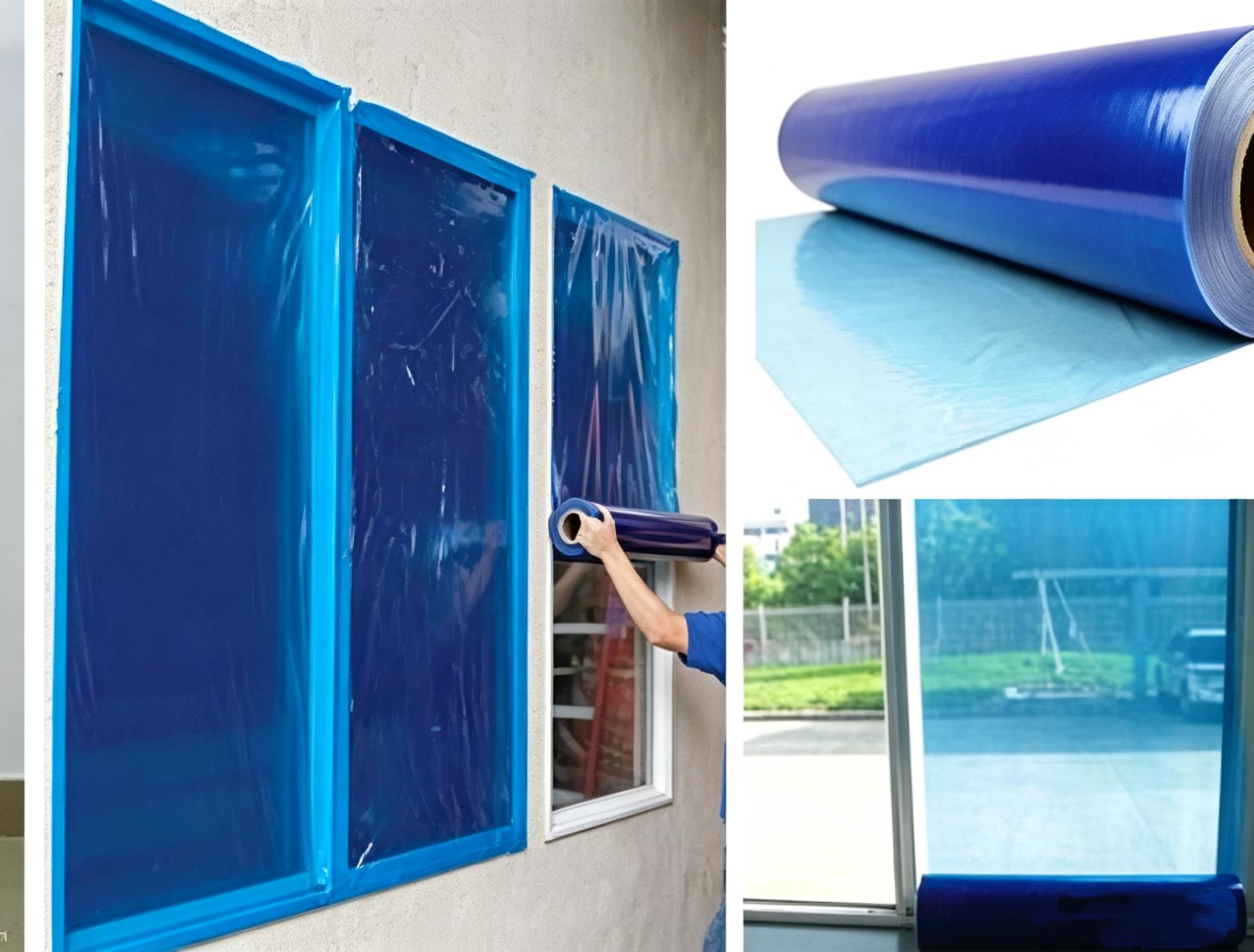
A mirror-smooth finish might look impressive, but true optical clarity goes far beyond surface gloss. Microscopic irregularities, subsurface damage from aggressive polishing, and even subtle variations in material density can scatter light or introduce distortion that the naked eye won't catch until it's too late. In precision optics, what you don't see is often what matters most.
The polishing process can leave behind a thin layer of stressed or chemically altered material just beneath the surface. This layer may refract light differently than the bulk substrate, creating a faint haze or reducing contrast in high-performance applications. Achieving genuine clarity requires controlled material removal, careful abrasive selection, and often a final etching or coating step to restore the surface to its natural optical state.
Engineers and manufacturers who overlook these hidden factors end up with components that pass a visual inspection but fail under real-world conditions. Clarity is not a single property—it's the cumulative result of surface quality, subsurface integrity, and material homogeneity. Only by addressing all three can you deliver optics that perform as cleanly as they look.
How the Best Manufacturers Stress-Test Beyond Standard Cycles
Top-tier manufacturers don't stop at industry-mandated cycle counts. They push enclosures through abusive thermal shock sequences that alternate between -40°C cold soaks and 85°C high-humidity dwells, often reversing polarity mid-cycle to expose weak solder joints and micro-cracks that standard tests miss. Vibration profiles get randomized too—swept sine, random, and combined temperature-vibration runs that mimic real road and rail freight conditions far beyond the typical 10–500 Hz sweep.
What separates the best is their willingness to sacrifice units for data. They run accelerated life testing with intentionally overstressed voltage and current, then tear down failures under a microscope to map exactly where corrosion, dendrite growth, or connector fretting begins. Some even embed strain gauges and humidity sensors inside the housing during abuse, capturing real-time degradation curves that feed back into design revisions before a single field failure occurs.
Finally, the top players add a layer of non-standard torture: salt fog with powered operation, IP69K steam jet cycling while connectors are mated and unmated, and chemical exposure to diesel exhaust fluid or road de-icers. They don't just test to pass a datasheet; they test to find the weakest link, then redesign it out—often running 3x to 5x the standard cycle count before claiming a product is truly rugged.
The Chemistry That Prevents Yellowing Before It Starts
Most yellowing isn't a surface stain that appears overnight—it's a slow oxidation cascade that begins the moment a polymer or coating is exposed to heat, light, or trace metal residues. The smartest formulations stop this before it ever gets going by embedding stabilizers that intercept free radicals at the initiation stage. Hindered amine light stabilizers (HALS) work like chemical circuit breakers: they don't just block UV energy, they scavenge the alkyl and peroxy radicals that would otherwise trigger chain scission and chromophore formation.
Another front is controlling hydroperoxides, the unstable intermediates that decompose into yellow byproducts. Phosphite antioxidants and lactone-based processing stabilizers react with these species while the material is still in the melt or curing phase, sacrificing themselves so the polymer backbone stays intact. This is crucial because once conjugated double bonds start stacking up, the yellow tint becomes nearly impossible to reverse without aggressive bleaching—so the only real solution is to prevent those bonds from forming in the first place.
There's also a less obvious culprit: residual metal catalysts from polymerization. Even a few parts per million of titanium or zinc can catalyze oxidation loops that keep regenerating radicals. Chelating agents and metal deactivators tie up these ions, shutting down the catalytic cycle at its source. Together, these molecular-level interventions create a formulation that resists yellowing not by masking it later, but by making the chemistry of discoloration impossible from day one.
What Precision Coating Does for Both Strength and Light Transmission
Lenses and optical components often face a trade-off: add a protective layer and you risk dimming the view, skip it and the surface becomes vulnerable to scratches and impact. Precision coating sidesteps this dilemma by fusing toughness with clarity at the microscopic level. The coating doesn't just sit on top—it bonds into the substrate, reinforcing the material's structure while allowing light to pass with minimal interference. The result is a surface that shrugs off daily wear without stealing brightness from the image.
Thin-film deposition techniques control the coating's thickness down to a few nanometers, which matters more than most realize. A layer that's slightly too thick can introduce unwanted reflections or a subtle color shift, while one that's too thin offers little real protection. By dialing in the exact refractive index and layer count, manufacturers create a stack that suppresses glare, boosts contrast, and still holds up against repeated cleaning and handling. It's the difference between a lens that looks good in a lab and one that performs in the field.
What often gets overlooked is how the coating redistributes stress across the glass or polymer underneath. Compression at the surface makes the whole piece less likely to crack when dropped, yet the optical path remains essentially unchanged. That balance—mechanical resilience paired with near-perfect transmittance—opens the door for thinner, lighter designs that don't sacrifice durability. In practice, it means a camera lens, a rifle scope, or a pair of eyeglasses can survive years of real-world abuse while still delivering a sharp, bright image every time.
The Overlooked Safety Role of Undistorted Window Views
Most safety discussions around windows center on impact resistance, lamination, or thermal performance. Yet visual fidelity gets far less attention. When glass has roller wave, edge distortion, or subtle curvature from tempering, the view outside can look slightly warped—straight lines bend, distances seem stretched or compressed, and motion appears to shimmer near the edges. For someone glancing out to gauge whether a walkway is wet, a vehicle is approaching, or a ledge is close, that split-second misread can matter more than the glass strength itself.
Undistorted views also reduce hesitation in emergency movement. People tend to trust their eyes before trusting signage or alarms, and a wavy pane can make a clear exit path look blocked or a drop seem shallower than it is. In hospitals, transit stations, and high-rise corridors, specifying low-distortion glazing—checking roller wave limits and residual stress patterns—turns windows from passive light sources into reliable visual instruments. The safety gain is rarely dramatic in isolation, but it compounds across hundreds of small decisions made near the glass every day.
FAQ
It means the film won't chip, crack, or delaminate when hit by stones, slammed doors, or extreme temperature swings. The best manufacturers use multi-layer adhesives and hard-coat top layers that resist abrasion from wiper blades and ice scrapers. They also test for chemical resistance so common cleaners don't fog the surface or eat away the edges. Without that, a film might look fine on day one but lose its grip and turn milky within a couple of seasons.
Because any distortion in the film directly affects how you judge distances and spot hazards, especially through side windows or windscreens. A tiny wave or haze can scatter oncoming headlights at night and create dangerous glare. Top-tier manufacturers use optically pure polyester substrates and control coating thickness to within microns, so the glass looks like there's nothing on it. That keeps driver reaction times sharp and reduces eye fatigue on long trips.
Yes, but only if the manufacturer knows how to handle the chemistry. Simply adding more layers usually introduces a grey or cloudy cast. The best companies use high-clarity adhesives and precision lamination to maintain over 90% visible light transmission even on thicker security films. They also avoid cheap dyes that drift in color, choosing ceramic or nano-particle infusions that block heat and UV without blurring the view.
They don't just hang samples in a sunny window. Reputable labs run xenon-arc weathering to simulate years of UV, salt-spray chambers for coastal corrosion, Taber abrasion tests for scratch resistance, and ball-drop impacts for shatter retention. Clarity is measured with haze meters and spectrophotometers before and after aging. If a film loses more than a small percentage of light transmission or develops visible defects, it fails. Ask any supplier for those third-party reports.
Absolutely, and that's where material selection matters. Cheap films often use dark dyes that absorb heat but reduce visible light and fade over time. High-end options use spectrally selective ceramics or metal oxides that reflect infrared and ultraviolet wavelengths while letting visible light pass almost untouched. This means you can have a nearly invisible film that blocks 99% of UV and a large share of solar heat, preserving the view and protecting interiors without turning the cabin into a cave.
That's a sign of adhesive breakdown or low-grade polyester. When manufacturers cut costs on UV stabilizers or use solvent-based adhesives, the film's layers react with sunlight and humidity. The result is clouding, yellowing, and edge lifting. A manufacturer that prioritizes durability will use UV-inhibited adhesives and optically stable base films, then age them in accelerated weathering to confirm they hold their color and clarity long past the warranty period.
Look past the adjectives. Ask for measurable specs: visible light transmittance, haze percentage, tensile strength, and adhesion values. Request warranty documents that explicitly cover bubbling, peeling, cracking, and clarity loss for a defined number of years. A serious manufacturer will also provide installation guidelines and real-world case studies from similar climates. If the only answer is 'trust us, it's premium,' that's a red flag.
The upfront saving usually disappears quickly. A low-grade film may need replacement after two or three years because it bubbles, scratches, or distorts the view. That means paying for removal, new film, and labor again, plus the risk of damaged defroster lines or glass. In contrast, a film built for long-term durability and optical precision stays clear and intact for a decade or more, so the total cost per year ends up lower and the glass remains safe and comfortable.
Conclusion
Most window films look fine on day one, but the real test happens months later when daily ultraviolet exposure begins to break down inferior adhesives and PET layers. The best manufacturers refuse to treat durability as a mere marketing claim. They run accelerated aging protocols that push samples well beyond standard cycle counts, simulating years of sun, heat, and humidity in a matter of weeks. At the chemical level, this means choosing stabilizers and UV absorbers that stop yellowing before it can start, rather than relying on a superficial polish that hides early degradation. Precision coating then locks those protective layers into place, so the film maintains both its structural integrity and its clarity over time.
Optical clarity is not just about a shiny surface. A truly clear window film must avoid the subtle haze, ripple, or distortion that cheap manufacturing introduces. Premium producers use high-precision coating heads to apply layers at microscopic tolerances, which preserves light transmission and keeps views sharp. This matters for more than aesthetics: in homes and vehicles, an undistorted view through the glass is a safety feature, especially when spotting movement outside or navigating in low light. By controlling thickness variations and aligning the film's internal structure, the best manufacturers ensure that what you see through the window remains true to reality long after installation. That combination of lasting durability and visual honesty is why they lead the market.
Contact Us
Contact Person: Jack Xu
Email: [email protected]
Tel/WhatsApp: 8615257328825
Website: https://www.temporaryprotectivefilm.com/