

Zinc Diethylphosphinate Manufacturer Guide: How to Source High-Purity Materials
2026-06-28
Finding a reliable source for high-purity zinc diethylphosphinate can make or break your flame retardant formulations. With inconsistent quality and supply chain headaches all too common, knowing what to look for in a manufacturer is critical. This guide walks you through the key factors—from purity benchmarks to production standards—so you can source with confidence. And when consistency matters, industry leaders like X.X.F.R set the bar for what high-purity material should deliver.
Spotting Genuine High-Purity Zinc Diethylphosphinate in a Market Flooded with Claims
In a landscape where every supplier insists their zinc diethylphosphinate is the purest, actual differentiation requires more than just glancing at a certificate of analysis. Start by examining the accompanying documentation for specifics that less scrupulous vendors often overlook—things like lot-specific impurity profiles, residual solvent levels, and clear evidence of particle size distribution control. A genuine high-purity product will be backed by data that demonstrates consistency across multiple batches, not just a single favorable result.
Beyond paperwork, the material itself offers clues. Observe the powder’s flowability and color consistency; high-purity zinc diethylphosphinate typically presents as a uniform, free-flowing white or off-white powder. Unexpected clumping, discoloration, or an off odor can signal residual reactants or degradation. An easy way to gauge reliability is to request a small sample for independent verification—reputable suppliers rarely hesitate, while those making inflated claims often find reasons to delay.
Finally, pair laboratory testing with practical application trials in your own formulations. Run the material through a small-scale flame retardant performance test, and compare the results against a control sample of verified quality. Differences in LOI, thermal stability, or mechanical properties will quickly reveal whether the product lives up to its purity promises. Over time, building a relationship with a supplier who openly shares process knowledge and welcomes technical discussions is the surest way to sidestep the hype.
Questions to Ask Before Committing to a Supplier
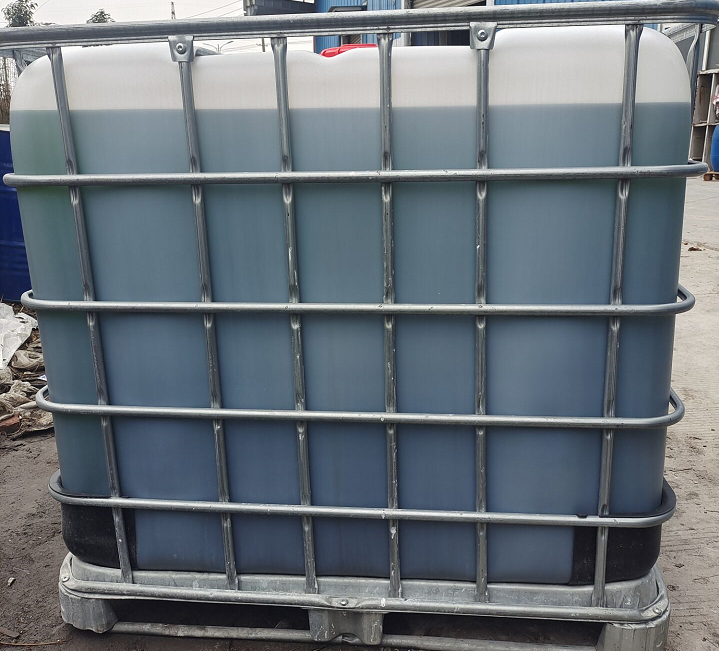
Locking in a supplier without digging into their actual capabilities can lead to costly surprises down the road. Start by asking about their production capacity and typical lead times—can they really handle your volume during peak seasons? Look beyond the sales pitch and request real data on defect rates, on-time delivery percentages, and how they’ve managed past disruptions. If they dodge specifics or only share polished success stories, that’s a signal to probe deeper.
Quality control shouldn’t be treated as a final checkbox. Find out who inspects the goods, when checks happen, and what happens if a batch fails muster. Do they have in-house testing or rely on third-party auditors? Get clear on communication channels too—if you’re dealing with time zone gaps, a single point of contact who actually replies to messages can save weeks of back-and-forth.
Pricing conversations often miss the hidden costs that eat into margins later. Beyond the unit price, ask about tooling charges, packaging fees, and whether they lock raw material costs or pass fluctuations on to you. A supplier comfortable with open-book costing and willing to walk you through their breakdown is far easier to build a long-term partnership with than one who treats every cost line as a secret.
Lab Testing Protocols That Reveal the Real Story Behind Sample Batches
When a new batch of samples arrives, the initial sensory checks often tell only part of the tale. A quick visual scan might miss subtle shifts in texture, while a casual sniff can be misled by masking agents. That's where deeper analytical methods step in—think gas chromatography for volatile compounds, or wet chemistry assays that quantify active ingredients without fancy digital shortcuts. These aren't just box-ticking exercises; they're the quiet detectives that flag inconsistencies long before a product ever reaches the public.
Microbial testing, for instance, often uncovers what the naked eye overlooks. A sample batch might look pristine under standard conditions, yet a carefully incubated petri dish can reveal a brewing colony of unwanted guests. It’s not about fear-mongering—it’s about having the full picture. Heavy metal screens add another layer, tracing contamination back to soil or processing equipment, and suddenly you're not just testing a product; you're tracing its entire journey from raw material to finished goods.
Of course, protocols vary wildly depending on what you're testing. A botanicals lab might lean into pharmacognosy, teasing out marker compounds through thin-layer chromatography, while a fragrance house obsesses over odor stability under UV exposure. The real story emerges when you combine these lenses: a batch that passes on paper can still fail sensory panel blind tests, pointing to variables no machine has yet learned to measure. That’s the art—knowing when to trust the instruments, and when to listen to the human senses that first raised the question.
Why Regional Sourcing Strategies Are Reshaping This Niche Supply Chain
The gradual pivot toward regional sourcing is quietly unraveling long-standing global dependencies in specialized supply chains. For decades, the default approach was to chase the lowest unit cost, often at the expense of visibility and agility. But that model is buckling under the weight of prolonged lead times, erratic freight costs, and a heightened awareness of vulnerability. In niche sectors—where components are not commoditized and production runs are smaller—the appeal of a supplier ten time zones away fades rapidly when delays translate directly into stalled final assembly.
Shorter supply loops are now rewriting the rulebook, forcing businesses to weigh the full spectrum of landed costs against the subtle advantages of proximity. A regional network can compress design-to-delivery cycles, enabling iterative product tweaks without the back-and-forth lag that kills momentum. It also unlocks a degree of collaboration that remote transaction-based relationships simply can't match—sharing material forecasts early, addressing quality hiccups on the spot, and adapting to quirks in demand that no spreadsheet ever anticipated. For niche players, these are not minor conveniences; they are the difference between meeting a tight seasonal window and missing it entirely.
Geopolitical tremors and shifting trade policies have only accelerated the shift, but the underlying logic is more durable than the headlines. When a supply base is scattered across politically charged choke points, a single tariff adjustment or port closure can fracture the entire chain. Regional sourcing, even at a moderate premium, is increasingly seen as a hedge—not against hypothetical risk, but against the certainty that disruption will strike again. In niche supply networks, this has translated into a quiet renaissance of regional clusters, where capability and responsiveness matter as much as per-unit price, quietly reshaping an entire ecosystem from the bottom up.
Decoding the Hidden Costs of Inconsistent Particle Size and Morphology
In powder-based industries, the assumption that all particles are created equal can quietly drain resources. When size and shape vary unpredictably, downstream processes—from mixing and compaction to coating and sintering—begin to behave erratically. Flowability suffers, leading to bridging and rat-holing in hoppers, while irregular packing density creates porosity fluctuations that weaken final products. These issues rarely announce themselves through outright failure; instead, they surface as higher scrap rates, longer cycle times, and nagging inconsistencies that engineers spend months troubleshooting.
The financial toll goes beyond rejected batches. In pharmaceutical tableting, even minor shifts in particle morphology can alter dissolution profiles, risking regulatory setbacks and costly reformulations. Ceramic manufacturers face analogous challenges: irregular grains cause uneven shrinkage during firing, resulting in warped components that must be discarded or reworked. Such hidden variability forces teams to overdesign safety margins, waste raw materials, and invest in extra quality checks—none of which would be necessary if the powder’s fundamental attributes were properly controlled. The costs accumulate not as dramatic line items, but as a persistent drag on yield and throughput.
Understanding the connection between particle characteristics and process behavior is the first step toward reclaiming those margins. Rather than treating particle size distribution as a checkbox on a certificate of analysis, forward-looking producers are mapping morphology data directly to critical quality attributes. This approach moves the conversation from reactive troubleshooting to proactive design, where incoming powder signatures inform machine settings, binder levels, and thermal profiles. The hidden costs begin to vanish when consistency becomes a deliberate outcome of process design—not a happy accident.
Building a Reliable Partnership Beyond the First Purchase Order
Real collaboration doesn’t end with a signed contract or a single shipment. It begins when both sides look past the immediate transaction and start asking how they can make each other’s operations smoother. That might mean sharing demand forecasts earlier, adjusting production schedules to avoid rush fees, or simply picking up the phone when an unexpected issue arises instead of relying on email chains. These small, consistent actions build a rhythm that transforms a one-time deal into something far more durable.
Over time, a supplier who understands your inventory cycles can suggest material alternatives that reduce cost without sacrificing quality. Or they might flag a potential bottleneck weeks before it impacts your timeline, because they’ve learned your tolerance thresholds. This kind of intuition isn’t written into any contract—it grows from repeated, honest conversations where both parties admit what’s working and what isn’t. When a partner treats your business challenges as their own, you’re no longer just a line item in their order book.
The goal isn’t to avoid mistakes entirely, but to handle them with enough transparency that trust deepens rather than erodes. A delayed shipment that’s communicated early, with clear reasons and a recovery plan, often strengthens the relationship more than a dozen flawless deliveries. It proves the partnership can survive pressure. And that’s what turns a reliable supplier into a strategic ally you lean on when market conditions shift or customer demands spike unexpectedly.
FAQ
High-purity zinc diethylphosphinate typically exceeds 99% assay with minimal heavy metal residues and low halide content. Impurities like sodium, chloride, or unreacted intermediates can compromise thermal stability and corrosion resistance in polymers such as polyamides or epoxies. When purity slips, you risk uneven flame retardancy, discoloration during processing, or even premature degradation—issues that get costly fast in high-performance electronics or automotive components.
Request a retained sample from an earlier production lot and send it to an independent lab for cross-check. Also ask for their batch traceability records and whether they follow ISO 9001 or similar quality frameworks. A transparent manufacturer won’t hesitate to share raw chromatography data, particle size distribution reports, and thermal gravimetric analysis curves. If they resist, treat it as a red flag.
Look for in-house synthesis from diethylphosphinic acid and a zinc source under controlled conditions, not merely repackaging. Key signs of control include solvent purification steps, crystallization from chelating agents, and air-free handling to prevent oxidation. Manufacturers using continuous flow reactors often achieve tighter impurity profiles than those relying on batch kettles—ask about their reactor setup and process analytics.
Yes. European and North American producers generally adhere to tighter REACH or TSCA documentation, while some Asian suppliers may offer lower prices but with less rigorous impurity tracking. Watch out for variations in residual phosphite or zinc carbonate content, which can affect flame performance. Always check if the material meets the specific heat release requirements for your end-market tests like UL 94 or IEC 60695.
Humidity control is critical; zinc diethylphosphinate is moderately hygroscopic, and moisture uptake can cause clumping and hydrolysis, ruining dispersion. Ask about their packaging—vacuum-sealed, double-lined bags with desiccant are a minimum. Also probe their shelf-life data under real-world logistics conditions, not just ideal lab storage. Some offer moisture-resistant coatings or customized packaging for long sea freight.
Request a small-scale trial with your specific resin system. Pay attention to melt viscosity shifts and color changes during extrusion. A quality supplier will provide guidance on dispersion aids if needed and can supply micronized grades with controlled particle sizes (D90 < 10 µm) for thin-walled parts. They should also share data on filter pressure rise in melt filtration tests—a practical predictor of production line headaches.
Look for developments in bio-based diethylphosphinic acid precursors and solvent-free synthesis to lower environmental footprint. Some producers are exploring synergistic blends with boehmite or nitrogen-based synergists that might alter purity requirements. Keeping an eye on EU initiatives to reconsider halogen-free flame retardants under the Green Deal could signal shifts in demand or regulation that influence supply stability.
Conclusion
In the race to secure high-purity zinc diethylphosphinate, buyers quickly learn that marketing claims rarely match reality. Spotting genuine material means moving past slick datasheets and demanding evidence—gas chromatography, ICP-MS, or DSC traces that confirm purity and rule out common contaminants like residual solvents or hydrolysis byproducts. Before committing, ask suppliers not just about assay percentages, but about their synthesis route, quality control frequency, and handling procedures that prevent degradation. Lab testing shouldn’t be a one-off formality; request retain samples from multiple production lots and run them through your own protocols—TGA to check thermal stability, particle size analysis to catch inconsistencies. These steps expose batch-to-batch variation that glossy brochures conveniently omit.
Regional sourcing decisions are quietly redrawing the zinc diethylphosphinate supply map, driven by regulatory shifts and logistics bottlenecks. But no matter the origin, inconsistent particle morphology will silently erode your bottom line through unpredictable dispersion behavior, uneven flame retardancy, and processing headaches that inflate scrap rates. Smart buyers negotiate specifications down to D50 ranges and crystal habit, not just chemical purity. Beyond the first purchase order, the real value lies in building a partnership where the manufacturer shares R&D insights, offers custom sieving or micronization, and proactively flags raw material cost trends. A supplier willing to audit their own upstream intermediates and invest in dedicated production lines is worth far more than a low introductory price—because in this niche, reliability is the true mark of purity.
Contact Us
Contact Person: Guohua Wang
Email: [email protected]
Tel/WhatsApp: 8613003442895
Website: https://www.xxflameretard.com